ARENA Boosts HAMR Energy’s Green Hydrogen-Powered Biomass-to-Fuel Chain
ARENA has pledged up to A$32 million to HAMR Energy’s biomass-to-fuel chain that combines forestry residues and green hydrogen. The project will yield 300,000 t of renewable methanol and 140 million L of SAF annually, marking a milestone in hydrogen production and infrastructure.
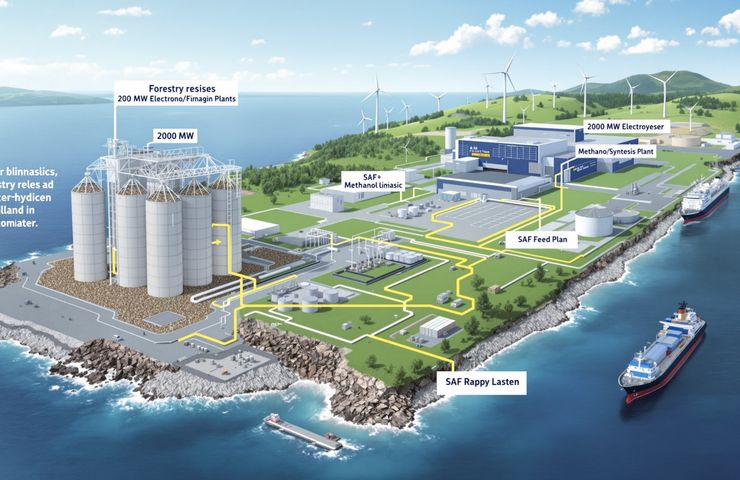
Australia’s federal clean energy agency is putting its money where its mouth is, committing up to A$32 million to HAMR Energy Pty Ltd. This investment is all about pushing forward a groundbreaking biomass-to-fuel supply chain in the Green Triangle region. With this funding, the project can dive deeper into the engineering details for a vertically integrated system. The idea is to make the most of plantation forestry residues while also ramping up large-scale green hydrogen production using a massive 200 MW+ electrolyser. In the long run, the goal is to roll out low-carbon renewable methanol and sustainable aviation fuel (SAF) that will serve both local and export markets from facilities located in Portland, Victoria, and Port Adelaide, South Australia.
Catalytic Biomass-to-Methanol Process
At the center of the Portland Renewable Fuels project is thyssenkrupp Uhde’s reliable Biomass to Methanol technology. Here’s how it works: they take lignocellulosic residues—think of harvest offcuts, sawdust, bark, and thinnings—and transform them into something useful. First, these materials are dried and reduced in size before heading into a high-temperature gasifier. Under controlled oxygen conditions, the biomass turns into syngas, a mix of carbon monoxide, carbon dioxide, and hydrogen. Then, using catalytic reactors, they whip up methanol from this stream, creating a flexible liquid fuel that can do a lot of heavy lifting.
HAMR Energy has its sights set on processing between 500,000 and 600,000 tonnes of certified plantation residues each year. By integrating state-of-the-art syngas cleanup and distillation units, this plant is expected to crank out about 300,000 tonnes of low-carbon methanol annually. Life-cycle assessments suggest that implementing this methanol will help reduce CO₂ emissions by around 300,000 to 390,000 tonnes per year, especially as it replaces fossil feedstocks.
Green Hydrogen and Electrolysis Integration
A key aspect of this project is the pairing of a robust 200 MW electrolyser, powered by onshore wind farms in the area. Whether using proton exchange membrane or alkaline configurations, this electrolyser splits water into hydrogen and oxygen. The green hydrogen created here gets mixed into the syngas mix to fine-tune the H₂:CO ratio for the best possible methanol synthesis.
This unique combo of biomass conversion and renewable hydrogen production boosts the overall fuel yield while upping carbon efficiency. Thanks to harnessing wind energy, the hydrogen comes with a minimal carbon footprint, ensuring the methanol checks all the boxes for stringent low-carbon standards. Plus, this integrated approach helps with grid balancing by allowing the electrolyser to soak up surplus renewable energy.
Methanol-to-Jet Route to SAF
Once they produce the methanol, it’ll be shipped out via the Port of Portland or transported by rail and road to an upcoming SAF Energy Park near the Port of Adelaide. Here, a dedicated methanol-to-jet refinery will convert the methanol back into syngas or intermediates, employing Fischer–Tropsch and hydroprocessing methods to create jet fuel molecules that can be dropped right into existing systems.
The Port Adelaide facility has plans to turn about 300,000 tonnes of methanol into roughly 140 million litres of SAF each year, with co-products like renewable diesel. Airlines such as Qantas and global players like Airbus have already shown interest in buying the produced SAF, as it fits nicely into their broader decarbonization strategies. With a steady domestic supply of SAF, this refinery could help replace a significant chunk of imported kerosene on crucial domestic routes.
Strategic and Policy Perspective
This A$32 million grant from the Australian Renewable Energy Agency kicks off the first round of funding under the A$250 million Low Carbon Liquid Fuels initiative in the Future Made in Australia Innovation Fund. They’ve released A$12.5 million right away, with another A$19.5 million depending on co-funding for the full front-end engineering design. This investment is bridging the gap between feasibility and actionable engineering, moving the project closer to reality.
HAMR Energy’s hub-and-spoke model brings together dispersed forestry by-products from plantation owner OneFortyOne, upgrading them into refined fuels. Teaming up with thyssenkrupp Uhde helps minimize risks related to technology selection, while backing from Qantas, Airbus, and private investors during a Series A funding round lends further credibility to the project. All of this is a step forward not just in industrial decarbonization but also in building hydrogen infrastructure in an aviation-heavy market.
Looking Ahead
If everything goes according to plan, we can expect the initial low-carbon methanol output to kick off in the early 2030s, with SAF production following close behind. A successful rollout could establish Australia’s capabilities in green hydrogen production, biomass conversion, and synthetic fuel manufacturing. And as demand for global SAF skyrockets, Australia has the chance to tap into export markets while helping its own aviation sector transition to net-zero emissions.