Green Hydrogen Production and Storage Enhanced at voestalpine’s Linz Steelworks
voestalpine and VERBUND have enhanced the H2FUTURE pilot at Linz with purification, compression, storage and logistics, advancing integrated green hydrogen production for steelmaking.
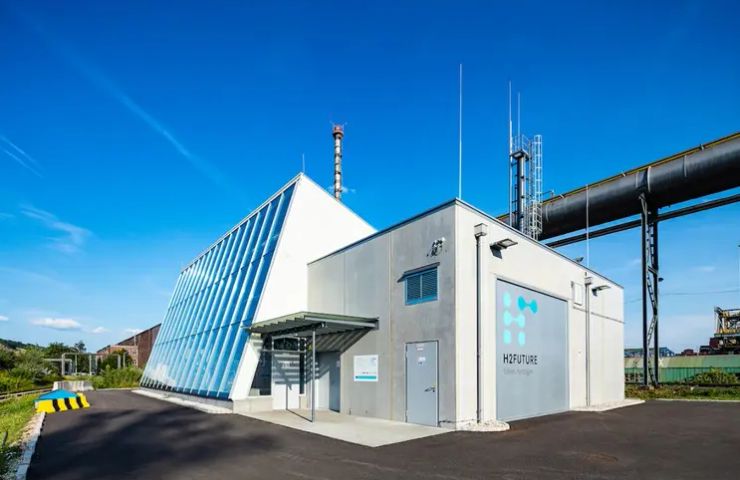
voestalpine AG and VERBUND AG have inaugurated the next operating stage of the expanded H2FUTURE hydrogen pilot facility at the Linz steelworks in Upper Austria, integrating key infrastructure for green hydrogen production into an active industrial environment rather than a standalone research site. The move shifts the project toward practical systems that can supply hydrogen at the quality, pressure and volume required by heavy industry. It is no longer only about producing molecules in isolation; it is now about making hydrogen usable where it is needed.
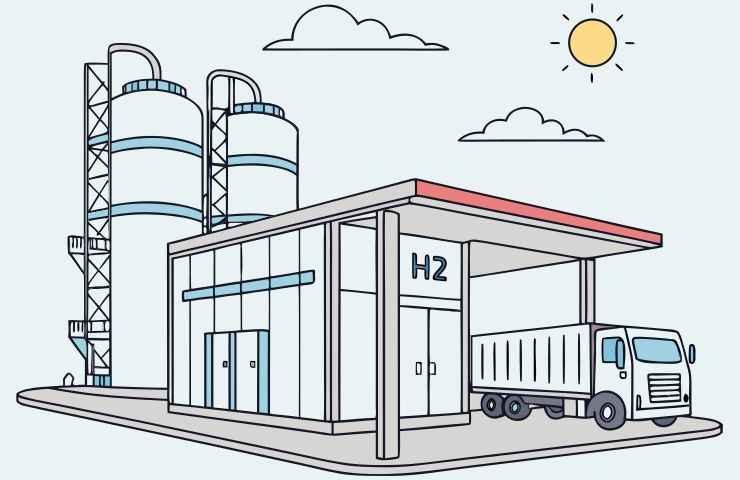
According to official announcements, the EUR 16.4 million extension adds hydrogen purification, multi-stage compression, temporary storage and loading capabilities to the existing six-megawatt proton-exchange-membrane electrolyser. The partners report installation of five new storage tanks—four to smooth production and consumption fluctuations and a fifth designated as a shipping tank to supply the on-site HY4SMELT demonstration plant via an approximately one-kilometre pipeline from next year. In addition, the upgraded facility can compress hydrogen to up to 500 bar for trailer loading, enabling distribution to external research and industrial projects. Initial functional tests have begun, with first research results expected by year-end as the facility transitions from production demonstration to integrated hydrogen logistics.
Key Technical Enhancements
The heart of H2FUTURE remains its six-megawatt PEM electrolysis system. According to the project website, the plant comprises 12 stacks, each containing 50 water-splitting cells, delivering up to 1,200 cubic metres of hydrogen per hour. To meet industrial gas-quality standards, hydrogen purification modules have been added to remove residual water vapour, oxygen and contaminant gases, in line with VERBUND’s operating requirements. Hydrogen is subsequently elevated to high pressure via multi-stage compressors able to reach 500 bar, reducing storage volume and enabling trailer loading. Five new storage vessels buffer fluctuations between variable renewable power input and hydrogen off-take, decoupling electrolyser operation from downstream processes. A dedicated shipping tank will feed HY4SMELT through a planned pipeline connection, testing real-world supply dynamics.
Industrial Integration and Logistics
Beyond onsite purification and storage, the expanded facility addresses hydrogen logistics critical to heavy-industry decarbonization. As reported by voestalpine, a roughly one-kilometre pipeline will link the shipping tank to the HY4SMELT demonstration plant at pressures suitable for operating high-temperature steelmaking trials. At the same time, high-pressure trailer loading stations will dispatch green hydrogen to external research sites, including the SuSteel project in Donawitz. By validating trailer filling at 500 bar and transport-ready purity, the partners aim to confirm that hydrogen can move reliably across industrial clusters. This dual approach—pipeline distribution and mobile transport—offers insights into flexible infrastructure models for large steel plants and regional hydrogen networks.
Strategic Implications for Industrial Decarbonization
This extension transforms H2FUTURE from a production-focused pilot into a holistic infrastructure testbed, a step voestalpine describes as essential to its greentec steel transformation programme targeting net-zero CO₂ by mid-century. Integrating the electrolyser with purification, compression, storage and logistics lets voestalpine capture operational data on pressure management, gas quality control and equipment response to fluctuating renewable electricity. For VERBUND, the project demonstrates how hydropower-driven green hydrogen can provide grid services and serve as an energy carrier for sectors where direct electrification remains challenging. The pilot also offers a reference case for Austria’s hydrogen roadmap, showcasing how renewable energy generation can link to industrial demand, a model that may be replicated across European steel hubs.
Policy and Funding Framework
The expansion is backed by Austria’s environmental-support framework administered by the Federal Ministry of Economy, Energy and Tourism, which provides public funding for green hydrogen initiatives. While the exact allocation between public subsidy and private investment remains undisclosed, the EUR 16.4 million budget underscores continued government commitment to industrial decarbonization. The original H2FUTURE project launched under the European Union’s Horizon 2020 Fuel Cells and Hydrogen Joint Undertaking, and the follow-up phase extends its scope toward operational readiness. The follow-up is set to conclude by late 2030, according to the latest company statements, although earlier plans had targeted year-end 2029. Resolving this timeline discrepancy will be essential for aligning research deliverables and funding disbursements.
Environmental and Economic Context
Green hydrogen produced via renewable electricity offers the potential to cut CO₂ emissions in processes traditionally reliant on fossil fuels, but real-world benefits depend on electrolyser efficiency, renewable-power availability and system utilization rates. According to VERBUND, the facility has cumulatively produced nearly 2,000 tonnes of hydrogen since its initial commissioning, though this figure has not been independently verified. Operating costs, levelized hydrogen pricing and lifecycle emissions must be measured against natural gas-based production to confirm long-term viability. The pilot’s outcomes will inform economic models for scaling hydrogen supply chains within the steel sector and beyond.
European Pilot Projects in Perspective
H2FUTURE’s integrated approach parallels efforts across Europe, where industrial clusters in Germany and the Netherlands are coupling electrolysers with storage and pipeline networks to validate operational resilience. What sets H2FUTURE apart is its embedding within an active steelworks: it tests interfaces with existing heavy-industry infrastructure rather than bespoke sites. Lessons on material compatibility, safety management and control strategies generated here will inform European guidelines for hydrogen-ready industrial installations.
Operational Challenges and Data Insights
Transitioning from pilot to practical application exposes challenges in equipment durability and process control. According to voestalpine, variable renewable electricity input can cause pressure and temperature swings in electrolysis cells, while compression cycles introduce thermal loads that affect component lifespan. Storage tanks must maintain high-pressure containment without hydrogen embrittlement, and purification systems need to consistently deliver parts-per-million level gas quality. Gathering detailed operating hours, availability metrics and maintenance records will be critical to determine how PEM technology scales in industrial settings. The research team plans to analyze these factors alongside power-market interactions to develop optimization algorithms that align hydrogen production with fluctuating electricity prices and grid requirements.
Looking Ahead
As the H2FUTURE follow-up advances through functional testing and into its research phase, the partners will publish initial findings by year-end and continue experiments through the project’s scheduled close. This expansion does not yet establish commercial-scale green steelmaking. It does, however, represent a vital step toward integrated hydrogen supply chains in heavy industry. The data and operational know-how generated at Linz will guide investor decisions, policy frameworks and engineering standards for future hydrogen systems. Ultimately, success here could unlock more ambitious projects across Europe, accelerating the transition toward low-carbon industry and supporting broader net-zero energy goals.