CullBeck Raises $20M in Hydrogen Project Financing for Glenbrook Demonstration Plant
CullBeck secures NZ$20 million to pilot a hydrogen-based ironmaking plant at New Zealand Steel’s Glenbrook site, testing a modular green hydrogen production and direct reduced iron process for titanomagnetite feedstock.
Decarbonizing steel production is no walk in the park, and when you consider New Zealand’s reliance on titanomagnetite ironsand, the challenge only gets tougher. But there’s a glimmer of hope on the horizon thanks to CullBeck, a startup that came out of the brilliant minds at Victoria University of Wellington. They’re putting their chips on hydrogen, aiming to shake things up in the industry. With a fresh investment of NZ$20 million, they’re gearing up to set up a demonstration project at the existing New Zealand Steel mill in Glenbrook—an exciting leap from research labs into real-world hydrogen infrastructure that could truly transform green ironmaking worldwide.
Demonstration at Glenbrook
So, what’s the game plan? The NZ$20 million funding package combines a popular NZ$15 million equity round with an additional NZ$5 million in customer-linked support. This blended-capital approach is smart—it aligns everyone’s interests from the get-go. The funds will be used for several crucial tasks like site prep, building reactors, storing hydrogen, and plugging into local utilities at Glenbrook Steel. They’re planning to launch a pilot plant that can churn out 2.5 tonnes of direct reduced iron every hour, using just hydrogen and electricity to produce a steady stream of iron pellets. They even have a memorandum of understanding (MOU) with New Zealand Steel that secures land access, steam offtake, and a roadmap for connecting to the grid and getting the necessary regulatory approvals. Construction is slated to kick off soon, paving the way for real-world testing and performance trials under actual industrial conditions.
Technical Innovation
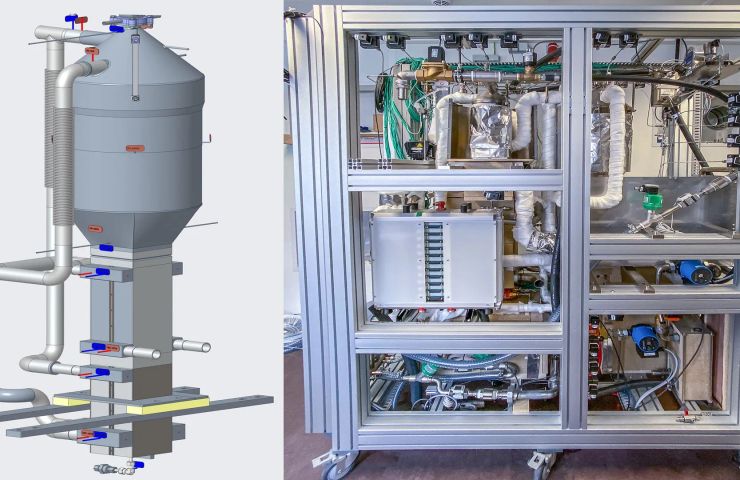
At the core of this pilot project is a nifty electrically heated continuous fluidized-bed reactor. How does it work? It lifts tiny iron particles in a stream of hydrogen gas, keeping them suspended to maximize contact, which speeds up the reduction process. Early tests at the Paihau/Robinson Research Institute managed to convert titanomagnetite to direct reduced iron in just about 150 seconds. That’s a massive improvement compared to the traditional methods that can take hours. Plus, this reaction only produces water vapor, so it completely cuts out CO₂ emissions from the reduction phase. By pairing this reactor with renewable electrolysis—possibly supported by on-site hydrogen storage—CullBeck is aiming to create a fully integrated system for green hydrogen production and ironmaking.
Strategic Partnerships and Financing
This funding round highlights new approaches to hydrogen project financing in heavy industry. Climate-focused investors came together for the NZ$15 million equity round, alongside strategic backers from the steel and energy sectors. On top of that, an Australian energy firm is putting in around NZ$5 million through a conditional offtake agreement, tying funding directly to the pilot’s deliverables. This structure not only reduces risk but also balances straightforward investment with early revenue streams. For CullBeck, this means speeding up engineering design, procurement, and construction, while also boosting their credibility in the market. Investors are keen on seeing a successful pilot, as it could open doors to licensing deals, equipment orders, and long-term contracts in the Asia-Pacific and beyond.
From Lab to Pilot
Founded from the innovative research at the Paihau/Robinson Research Institute, CullBeck has deep academic roots. Dr. Chris Bumby led the charge, exploring hydrogen-based ironmaking with electrically heated beds. His work laid the groundwork for understanding the chemistry and heat management required, reportedly achieving speedy reduction of New Zealand’s ironsand in tightly controlled conditions. CEO Martin Hacon brings a wealth of experience from steel production and process engineering, and he’s built a solid management team to bridge that crucial gap between academia and the industry. Their mission? Transform lab-scale data into real engineering designs, showcasing how deep-tech startups can tackle complex commercialization challenges while tapping into both public research support and private funding.
Positioning in a Global Shift
On the global stage, hydrogen direct reduced iron (H2-DRI) is becoming a hot topic in the pursuit of zero-emission steel. There are pilot projects popping up in Scandinavia and the Middle East, all racing to decarbonize outdated mills. Most efforts are focusing on high-purity pellets and setting up shop near affordable renewable energy sources. What sets CullBeck apart is their approach—modifying the process for titanomagnetite ironsand. This could potentially open up vast new mining opportunities in Australia, Indonesia, and the Philippines. By demonstrating modular units that fit in with coastal resource hubs, their technology tackles logistical and feedstock problems head-on, paving an original path to lower-emission steel that leverages the existing milling infrastructure.
Policy and Market Implications
New Zealand’s interim hydrogen roadmap has recognized steel as a key sector for development but flags some real hurdles, like fluctuating electricity prices, supply chain integration, and the need for clearer regulations. By launching a hydrogen-DRI pilot right at an existing mill, CullBeck is confronting these challenges directly. The project can tap into industrial power tariffs and utilize existing gas and water networks while testing out permitting strategies for hydrogen storage and handling flammable gases. If all goes well, this could encourage policymakers to roll out targeted incentives—think electrolyzer subsidies or designated grid capacity—while steel buyers might jump at the chance to lock in low-emission products through long-term contracts to hit their corporate net-zero ambitions.
Environmental Upside and Hurdles
Using hydrogen for reduction can bring direct process emissions down to nearly zero. That said, the overall carbon footprint still hinges on where the hydrogen comes from. Initially, they may have to rely on grey hydrogen to fill in gaps until renewable electrolysis can scale up, so lifecycle assessments will play a critical role in demonstrating real emissions cuts. The pilot’s electric load could reach tens of megawatts, putting pressure on local grids unless they adopt smart demand management or ramp up renewable capacity. But there’s a silver lining—the process generates a titanium- and vanadium-rich slag that can be valued, offering opportunities to contribute to a circular economy. Smart heat recovery, effective water treatment, and utilizing by-products will be vital to proving a viable route toward complete decarbonization in heavy industry settings.
Modular Growth and Commercial Outlook
CullBeck envisions the Glenbrook pilot as a stepping stone towards a modular ironmaking system that can be scaled up or replicated. Each unit will provide operational data and performance benchmarks alongside engineering templates. Future income streams could include licensing fees, contracts for turn-key plant builds, and ongoing technical support. Steel producers and equipment manufacturers might team up to build local supply chains, which would help reduce costs and lead times. With global demand for low-emission materials skyrocketing—especially in construction, infrastructure, and automotive sectors—the first ones to jump on board could stand to gain a significant competitive edge.
Forward Look
In the next 18 months, we’ll see if rapid, hydrogen-driven reduction can really take off beyond the lab setting. Will this continuous fluidized-bed reactor keep the flow going and balance heat at an industrial level? Can the hydrogen supply chain—from electrolyzers to on-site storage—meet the growing demand? As steelmakers worldwide weigh their options for decarbonization, success at Glenbrook could open up a groundbreaking model that merges current assets with innovative hydrogen production and reduction methods. For everyone involved—investors, engineers, and policymakers—it will be a true test of whether clean hydrogen news can lead to real change in the industrial landscape.