TEAL Mobility Lowers Public Hydrogen Price to €9.95/kg at Benelux Refuelling Stations
TEAL Mobility will reduce its public hydrogen pump price to €9.95/kg including VAT at nine Benelux stations to stimulate heavy-duty fleet adoption, according to the joint venture.
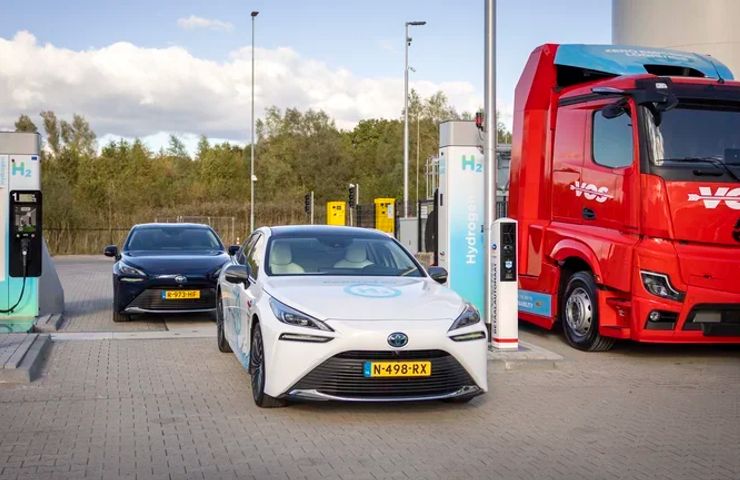
TEAL Mobility announced it will lower its public pump price for hydrogen to €9.95 per kilogram including VAT at nine stations across the Benelux, according to the company. The reduction takes effect in October. It applies to sites in the Netherlands, Belgium and Luxembourg that are designed primarily for heavy-duty transport.
Price Below €10/kg for Cross-Border Corridors
The stations identified by TEAL Mobility include seven sites in the Netherlands—Deventer, Utrecht, Roosendaal, Rhoon, Capelle aan den IJssel, Veldhoven and Delfzijl—together with Zaventem in Belgium and Bettembourg in Luxembourg, according to its station directory. The public price reduction aims to standardise costs along major freight routes and simplify refuelling with a single H2 card, network and invoice.
Card Pricing and Professional Discounts
In addition to the headline public price, independent reporting indicates that fleet operators using a TEAL Mobility H2 card may access net prices of around €7.72 per kilogram excluding VAT in the Netherlands and Belgium, and about €8.71 per kilogram excluding VAT in Luxembourg, though precise volume thresholds and contract conditions have not been verified. Some sources suggest professional customers could secure rates below €6.50 per kilogram excluding VAT contingent on annual offtake, according to secondary coverage, but TEAL Mobility has not publicly confirmed those specific terms.
Joint Venture Strategy and Network Ambition
TEAL Mobility was formed in January 2024 as an equally owned joint venture of Air Liquide and TotalEnergies, according to a joint press release. The partners set out to develop more than 100 hydrogen refuelling stations over the next decade along Europe’s core transport corridors, with an initial network of around 15 sites planned across France, the Netherlands, Belgium, Luxembourg and Germany.
Leveraging Complementary Expertise
TotalEnergies brings experience in operating and marketing station networks under its brand and distributing energy to business customers, while Air Liquide contributes technical knowledge in hydrogen production, conditioning and distribution. Together they aim to accelerate the commercial roll-out of hydrogen infrastructure for heavy-duty vehicles, as described in their announcement and subsequent company materials.
Lowering the Barrier for Heavy-Duty Fleets
Hydrogen mobility has faced headwinds from high fuel costs, limited vehicle availability and low station utilisation. Setting a public pump price below €10 per kilogram is often cited as a psychological threshold that can encourage fleets to test or scale up hydrogen fuel-cell operations, according to industry observers. By reducing fuel-cost uncertainty, TEAL Mobility seeks to build recurring throughput and improve station economics.
Addressing High Fixed Costs
Hydrogen refuelling stations carry substantial capital and operating expenses for compression, storage, cooling and dispensing equipment, as well as safety and maintenance systems. Station operators typically need steady daily volumes to cover these fixed costs, so price-driven demand stimulation can be interpreted as a market-development measure rather than a conventional retail discount, according to sector analysis.
Enabling Cross-Border Logistics
Long-haul and cross-border trucking require predictable refuelling options at regular intervals. A uniform sub-€10 price across nine stations in three countries reduces planning complexity for transport operators that currently navigate varying tariffs and payment systems, according to TEAL Mobility. This pricing cohesion aligns with the ambition to create hydrogen corridors capable of supporting heavy-duty traffic.
Cost Competitiveness and Independent Research
Despite lower pump prices, independent studies by the International Council on Clean Transportation continue to find that hydrogen fuel-cell trucks generally have higher total cost of ownership than battery-electric or diesel alternatives, under current conditions. Major factors include vehicle acquisition cost, hydrogen production pathways, station utilisation rates and energy-conversion losses, according to the ICCT’s analysis.
Policy Framework and Infrastructure Regulation
The EU’s Alternative Fuels Infrastructure Regulation requires hydrogen refuelling stations at intervals of up to 200 kilometres along the TEN-T core network and in key urban nodes by 2030, according to EU transport policy documents. TEAL Mobility’s network development and pricing initiative are designed to support compliance with these requirements and to attract long-distance freight traffic.
Supply Origin and Environmental Impact
The public price announcement does not disclose whether the hydrogen dispensed at these stations qualifies as renewable or RFNBO under EU rules. Lifecycle emissions depend on the production and distribution pathway, and a lower pump price alone does not guarantee a green origin, according to renewable-hydrogen guidelines and industry guidance.
Outlook for Network Expansion
TEAL Mobility’s next steps include extending its corridor coverage and securing offtake agreements with high-mileage fleets. The success of the price initiative will hinge on attracting consistent demand and device availability, as well as on incentives such as road-toll reductions or renewable-fuel credits, according to market observers.
While the sub-€10 pump price marks a notable commercial step, the broader test for hydrogen in heavy-duty transport will depend on the interplay of infrastructure deployment, vehicle supply and the evolution of hydrogen production costs, as well as policy support, according to sector analyses.
Station Technical Specifications
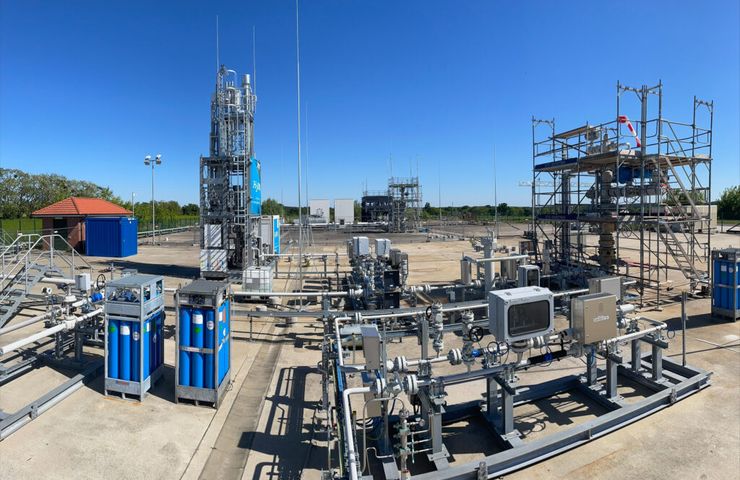
According to TEAL Mobility’s station directory, most of the nine Benelux hubs offer dual pressure dispensing at 350 and 700 bar to cater to a range of vehicle types. High-pressure equipment enables rapid refuelling for fuel-cell trucks without compromising turnaround times, while lower-pressure options serve light-duty applications.
Early Network Deployments
Earlier network deployments included the inauguration of a TotalEnergies-branded station in Deventer, according to TotalEnergies’ communications, which opened in 2024. That facility set a precedent for public hydrogen availability in the Netherlands and provided an operational testbed for supply logistics and station performance under real-world conditions.
Demand and Utilisation Thresholds
Industry analyses underscore that heavy-duty truck operators typically need annual mileages in the hundreds of thousands and consistent station throughput to realise cost benefits, according to the ICCT’s research. Low utilisation rates have challenged earlier deployments, and TEAL Mobility’s pricing initiative is intended to boost volumes toward the levels needed for sustainable station economics.
Policy Incentives Beyond Pricing
Beyond public pricing, hydrogen corridors may benefit from future regulatory tools including road-toll exemptions, grant funding and renewable-fuel credits, according to EU transport policy analysis. TEAL Mobility’s cross-border price could strengthen applications for such incentives by demonstrating customer traction and corridor viability.
Operational Verification
While TEAL Mobility lists these nine stations as operational, an exact verification of opening hours and service availability on launch day has not been independently confirmed. Prospective users should consult the company directory for the most up-to-date station status and technical specifications, according to TEAL Mobility’s online information.
TEAL Mobility’s initiative joins broader industry momentum for hydrogen in transport. Similar price measures could emerge as station networks expand and electrolytic capacity grows, potentially shaping competitive dynamics in the European hydrogen market, according to market analysts.