SoutH2 Declaration Advances Hydrogen Infrastructure Linking North Africa and Europe
The Algiers declaration establishes a UNIDO-backed technical secretariat to advance the SoutH2 Corridor, a planned 3,300 km renewable hydrogen pipeline from North Africa to Europe, with feasibility, financing and offtake agreements still pending.
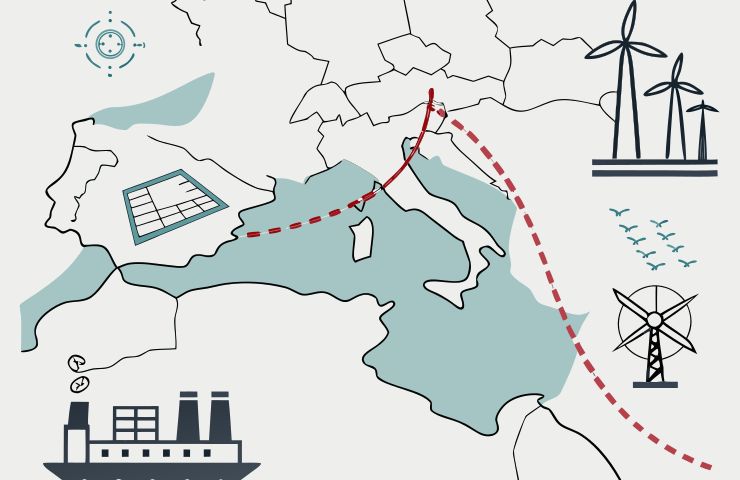
Energy ministers of Algeria, Tunisia, Italy, Austria and Germany gathered in Algiers and signed the Algiers Ministerial Declaration to advance the SoutH2 Corridor, according to official statements from Algeria’s energy ministry. The pact sets out a coordinated framework for what proponents describe as a roughly 3,300-kilometre hydrogen pipeline network. It is intended to move renewable hydrogen produced from North African solar and wind resources to industrial demand centres across Europe. The announcement frames the project as a response to Europe’s need for large-scale renewable hydrogen supplies and to North Africa’s ambitions for export-led energy development, according to official statements from Algeria’s energy ministry.
Building Political Momentum
The ministerial meeting in Algiers follows an earlier political declaration signed in Rome, and it establishes a dedicated technical-support secretariat with assistance from the United Nations Industrial Development Organization (UNIDO), according to the Algiers declaration. No construction contracts were awarded and no final investment decision was announced at the meeting. Rather, the gathering marks an institutional shift from bilateral talks toward a structured five-country feasibility process. The secretariat’s remit will include coordinating cross-border studies, driving regulatory alignment and carrying out technical validation of pipeline repurposing, export logistics and certification under emerging European hydrogen rules, according to the Algiers declaration.
Bridging North African Resources with European Demand
The SoutH2 Corridor is designed to connect abundant renewable generation in southern Tunisia and Algeria—where onshore wind and solar output is high—with principal entry points in Italy, Austria and ultimately Germany, according to Snam, the Italian transmission-system operator leading corridor development. By proposing links to existing gas-grid infrastructure, the concept seeks to reuse more than 65% of the planned pipeline route through asset repurposing. That approach, supporters say, could reduce the scale of new civil works required and better align the corridor with Europe’s wider renewable energy strategy, according to Snam.
Project Architecture and Capacity Targets
According to the corridor consortium led by Snam, the network could span roughly 3,300 kilometres and would have a design import capacity exceeding 4 million tonnes of renewable hydrogen per year. Project backers describe that figure as a targeted transport volume rather than an operational throughput. Italian-section planning by Snam encompasses about 2,300 kilometres of the route, and that stretch is eligible for co-financing under the EU’s Connecting Europe Facility, according to Snam’s project announcement. Several technical elements remain under study: conversion needs for compressors, metering arrangements, pipeline metallurgy and leak detection systems adapted for hydrogen’s lower volumetric energy density and embrittlement risks.
Tunisian and Algerian Production Plans
Tunisia has outlined a national green hydrogen strategy targeting approximately 8.3 million tonnes annually by 2050—about 6 million tonnes for export and more than 2 million tonnes for domestic use or derivatives—according to Tunisia’s Ministry of Industry, Mines and Energy. In parallel, TE H2 (a TotalEnergies and EREN Groupe joint venture) and Austria’s VERBUND signed a memorandum of understanding with Tunisia in mid-2024 to develop H2 Notos, a project framework that aims for an initial 200,000 tonnes per year of production in southern Tunisia, scalable to one million tonnes, according to TE H2 and VERBUND. Those twin tracks—national strategy and private joint ventures—underline Tunisian plans to build both long-term capacity and individual export-ready projects, according to Tunisia’s Ministry of Industry, Mines and Energy.
Algeria has launched the ALTEH2A feasibility study under Minister Mourad Adjal, seeking to identify optimal renewable hydrogen production sites, estimate cost trajectories, assess transport options through the Tunisian corridor and gauge European market demand, with initial results expected in 2027, according to Algeria’s energy ministry. The study is intended to map technical and economic choices and to feed into the cross-border feasibility work now coordinated by the new secretariat, according to Algeria’s energy ministry. Together, the North African initiatives present a dual track: long-range national export ambitions alongside near-term joint ventures aimed at bringing production capacity online.
Technical and Environmental Challenges
Delivering large-scale green hydrogen will require integrated planning across renewable power, desalination, electrolysis and pipeline systems. Seawater desalination is proposed to supply water for electrolysis in this water-scarce region, but it carries energy and brine-management costs. Industry reviews note that reverse osmosis plants consume significant electricity and demand careful brine discharge controls to mitigate marine impacts, according to industry reviews. Electrolysers must also manage variable renewable output and grid integration. Meanwhile, upgrading gas infrastructure to carry hydrogen calls for meticulous assessment of pressure ratings, compressor compatibility and steel embrittlement. Leak detection, meter calibration and safety protocols will need alignment with EU and national regulations, according to industry reviews.
Next Steps and Market Dynamics
With the technical secretariat now in place, participating governments plan to complete cross-border feasibility studies and regulatory alignment in the coming months, according to the Algiers declaration. Reaching final investment decisions will hinge on a combination of factors: securing financing—potentially through EU infrastructure grants and concessional capital—agreeing long-term offtake contracts, and obtaining renewable certification under the EU’s hydrogen and decarbonisation frameworks, according to the Algiers declaration. The timetable for those steps remains conditional on study outcomes and on market appetite for multi-decade supply agreements.
European policy drivers remain strong: the European Commission’s REPowerEU strategy sets an aspirational import target of 10 million tonnes of renewable hydrogen per year by 2030, according to the European Commission. The SoutH2 Corridor aims to capture a significant share of that volume, offering potential supply diversification to help decarbonise hard-to-electrify industrial sectors such as steel, chemicals and refining. Those sectors are cited as key demand centres where renewable hydrogen could substitute processes that cannot be readily electrified, according to the European Commission.
A Milestone, Not a Finish Line
The Algiers Ministerial Declaration represents an important political and institutional milestone in a multi-year effort, rather than evidence of an operational corridor. Moving from declarations to deliveries will hinge on feasibility outcomes, permitting, financing, and credible offtake agreements. As governments and industry partners pursue the next phase, the corridor’s ultimate success will depend on aligning technical solutions, environmental safeguards and equitable value creation for North African and European stakeholders. The ministers, their advisers and industry partners have opened a formal path. Much work remains before pipes carry hydrogen across continents.