SeaEly Advances Direct Seawater Electrolysis for Green Hydrogen Production
Fraunhofer IWES and IFAM developed test benches and membranes for direct seawater electrolysis, demonstrating initial feasibility for producing green hydrogen with untreated saline feedwater and establishing research infrastructure for further long-term studies.
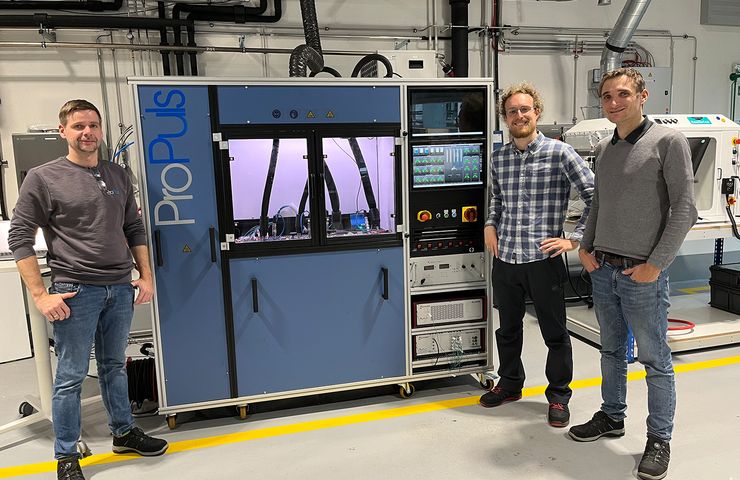
Fraunhofer Institute for Wind Energy Systems IWES coordinated SeaEly, a collaborative German research project that developed and tested electrolysis components and multipurpose test benches for direct electrolysis of untreated seawater and brackish water, according to Fraunhofer IWES. The project assessed whether saline feedwater could generate hydrogen and oxygen without full desalination. Its stated aim was to streamline water-treatment processes in coastal and offshore settings.
Most commercial electrolyzers depend on ultrapure water. That reliance typically requires energy-intensive desalination or purification and complicates siting near renewable-power sites. SeaEly set out instead to determine minimal water-treatment requirements by introducing chloride, suspended particles and organic matter characteristic of seawater directly into electrolyzer stacks, according to Fraunhofer IWES. If feasible, that approach could lower capital and operational costs for green hydrogen facilities adjacent to offshore wind and coastal solar parks.
Project Coordination and Test Infrastructure
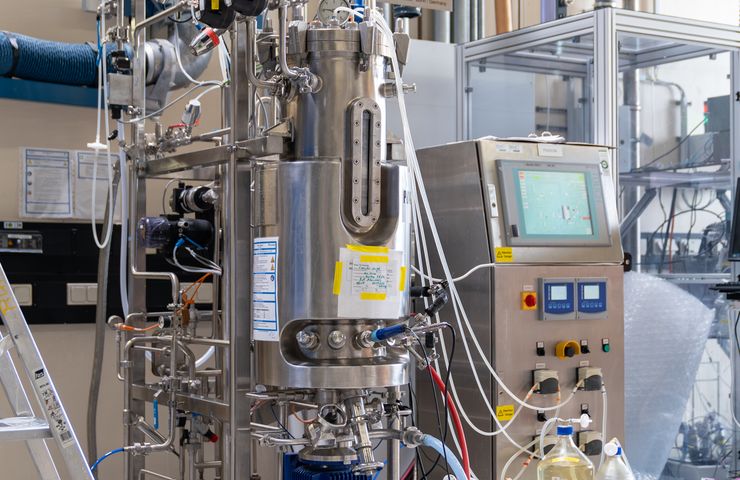
Fraunhofer IWES designed and constructed a modular electrolysis test bench at its Hydrogen Lab in Leuna, capable of accommodating lab-scale cells and pilot-scale stacks under defined saline conditions, according to Fraunhofer IWES. The bench combines programmable pumps, temperature control and real-time monitoring of voltage, current, gas flow and electrolyte composition. Researchers can switch between alkaline, PEM and AEM configurations within a single hardware setup, enabling direct performance comparisons. That flexibility supports stepwise scale-up studies by testing individual cells, short stacks and eventually larger modules, which helps reduce uncertainties when transitioning from laboratory demonstrations to more extensive pilot trials.
Group leader Nadine Menzel at IWES oversaw electrochemistry and analytics, focusing on how impurities in untreated seawater affect catalyst activity and membrane conductivity. Menzel’s team developed protocols to sample and analyze electrolyte before and after electrolysis. Those protocols provided data on corrosion products and dissolved contaminants and informed material-selection decisions.
Membrane Innovation and Component Analysis
The membrane is a critical component in direct seawater electrolysis. Fraunhofer IFAM engineered and characterized AEMs tailored for high-salinity service by adjusting polymer backbones and ion‐exchange chemistries to balance conductivity, mechanical strength and chemical stability, according to Fraunhofer IFAM. Under the supervision of Andreas Brinkmann, IFAM researchers fabricated membranes with reinforced structures designed to limit swelling and fouling.
Membrane samples were tested in synthetic seawater at various salinities and current densities. After operation, research teams used scanning electron microscopy, EDX, XPS and TOF-SIMS to identify deposit layers, surface-bound chlorine species and mechanical wear. While detailed performance metrics remain under review, Fraunhofer IFAM reports that these initial tests yielded promising indications of membrane resilience in saline environments, although further long-duration testing is required to quantify lifetime and efficiency losses.
Comparative Electrolysis Technologies
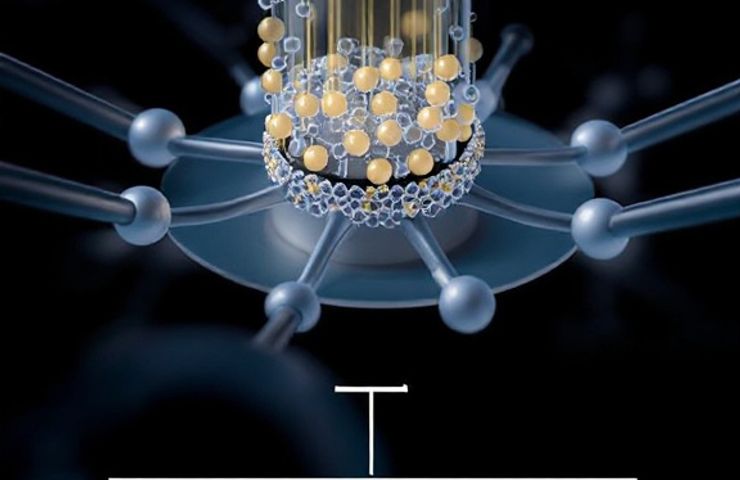
SeaEly ran head-to-head comparisons of three electrolysis approaches under saline feedwater. In alkaline electrolysis, a potassium hydroxide solution and a porous diaphragm separate electrodes; however, chloride ions can corrode cell components and degrade electrolyte purity. PEM electrolysis splits water on a proton-conducting membrane, but untreated seawater risks chlorine evolution at the anode and membrane damage. AEM electrolysis uses membranes that selectively transport anions like hydroxide, offering potential cost and durability benefits, though salt-induced swelling and fouling remain concerns. By operating each technology under identical salinity, temperature and current load, researchers gathered data on voltage efficiency, gas crossover rates and component degradation kinetics, according to Fraunhofer IWES and Fraunhofer IFAM.
Engineering Challenges of Seawater Electrolysis
Direct use of seawater introduces several engineering challenges. According to the European Commission Joint Research Centre, chloride oxidation can compete with the oxygen evolution reaction, producing chlorine or hypochlorite that attack catalysts and membranes. Suspended solids and organic matter create deposits on electrode and membrane surfaces, obstructing flow channels and increasing electrical resistance. SeaEly’s experiments measured chlorine release rates, electrolyte conductivity changes and structural damage to electrodes over multiple cycles. The measurements helped identify material coatings and operational strategies that mitigate corrosion and fouling, such as controlled rinse protocols or periodic polarity reversal.
Environmental and Regulatory Considerations
Using untreated seawater could reduce freshwater withdrawal and minimize brine waste from desalination, which would be advantageous in water-stressed coastal regions. Managing chlorine byproducts and discharge quality, however, will require treatment systems and permits, according to the Institute of Shipping Economics and Logistics. Regulatory frameworks for seawater intake and brine discharge must take local ecosystems into account. SeaEly’s post-mortem analyses of discharged electrolytes are intended to inform environmental impact assessments and support compliance with existing water-quality regulations.
Consortium and Funding
SeaEly brought together Fraunhofer IWES, Fraunhofer IFAM, Technische Universität Berlin, Whitecell Eisenhuth GmbH & Co. KG and the Institute of Shipping Economics and Logistics, according to project listings. Universities provided modeling and simulation expertise, industry partners supplied design and assembly support, and logistics researchers assessed supply-chain implications for coastal hydrogen production. Funding came from Germany’s Hydrogen Republic of Germany initiative, with Fraunhofer IWES reporting €1.57 million for its work package and the Institute of Shipping Economics and Logistics reporting €3.7 million for the overall SeaEly programme, according to project documentation.
Potential Applications and Next Steps
Direct seawater electrolysis could enable hydrogen production at coastal and offshore renewable energy sites without dedicated desalination plants, potentially lowering capital expenditure and simplifying plant layouts. Produced hydrogen may serve as a feedstock for ammonia synthesis, as an energy carrier for fuel-cell vehicles or for synthetic-fuel production. SeaEly’s multipurpose test benches are available to industry and academia for extended trials at higher current densities and over longer durations. Future studies will need to demonstrate that system efficiency, gas purity and component lifetime meet industrial standards under continuous operation, according to Fraunhofer IWES.
SeaEly ran from late 2022 to early 2026 under federal funding, according to Fraunhofer IWES. Its verified outcome is a validated research infrastructure, innovative membranes and comparative performance data for direct seawater electrolysis. The project stops short of delivering a commercial-ready system or claimed cost reductions, but it provides a robust evidence base for evaluating whether untreated seawater can replace purified feedwater in green hydrogen production.
SeaEly’s systematic approach—standardized testing across multiple electrolysis technologies and rigorous post-analysis of materials—equips researchers and industry with insights into degradation mechanisms and mitigation strategies. That research-driven foundation will inform decisions on coastal hydrogen hubs and guide the design of future electrolyzer systems built for saline environments.
SeaEly contributes essential data and test infrastructure to the emerging field of direct seawater electrolysis. As the green hydrogen economy grows, evidence-based projects of this kind will be critical in determining the most reliable and cost-effective pathways for decentralized hydrogen production.