A Groundbreaking Study on Enhancing Durability in Solid Oxide Fuel Cells
A new study from researchers at the Ordos Institute of Technology reveals how a samarium-doped ceria buffer layer can enhance the durability of solid oxide fuel cells, offering insights that could transform clean energy technologies.
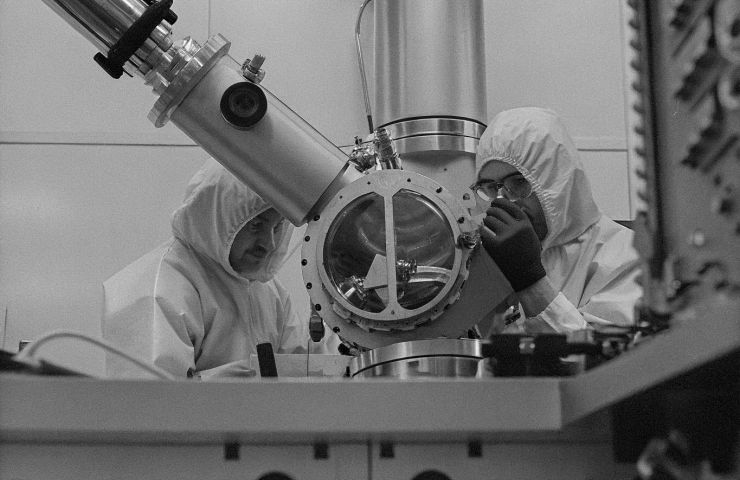
Researchers from the Ordos Institute of Technology in Inner Mongolia, China, have published an insightful study in the journal Ionics that tackles a persistent materials problem in fuel-cell research. The team set out to examine how different electrode arrangements influence both the short-term output and the longer-term stability of intermediate-temperature solid oxide fuel cells (SOFCs). Their paper focuses on a set of nickel-based designs and compares them under controlled laboratory conditions. The objective was practical: identify anode configurations that might improve durability without sacrificing too much performance, and thereby help move SOFCs closer to reliable, wider deployment in low-emission energy systems.
The study draws attention to the role of a specific interlayer. The researchers report that samarium-doped ceria (SDC) used as a buffer layer can improve operational stability for SOFCs while producing encouraging efficiency results. That finding is set against a broader context in which advances in clean hydrogen production and storage technologies matter to grid flexibility and decarbonization. In other words, materials-level innovations such as the one reported from Ordos can feed directly into the technical roadmap for cleaner energy solutions, provided the laboratory results translate into practical device improvements.
What this means is that the core materials at the anode–electrolyte interface are under renewed scrutiny. The researchers note that the high reactivity of conventional nickel electrodes with the La0.9Sr0.1Ga0.8Mg0.2O3 (LSGM) electrolyte has long been a limiting factor for sustained operation. To probe that issue they ran comparative experiments on three different nickel-based cermet anode configurations. One clear outcome from their tests was that configurations incorporating an SDC buffer retained voltage more reliably over time than those without such a layer. This was not simply a one-off observation but a repeatable trend across their test matrix.
The technology: The magic ingredient? The paper frames the SDC layer as a physical and chemical barrier that helps separate the reactive nickel phase from the LSGM electrolyte, thereby limiting the unfavorable interactions that drive degradation at the interface. In the experimental lineup the direct Ni/LSGM configuration recorded the highest peak power density of the group, yet it suffered from substantial voltage loss during extended operation. By contrast, the SDC-buffered configuration—while producing lower initial power—showed the strongest resistance to decline, registering just 6.9% degradation over 100 hours. That trade-off between early peak output and sustained voltage retention is the central materials engineering dilemma the authors highlight.
Support for the work came through regional research funding and institutional backing. The project received financial support from the Ordos Higher Education Institutions Scientific Research Innovation Project and the Natural Science Foundation of Inner Mongolia Autonomous Region. These funding sources, the authors write, made the comparative testing and extended-duration runs feasible. The paper positions such collaborative investment as essential for continuing investigations that bridge laboratory-scale experiments and the longer-term studies needed to assess practical viability.
Zooming out, the possible implications extend beyond the laboratory bench. If the stability advantages linked to an SDC buffer can be replicated in larger cells and stacks, manufacturers could see a pathway to lowering the lifecycle costs associated with SOFC systems. That follows because improved voltage retention reduces the frequency of performance-related replacements and maintenance, and because a more stable cell can allow system designers to prioritize longevity alongside performance. The authors use cautious conditional language, however, noting that successful scale-up remains an open question.
On the technical front there are still practical hurdles. The paper flags topics that will require further work, including manufacturing approaches that can incorporate SDC interlayers at scale and the need for comprehensive environmental impact assessments for any new production route. These are not minor details: production techniques and lifecycle considerations will shape whether a materials improvement becomes an industrial standard or remains a niche laboratory result. The authors underline that the interplay between durability and efficiency demands both materials insight and engineering development.
Now is the time for transformation! The study’s results invite a reassessment of how SOFC anodes are configured for intermediate-temperature operation. Researchers at the Ordos Institute present evidence that modest architectural changes at the microstructural level—such as inserting a samarium-doped ceria barrier—can shift the balance toward longer-lived performance. Yet they are careful to stop short of claiming an immediate commercial fix; instead they present their findings as a step in a longer process of validation, optimization and scale-up.
Now, what’s the final shot? The advancements coming from the Ordos Institute mark an inviting crossroads between laboratory innovation and potential application within the hydrogen energy sector. The paper suggests that exploration into SDC buffer layers illuminates a plausible path for reconciling durability with acceptable efficiency in intermediate-temperature SOFCs. If the stability and performance demonstrated in these controlled tests can be realized under real-world operating conditions, the community may be positioned to deploy more resilient fuel-cell systems that contribute to cleaner, more efficient energy solutions.