Hydrogen news
Scientists may have found a solution to plastic pollution
Japanese scientists have discovered bacteria that eat old plastic. Microbiologists in Japan have found a plastic-eating species of bacteria, which they uncovered after skimming through waste and soil samples at a plastic recycling plant. The newly discovered microbe eats one kind of plastic called polyethylene terephthalate, better known as PET. This form of plastic is the most abundant on Earth and is most commonly used in water and soda bottles, but can also be found in carpet, clothing fibers such as fleece, plastic jars, potato chip bags, and so on. While some of it is recycled, a large p…
Japanese scientists have discovered bacteria that eat old plastic.
Microbiologists in Japan have found a plastic-eating species of bacteria, which they uncovered after skimming through waste and soil samples at a plastic recycling plant. The newly discovered microbe eats one kind of plastic called polyethylene terephthalate, better known as PET. This form of plastic is the most abundant on Earth and is most commonly used in water and soda bottles, but can also be found in carpet, clothing fibers such as fleece, plastic jars, potato chip bags, and so on. While some of it is recycled, a large portion ends up as plastic pollution.The bacteria could break down plastic in six weeks.
According to a report from PBS, the new study that was published in the journal Science found that while PET typically takes between five and ten years to naturally break down, the bacteria can deteriorate the plastic in as little as six weeks. Researchers say that this discovery could play a vital role in how we deal with our world’s growing plastic pollution problem. Kohei Oda, co-author of the study and a microbiologist of the Kyoto Institute of Technology in Japan, said, “I was very surprised to find microorganisms that degrade PET, because so far, it has been said that PET is a nonbiodegradable plastic.”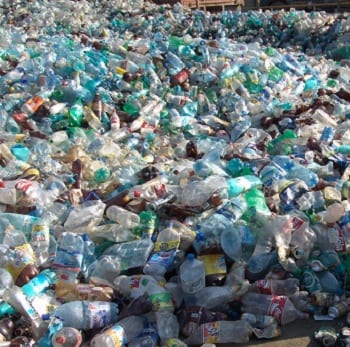
Although PET has the highest recycling rate in the world it is still a huge contributor to plastic pollution.
Back in 2014, humans produced 311 million metric tons of plastic, which is about equal to 3,500 of the largest aircraft carriers in the world. While PET does have the highest recycling rate compared to any other type of plastic in the world, still, almost half of it isn’t recycled, which makes discovering this bacteria particularly exciting. The researchers who discovered the microorganism that can devour PET called it “Ideonella sakaiensis”. It has the ability to penetrate the surface of PET, which is known for its resistance to bacteria attacks. Ideonella sakaiensis breaks apart its chemical bond, which is what makes this new bacteria species particularly unique, according to Uwe Bornscheuer, a German biochemist who was not a part of the research team. Now that the study has been published, many scientists are likely to investigate new options for these bacteria, especially when it comes to dealing with the growing plastic waste problem in the world’s oceans. Presently, it is believed that the world’s oceans contain anywhere from 15 to 51 trillion micro-sized plastic particles. Bornscheuer said that, in theory, the bacteria should also work in water. While this would be ideal for helping to irradicate plastic pollution in the ocean, studies will need to be conducted to find out if the bacteria can survive in the salt water, which can also dramatically change in temperature.How was this article?
Thanks for the feedback!