Schleswig-Holstein Commits €3.65M to ITE for Green Hydrogen, Heat and Grid Integration Research
Schleswig-Holstein channels €3.65 million into FH Westküste’s ITE to secure research on heat, green hydrogen, grid integration and smart buildings through 2030.
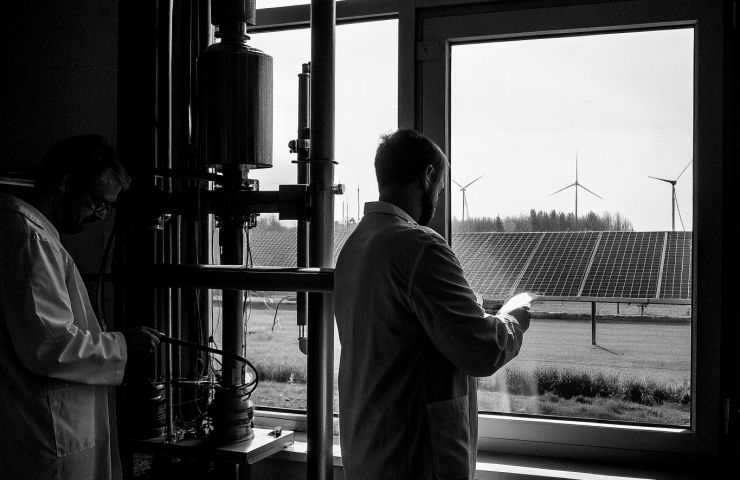
This month, Land Schleswig-Holstein announced a new funding boost of 3.65 million euros for the Institute for the Transformation of the Energy System (ITE) at FH Westküste in Heide. This support, which will extend through 2030, aims to enhance applied research and technology transfer in areas like heat decarbonization, green hydrogen production, grid integration, and building technology.
Key Takeaways
- This long-term commitment aligns with the state's hydrogen strategy and sector-coupling goals.
- Focus areas include efficient heating solutions, hydrogen generated through electrolysis, grid stability, and smart building technologies.
- This latest funding builds on previous state support, giving researchers added planning certainty for four more years.
- Underlying framework: Landeskompetenzzentrum Energiewendeforschung and Landesförderfonds Energiewendeforschung.
Regional Renewable Profile
Schleswig-Holstein stands out as one of Germany’s most wind-rich regions, boasting both onshore and offshore turbines that often generate surplus power. A creative solution to storing this excess renewable energy is converting it into green hydrogen through electrolysis. This method not only helps store renewable energy but also provides a way to energize hard-to-electrify sectors and even smooth out grid fluctuations.
Institutional Ecosystem
The ITE is hosted by the FH Westküste, a well-regarded university of applied sciences known for its interdisciplinary approach to engineering, economics, and regulatory studies. They work hand-in-hand with the Gesellschaft für Energie und Klimaschutz Schleswig-Holstein (EKSH), which manages the state's research centers and funding initiatives.
Technical Focus
The institute is diving into several key areas:
- Heat systems: They're working on integrating heat pumps, thermal storage, and low-carbon supply chains to make buildings more energy-efficient.
- Hydrogen value chain: This includes everything from electrolysis and storage solutions to pipeline integration and practical demonstrations of hydrogen use.
- Grid integration: They're focused on managing variable renewables and flexible loads to help decrease congestion on the grid.
- Building technology: Smart controls and automation that transform buildings into active participants in the energy grid are also on the agenda.
For example, producing green hydrogen can take advantage of peak wind output, allowing energy to be stored in tanks or caverns for later industrial use or converted back into power and heat. Their research into net integration employs advanced simulation tools to better coordinate solar farms, battery arrays, and flexible industrial loads, ultimately aiming to cut costs and improve reliability. Meanwhile, their work on smart buildings encompasses everything from automated thermostats to digital twins that shift energy consumption based on grid demands.
Policy and Industry Alignment
This funding initiative falls neatly into an established framework. Under EKSH’s Landeskompetenzzentrum Energiewendeforschung and Landesförderfonds Energiewendeforschung, the state is directing resources to strategic areas like hydrogen, net integration, and lowering building emissions. The state ministry for higher education and research makes sure these projects align with broader climate and economic goals.
- Continuous support since 2019 has laid a solid foundation; this latest funding extends that security through 2030.
- Collaborators include local utilities, technology providers, and city planners.
- Research outcomes will directly influence pilot projects and regional planning studies.
Strategic Implications
With four more years of secured funding, ITE researchers can really dig into creating demonstration facilities, fine-tuning digital planning tools, and forging partnerships with industry players focused on decarbonization pathways. Local businesses can leverage the institute’s expertise to develop processes ready for hydrogen or retrofit buildings to be more energy-efficient.
In a competitive landscape where regions vie for specialized talent, Schleswig-Holstein strengthens its position by anchoring a dedicated applied research hub along the west coast. The ITE’s efforts in hydrogen storage, distribution, and sector coupling will also help shape the future of clean hydrogen corridors throughout the North Sea region.
Looking Ahead
In the coming years, stakeholders will be watching how the ITE:
- Develops integrated pilot projects in smart neighborhoods and municipal campuses.
- Teams up with electrolysis manufacturers and pipeline operators to roll out green hydrogen.
- Advances sector-coupling models for energy planners and grid operators.
- Contributes to policy reviews on safety, regulation, and market structures for hydrogen networks.
With research and transfer capabilities secured through 2030, Land Schleswig-Holstein is sending a clear message: hydrogen and integrated energy systems are at the heart of its journey towards climate neutrality. The ITE’s expanded mission paves the way for practical projects that can transform renewable power into low-carbon heat, transportation, and industrial resources.
For companies, utilities, and policymakers, keeping an eye on ITE’s findings will be essential to transitioning from lab results to tangible energy solutions.