Asahi Kasei and Power to Hydrogen Collaborate on Next-Gen Anion Exchange Membrane Electrolysis
Asahi Kasei and Power to Hydrogen, Inc. have signed a memorandum of understanding to explore commercialization pathways for anion exchange membrane (AEM) water electrolysis systems aimed at producing clean hydrogen.
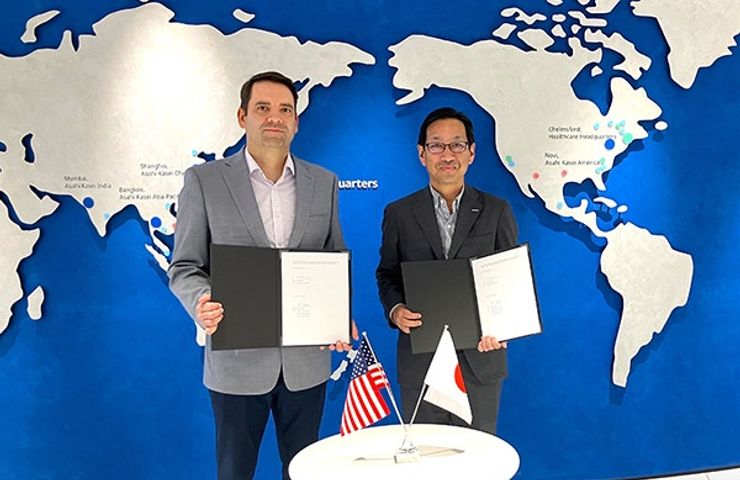
Asahi Kasei Corporation of Japan has signed a memorandum of understanding (MOU) with U.S.-based Power to Hydrogen, Inc. (P2H2) to explore the commercialization pathways for anion exchange membrane (AEM) water electrolysis systems. The agreement seeks to leverage P2H2’s innovative AEM technology along with Asahi Kasei’s substantial expertise in electrolysis manufacturing and commercialization. It is framed as a cooperative effort to evaluate how AEM systems might be scaled and deployed to meet demand for clean hydrogen. The MOU does not, at this stage, commit either party to production investments or to defined production capacities.
Key Highlights of the Agreement
- Parties Involved: Asahi Kasei Corporation and Power to Hydrogen, Inc.
- Objective: Evaluate manufacturing scale-up and pathways for AEM technology commercialization.
- Scope: This is a collaborative framework and does not currently include confirmed production investments or capacities.
- Context: The MOU was announced in Tokyo, Japan, highlighting a significant partnership between a leading Japanese firm and an American clean-hydrogen innovator.
The companies describe the collaboration as a means to combine complementary strengths. Asahi Kasei brings established capabilities in electrolysis manufacturing and the commercial know‑how that comes with that experience. P2H2 contributes its AEM technology and what the companies frame as practical deployment experience. Together they plan to assess technical and commercial hurdles that must be cleared before AEM electrolysis could be adopted at industrial scale.
Assessment is the immediate task. That includes reviewing manufacturing pathways that would support higher production volumes of AEM systems and examining commercialization routes that could move the technology beyond pilot and demonstration projects. The MOU therefore sets up a structured process for evaluation rather than a firm production timetable. In other words: collaboration, not a production guarantee.
Technical Insights into AEM Technology
AEM electrolysis is distinguished by its use of an anionic membrane within an alkaline environment. This configuration contrasts with proton exchange membrane systems and conventional alkaline electrolysers. One practical implication, as framed by the parties, is the potential to rely on lower-cost, non-precious metal catalysts rather than the expensive materials typical of some proton exchange membrane (PEM) systems. That, the companies say, could help make AEM attractive for broader uptake if other technical and durability questions are resolved.
Flexibility is another characteristic the partners highlight. AEM systems are said to be well suited to operate with variable power input, which makes them potentially compatible with the intermittency of renewable energy sources. In use cases where electricity supply fluctuates, that operational flexibility could matter. Yet AEM remains a less mature option compared with established alkaline and PEM technologies, and that immaturity is central to the work the MOU sets out to do.
The technical challenges are explicit. Membrane degradation, catalyst stability, and operational efficiency during dynamic cycling are named as priority issues for further testing and validation. These are not presented as hypothetical concerns but as concrete areas where empirical evidence is needed to judge whether an AEM approach can meet the durability and performance thresholds required by industrial hydrogen producers and their customers.
To be clear: the partnership is aimed at rigorous evaluation. That means lab work, extended testing under real operational profiles, and studies focused on how membranes and catalysts hold up under cyclic loads. It also implies engineering work to translate cell- and stack-level performance into manufacturable modules, and then into repeatable production processes. All of those steps must be demonstrated before the companies would move from the MOU’s exploratory phase to any form of committed manufacturing investment.
Market Context and Future Implications
The collaboration arrives amid a rapidly evolving landscape for hydrogen production, primarily driven by significant policy advancements supporting hydrogen infrastructure. In that context, the MOU is presented as strategically aligned with national and international goals to expand low-carbon hydrogen supply chains. Notably, the draft references Japan's hydrogen strategy, which aims for a substantial increase in electrolyzer installations globally by 2030. That objective provides a policy backdrop for the technical and commercial work these two firms have agreed to pursue.
Power to Hydrogen brings tangible deployment experience to the table. The company points to a recent 500 kW commercial deployment at the Port of Antwerp-Bruges as evidence that its AEM approach is moving from laboratory concept toward real-world application. At that reference site, the system is designed to supply up to 70 metric tonnes of hydrogen annually, primarily for regional users. Those figures serve as a practical benchmark for the kinds of outputs the partners will consider when thinking about scale and economics under the MOU.
These reference numbers are important because they frame expectations without promising replication. A 500 kW deployment and a projected supply of up to 70 metric tonnes per year at a single site do not, by themselves, prove economic viability at larger scale. Instead, they provide a starting point for technical validation and for cost and supply modelling. The MOU is positioned as the mechanism through which those next-stage assessments will be carried out.
Market uptake will ultimately depend on several interlocking factors. Technology performance under real operating conditions is one. Manufacturability and the ability to scale production in a cost‑effective way is another. Policy support and the development of hydrogen infrastructure to receive and move produced hydrogen will also matter. The parties to the MOU have framed their work to address these linked issues, while noting that the agreement itself does not create binding production commitments.
Conclusion
The collaboration between Asahi Kasei and Power to Hydrogen emphasizes a proactive approach towards enhancing hydrogen production technologies. Over the coming months, the companies say they will work through the technical and commercial questions that determine whether AEM electrolysis can be a viable option at industrial scale. Their effort will serve as a test of AEM technology's readiness within a competitive hydrogen-production landscape. As the world looks to reduce carbon emissions, the outcomes of this MOU could influence how AEM systems are judged as a route to increased green hydrogen production.