Hydrogen news
Solar landfill turns unusable land into green energy
A 2 megawatt photovoltaic plant in Rutland Vermant is being constructed on a 9.5 acre closed landfill. Although some Rutland residents have been opposed to plans for building large photovoltaic (PV) systems in the region, as the concern is the large, ground-mount solar arrays will blemish Vermont’s pastoral landscape, Green Mountain Power’s 2 megawatt (MW) PV plant has been welcomed because it will be built on a closed landfill, effectively making it a solar landfill. Many cities and towns across the US are building solar farms on unusable land. The number of solid waste landfills that accept…
A 2 megawatt photovoltaic plant in Rutland Vermant is being constructed on a 9.5 acre closed landfill.
Although some Rutland residents have been opposed to plans for building large photovoltaic (PV) systems in the region, as the concern is the large, ground-mount solar arrays will blemish Vermont’s pastoral landscape, Green Mountain Power’s 2 megawatt (MW) PV plant has been welcomed because it will be built on a closed landfill, effectively making it a solar landfill.Many cities and towns across the US are building solar farms on unusable land.
The number of solid waste landfills that accept household garbage is on a major decline in the United States. The number of these active landfills has gone from almost 8,000 in the late 1980’s to fewer than 2,000 by the mid 2000s. With so many closed landfills in the country, as well as closed cells on landfills that are still active, this has left many wondering what to do with these massive areas of land that are completely unusable and underdeveloped. The trouble is the land is often disrupted or it is contaminated, which makes it unsuitable for the development of residential or commercial buildings. However, as it turns out, by converting these brownfields into solar farms, this is an effective way to save on energy costs and generate revenue. Like Rutland, many cities and town across the United States have started to install solar panels at closed waste sites, including the states of Nevada, Colorado, Massachusetts and Georgia.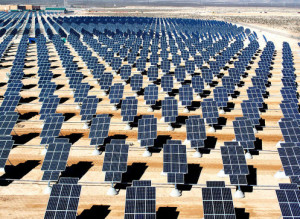
Solar landfills are usually cheaper and have less of a negative impact on communities.
It is typically less expensive to build a solar energy plant on a landfill site and fewer people in the community are concerned about solar installations compared to when they are built on a greenfield site. Furthermore, many municipalities do not have huge areas of green space, but there are plenty of old municipal landfills. In fact, it is estimated that there are more than 10,000 of them in the US and many of them are located near existing utility grids. Massachusetts is currently leading the way in turning its closed waste sites into solar landfills. Amy McDonough told the Rocky Mountain Institute that, “Putting a solar energy generating system on land that couldn’t be used for anything else and that will save the municipality millions of dollars over the terms of the PPA is a win-win situation.” McDonough is the senior project developer for Borrego Solar, the PV financing and contracting company that has done much of the work in repurposing landfills in the state.How was this article?
Thanks for the feedback!