
Hydrogen news
Hydrogen storage research Begins in CGG and U of E collaboration
The University of Edinburgh’s GeoEnergy research group and CGG are examining subsurface opportunities. Multinational geoscience surveying services company CGG and the GeoEnergy research group from the University of Edinburgh have teamed up to pursue subsurface hydrogen storage in depleted gas fields. H2 is expected to be a leading fuel in global decarbonization but storing it will require care and study. Large-scale, affordable and reliable hydrogen storage options will be required if H2 is to become a viable alternative to fossil fuels such as natural gas. Many countries and regions are look…

The University of Edinburgh’s GeoEnergy research group and CGG are examining subsurface opportunities.
Multinational geoscience surveying services company CGG and the GeoEnergy research group from the University of Edinburgh have teamed up to pursue subsurface hydrogen storage in depleted gas fields.H2 is expected to be a leading fuel in global decarbonization but storing it will require care and study.
Large-scale, affordable and reliable hydrogen storage options will be required if H2 is to become a viable alternative to fossil fuels such as natural gas. Many countries and regions are looking into opportunities to replace natural gas with H2 or at least create a blend of the two for domestic heating, manufacturing, industry and energy. That would require massive volumes, which means that storing it aboveground would be impractical.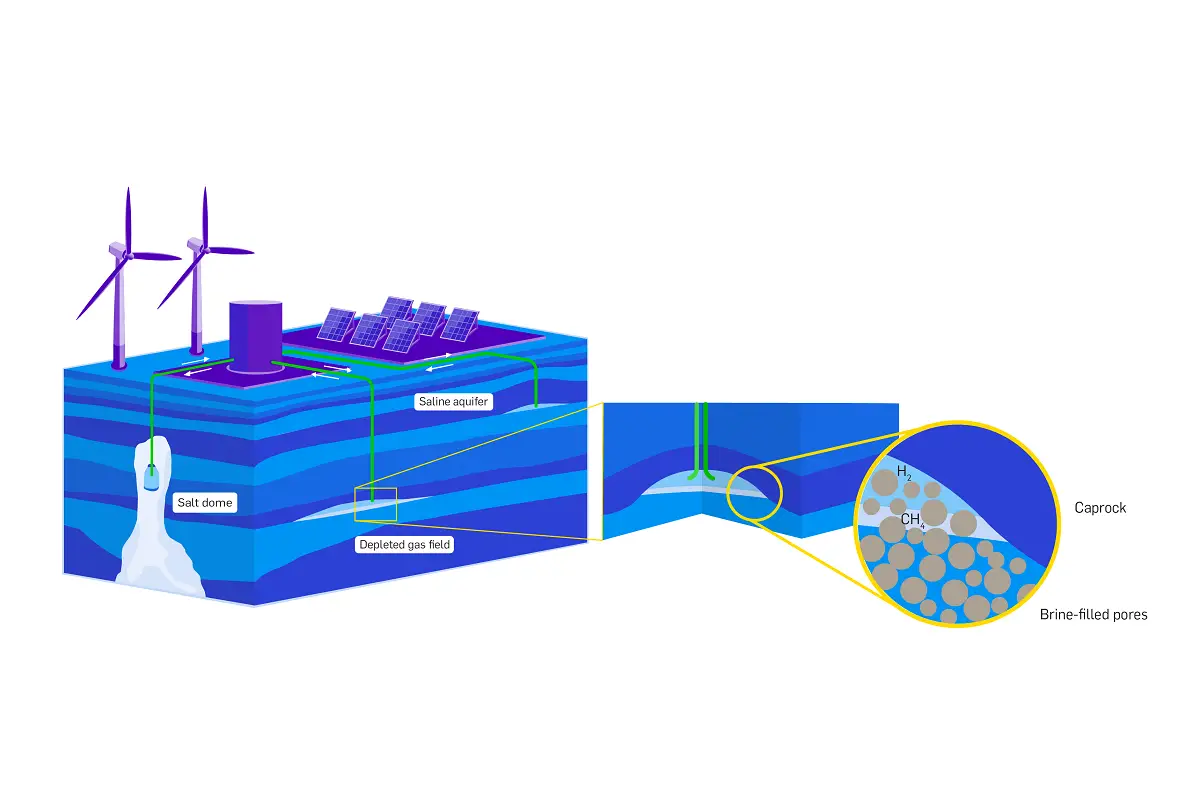 Therefore, the new collaboration is looking into the possibility of repurposing depleted gas fields to fill this requirement.
Together they intend to model the heterogeneity of the subsurface geological reservoirs from the depleted gas fields. This will allow them to determine which among them are the most promising as potential hydrogen storage sites. They will also look into other possible strategies such as alternative cushion gases – such as carbon dioxide – for use in decreasing operational storage.
Therefore, the new collaboration is looking into the possibility of repurposing depleted gas fields to fill this requirement.
Together they intend to model the heterogeneity of the subsurface geological reservoirs from the depleted gas fields. This will allow them to determine which among them are the most promising as potential hydrogen storage sites. They will also look into other possible strategies such as alternative cushion gases – such as carbon dioxide – for use in decreasing operational storage.
The hydrogen storage project could help to make H2 a feasible fossil fuel replacement in the region.
The project results are considered to be vital for the progress the energy industry and its regulators intend to make in the use of H2. Those outcomes will be central to their improved decision making for efficient and appropriate sites for storing H2 and for optimization strategies.[aweber listid="6179904" formid="497551345" formtype="webform"] The CCS & Energy Storage group from CGG has been working closely with the GeoEnergy research group from the University of Edinburgh for more than four years. They have worked as advisors to the UK Hydrogen Storage in Porous Media (HyStorPor) research project, of which they are currently the leaders. They have also been supervisors of MSc dissertation students and have collaborated in a number of different projects focused on storing H2. “Our participation in this important research project will draw on CGG’s geoscience expertise and technology leadership and demonstrates our commitment to working with research partners such as the University of Edinburgh to develop the knowledge and solutions that will best support the energy transition,” said CGG VP of Energy Transition & Environment Dave Priestley. “Specifically, we are keen to leverage our long-standing expertise in subsurface storage evaluation, reservoir modelling, engineering, instrumentation and monitoring to support the global effort to better understand the role that hydrogen can play in the future energy mix required to meet net-zero targets,” added Priestley.How was this article?
Thanks for the feedback!