Hydrogen Fuel Cell Technology Set for Takeoff with KLM-Dash 8 Retrofit Project
KLM, Transavia, and Conscious Aerospace team up to retrofit a Dash 8-300 with a 2.1MW hydrogen-electric propulsion system. The project could mark a turning point for zero-emission regional flight.
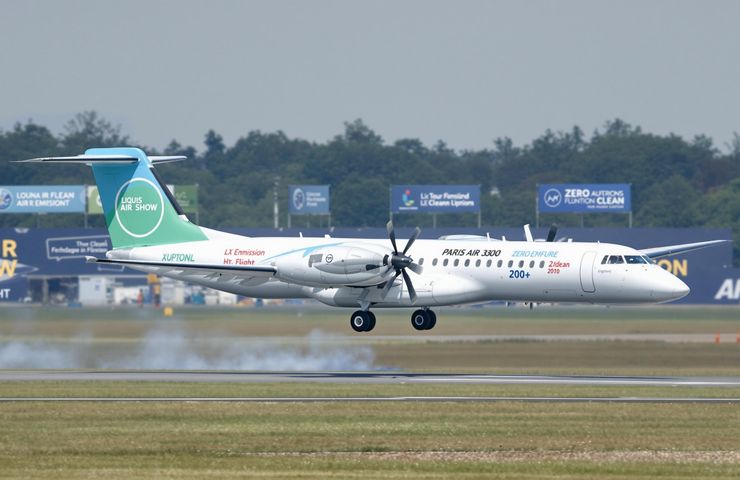
Hydrogen fuel cells might finally be getting their moment in the spotlight—this time, at 30,000 feet. At the upcoming 2025 Paris Air Show, KLM Royal Dutch Airlines, its low-cost arm Transavia, and tech trailblazer Conscious Aerospace unveiled plans for something seriously ambitious: they’re teaming up to retrofit a De Havilland Dash 8-300 with a 2.1MW hydrogen-electric propulsion system. In plain speak, they’re taking a respected regional workhorse and giving it a zero-emissions heart transplant.
Getting Serious About Cutting Emissions
This isn’t just another eye-catching announcement at a high-profile air show. The signed Memorandum of Understanding (MoU) signals something much bigger: a fresh, full-on commitment to slashing aviation’s carbon footprint, which still hovers around 2–3% of global CO₂ emissions. While advancements like sustainable fuels and slightly more efficient engines have been helpful, they don’t fully solve the problem. This new system? It could. Using hydrogen fuel cells, the only thing it leaves behind is water vapor.
And the star of this transformation? The rugged, reliable Dash 8-300, a regional favorite around the world. Conscious Aerospace is reimagining it by replacing fossil fuels with a fully electric propulsion system powered by hydrogen fed into fuel cells. It’s clean, it’s quiet, and they believe it can scale—making it a serious contender for greener skies.
Why These Partners, and Why Now?
Conscious Aerospace is leading on the tech front, but they’re not doing it alone. Real-world expertise from KLM and Transavia brings operational insight to the table—things like route planning, maintenance, passenger needs, and actual costs per seat-mile. That frontline knowledge is exactly what it’ll take to turn a promising prototype into a plane that fits into regular flight schedules.
They’re starting small for a reason. Short-haul regional flights are the low-hanging fruit: they need less fuel, and storing liquid hydrogen is less of an issue. Plus, the political winds in the EU are blowing in their favor—domestic-focused, lower-emission routes line up nicely with climate goals and public opinion. It’s the testing ground for tech that could eventually go intercontinental.
And it’s not just the airlines getting their hands dirty. EASA (European Union Aviation Safety Agency) and the Dutch Ministry of Infrastructure and Water Management are already involved. That’s key—because you can’t take these planes to the skies without the regulators onboard, literally and figuratively.
Hydrogen's Hurdle: Infrastructure on the Ground
So, the plane’s future-ready—but what about the airports? That’s where the rubber hits the runway. Right now, there’s almost no hydrogen infrastructure to speak of when it comes to airport fueling, especially for cryogenic liquid hydrogen. Building out that support system is a massive task, involving everything from safe storage systems to retraining ground crews to handle an entirely new fuel.
But big moves like this drive progress. The fact that established players like KLM and Transavia are involved gives the whole project legitimate momentum. They’re not just testing ideas—they’re building a pathway toward making them operational, with ticketed passengers and commercial payloads on board.
Riding the Climate Wave
The timing couldn’t be better. Climate accountability in aviation is picking up pace, especially in the EU, and hydrogen’s having a bit of a moment. With green hydrogen capacity rapidly expanding across Europe, and climate commitments becoming non-negotiable, the industry is hungry for real solutions. And what better platform to make noise than the Paris Air Show—it’s where aviation, policy, and emerging tech collide.
For the Netherlands in particular, this project makes a bold statement: they’re not waiting for someone else to lead the charge. They're rolling up their sleeves and taking aim at decarbonizing flight one regional route at a time—even if there are still plenty of turbulence and crosswinds ahead.
Cleared for Demo Flights—Eventually
Now, don’t expect to book a seat on one of these hydrogen-fueled Dash 8s just yet. The next few years will be all about R&D, technical validation, simulations, cost modeling, and rigorous safety checks. But late this decade? That’s when we may start seeing demo flights take off, paving the runway for future fleets.
And yes, the first versions might not carry as many passengers as the original layout allowed. Some cargo and luggage space will need to make way for those big hydrogen fuel cells. But this is the trade-off for pioneering zero-emission technology. Over time, the goal is to refine the system to restore capacity without compromising on sustainability.
The bottom line? If this works, it could be a game-changer—not just in theory, but in real-life aviation. It’s a high-stakes, high-reward bet: regional routes first, but a long-term vision that could transform the entire industry. This is innovation with wings—and it’s aiming straight for a cleaner sky.