Hydrogen Storage: CB&I’s Non-Vacuum Liquid Hydrogen Tank Milestone at NASA Marshall
CB&I completed the first fill of its non-vacuum liquid hydrogen tank at NASA Marshall, advancing efforts to commercialize lower-cost, large-scale hydrogen storage.
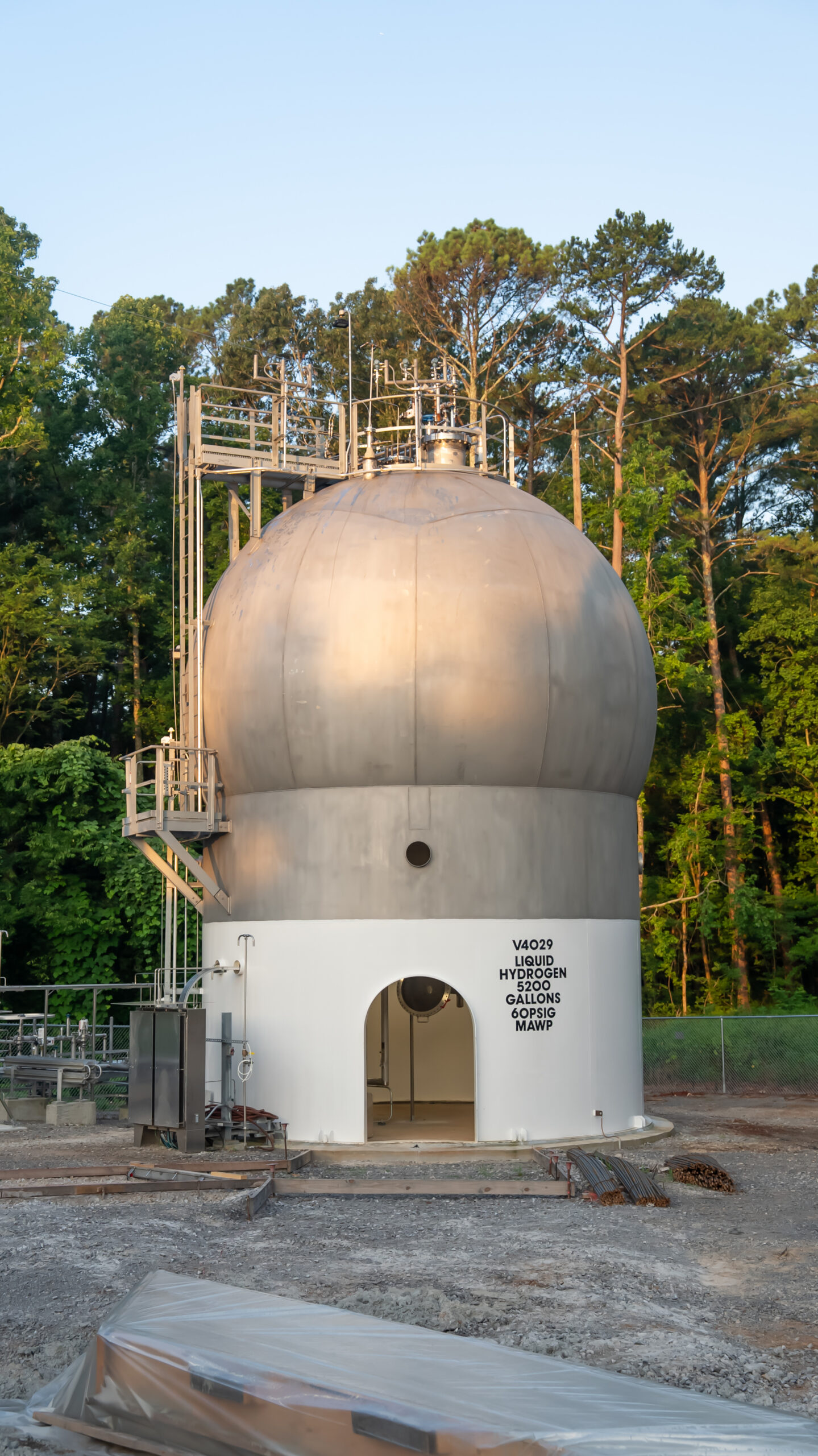
With hydrogen gaining traction as a clean fuel and a key player in industry, one big question looms: how can we store liquid hydrogen efficiently without breaking the bank or complicating things? Recently, CB&I hit a notable milestone by successfully filling its non-vacuum liquid hydrogen demonstration tank at the NASA Marshall Space Flight Center in Huntsville, Alabama.
This occasion was a team effort, gathering partners like Shell International Exploration and Production, Inc., GenH2, and the University of Houston to explore an innovative alternative to the vacuum-insulated tanks that have been the norm for large-scale liquid hydrogen storage for years. By steering away from the traditional vacuum design, the goal here is to simplify construction, cut down on costs, and achieve storage capacities that would usually be tricky to realize on-site.
Each partner brings something special to the table: Shell shares insights on market dynamics and logistical scenarios for hydrogen trade, while GenH2 brings expertise in liquefaction and handling technology. Meanwhile, research teams from the University of Houston lend their prowess in materials characterization and thermal modeling. Together, they're not just building a tank; they're working to streamline the entire hydrogen supply chain.
Testing a Fresh Insulation Strategy
Typically, large liquid hydrogen (LH2) tanks rely on vacuum insulation, filled with perlite or similar materials to minimize heat gain and prevent loss from boil-off. While this approach works, these vacuum-insulated systems can be pricey to construct and maintain, and scaling them up can lead to structural issues. The new demonstration is taking a different route, employing advanced insulation materials and a clever tank wall design that limits heat transfer, keeping hydrogen close to its liquefaction point of around 20 K—without needing a full vacuum barrier.
Engineers at the NASA Marshall Space Flight Center, who've got a wealth of experience in cryogenic fluid management, filled the demo tank with liquid hydrogen under carefully controlled conditions. They've equipped the tank with instruments to monitor thermal performance, pressure behavior, and boil-off rates during several fill and drain cycles. This data is crucial to determine if this non-vacuum setup can match traditional designs in storing LH2 efficiently while simplifying the process.
Inside the tank, sensors for temperature and pressure will monitor any fluctuations in heat flow, while external systems will log surrounding conditions. These readings will feed into computational models that enhance the predictions about how well the insulating materials perform. In upcoming tests, the team's planning to cycle the tank through multiple fills and drains to stress-test seals, valves, and insulation under realistic conditions.
Why Huntsville is Key
Huntsville holds a significant place in U.S. space history, dating back to the early rocket programs, bolstered by Marshall’s focus on propulsion and cryogenics. The locale offers specialized infrastructure and a crew that knows the ins and outs of super-cold propellants. For this demonstration, Marshall acts as both the testing ground and a source of credible technical validation, ensuring the findings meet the high standards established by NASA over the years.
What's at Stake and the Road Ahead
This project is part of a larger push to commercialize hydrogen storage for industrial use and global trade. CB&I sees the non-vacuum approach as a means to lower capital costs and unlock new logistics opportunities, such as import terminals and maritime supply chains. If this initiative succeeds, it could open doors to new markets with a cost structure that competes better against the vacuum-jacketed tanks currently in use.
CB&I is suggesting that the non-vacuum design could slash capital expenditures significantly compared to traditional tanks, though they haven’t disclosed specific figures. The company believes that easier field assembly and a reduced need for high-grade vacuum systems will drive these savings, making LH2 import terminals more viable, especially in areas with limited industrial setups.
However, it’s worth noting that this initial fill is just a stepping stone toward full commercial use. They still have a list of things to validate—think long-duration performance, safety checks, and side-by-side cost comparisons. Managing boil-off, ensuring system durability, and aligning with pressure-vessel and cryogenic standards will all influence whether the industry embraces this new idea.
A Legacy of Cryogenic Breakthroughs
CB&I’s partnership with NASA spans back over sixty years, starting in the 1960s with the construction of the agency’s first LH2 storage spheres at the Kennedy Space Center. Those vacuum-insulated tanks played a crucial role in missions like Apollo, the Space Shuttle, and today’s Artemis initiatives. This history highlights a trend: advancements in space-related cryogenics often spark new engineering techniques that ultimately benefit civilian energy infrastructures.
This demonstration also has the backing of the U.S. Department of Energy, which is funneling resources into liquid hydrogen storage research and development through workshops and funding. The collaboration between the DOE and NASA highlights a national interest in building efficient hydrogen supply chains for both space and energy applications here on Earth.
Meanwhile, both NASA and the DOE have been exploring various strategies—like zero-boil-off technologies, active cooling methods, and heat-exchanger integration—to tackle LH2 losses. The non-vacuum tank at Marshall fits into this wider initiative, emphasizing simplicity and scalability.
Searching for Balance: Optimism Meets Reality
The excitement around non-vacuum liquid hydrogen storage isn’t just rosy; there are challenges to be mindful of too. Industry experts point out that large LH2 systems have to tackle flammability issues, insulation wear over time, and the energy costs associated with keeping hydrogen at 20 K. The anticipated savings hinge on how well these technologies perform in real-world conditions and how resilient the new insulation proves under repeated thermal cycles.
Independent studies highlight that any fresh insulation method must consider real-world aging, moisture infiltration, and mechanical stresses. We know vacuum degradation is an issue in traditional tanks, and the new non-vacuum systems will also face their own set of risks if materials compress or settle. Ongoing research will need to look at how maintenance practices and material replacements can influence the long-term costs of operation.
Beyond the technical side, regulatory frameworks will play a vital role too. Pressure-vessel codes, cryogenic safety guidelines, and local permitting processes can vary widely. Data gathered from the Marshall demonstration will act as a reference for regulators considering future commercial builds. Industry groups and classification societies might update design standards based on performance data, which could pave the way for wider adoption.
Looking to the Future
By taking the non-vacuum design from ideas to a filled test tank, CB&I and its partners have made a crucial early leap toward reshaping the economics of hydrogen storage. The next steps will involve checking boil-off over time, figuring out what maintenance looks like, and refining insulation materials based on what they learn through hands-on experience.
If this design proves to be as effective as it promises, it could change how various industries—from shipping to energy generation—approach hydrogen logistics. More widely, this project illustrates how decades of aerospace know-how in cryogenic fluid management can accelerate the shift toward cleaner energy. Whether this non-vacuum tank becomes the new go-to standard is still in the air, but the latest developments in Huntsville show that the quest for better, more efficient hydrogen storage solutions is in full swing.