Luxembourg Approves HY4Link Phase 1 Hydrogen Pipeline Project
The Luxembourg Government Council has recently approved the initial phase of the HY4Link hydrogen pipeline project, aimed at establishing a cross-border hydrogen infrastructure connecting Luxembourg to France.
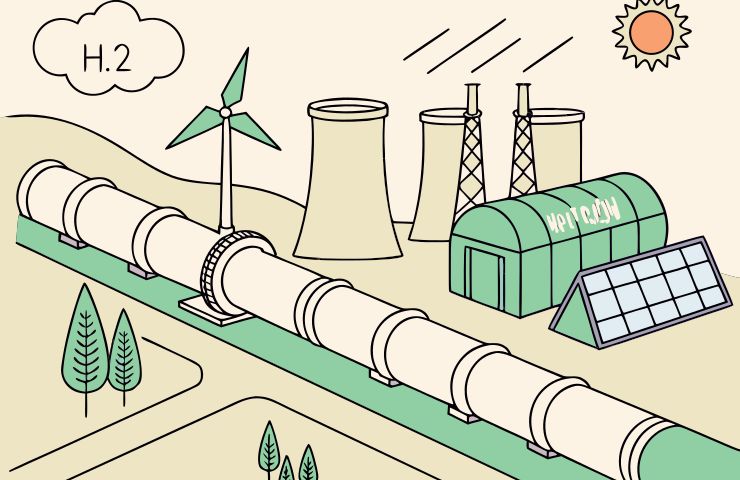
The Luxembourg Government Council has recently approved the initial phase of the HY4Link hydrogen pipeline project, aimed at establishing a cross-border hydrogen infrastructure connecting Luxembourg to France. The approval marks a formal start to planning for a pipeline that is intended to link local production and consumption points with suppliers across the border.
Phase 1 of the HY4Link project will feature a planned pipeline approximately 40 kilometres in length, connecting Thionville in France to Pétange in southern Luxembourg. That route is designed to serve industrial users in the Greater Region by delivering renewable and low-carbon hydrogen. The stated purpose is to integrate Luxembourg’s hydrogen production capabilities with a broader European hydrogen market.
Strategic Significance
The government’s decision sits at the centre of Luxembourg’s strategy to expand its hydrogen infrastructure and link domestic industrial demand with cross-border suppliers. It is positioned within the European Hydrogen Backbone initiative, which aims to create a cohesive hydrogen network across Europe by integrating production sites, storage, and consumption points.
Hydrogen is expected to play a key role in decarbonizing sectors that are difficult to electrify. Steel manufacturing, chemicals and heavy transport are highlighted as areas where hydrogen can reduce emissions. By improving access to diverse hydrogen sources, the HY4Link infrastructure is intended to help meet both local and regional clean energy targets.
Access. Flexibility. Options. These are the practical gains proponents emphasise. For industrial users, a cross-border pipeline can mean steadier supplies and a broader range of suppliers to contract with. For planners, it offers another piece in a regional energy puzzle that includes production, storage and end use.
Collaboration and Development
The development of the HY4Link project involves collaboration among several named partners: Creos Luxembourg Hydrogen S.A., the national hydrogen-network operator; NaTran, the French transmission system operator; and Fluxys Hydrogen, the Belgian partner for future connections to Belgium. Together, these organisations are working to extend the hydrogen network and ensure transport and accessibility across borders.
That cooperation spans technical planning and coordination with regulators. Project teams are conducting environmental assessments and route studies, which must be completed before any construction can begin. Both local and EU regulations will guide these procedures, ensuring compliance with safety and sustainability standards.
Environmental assessments typically examine potential impacts on land use, ecosystems and local communities. Route studies assess engineering feasibility, right-of-way options and how the pipeline would connect to existing industrial sites. While those steps are standard, they are also critical: they shape the final alignment, the permitting timeline and the scope of subsequent construction works.
Regulatory review runs in parallel. Permits and approvals, whether local or at EU level, will determine conditions for construction and operation. Recognition as a cross-border initiative adds complexity; it also introduces additional forums for coordination. That requires project partners to synchronise technical, legal and administrative workstreams across national boundaries.
Looking to the Future
Luxembourg’s focus on hydrogen aligns with broader European energy policies that promote sustainable energy sources and reduced dependence on fossil fuels. The HY4Link project is recognised as a Project of Common Interest (PCI) by the European Commission, a designation that could facilitate funding opportunities and streamline cross-border coordination, essential for its implementation.
PCI status does not guarantee financing. It signals, however, that the project is considered relevant to the EU’s integrated energy objectives. That recognition can make it easier to access certain support mechanisms and to coordinate regulatory timelines across member states.
As the hydrogen economy evolves, projects such as HY4Link are intended to improve logistics and infrastructure frameworks. Those frameworks may, in turn, support wider adoption of hydrogen across industry. The project’s proponents see a potential chain reaction: more infrastructure can enable greater offtake, which can encourage more production, which then supports further infrastructure investment.
How quickly that chain moves will depend on the outcomes of the current studies, regulatory approvals and the market decisions of industrial consumers. Important variables remain under study, including precisely how the pipeline will be integrated with existing networks and storage facilities, and how supply contracts will be structured across borders.
Conclusion
The HY4Link Phase 1 project represents a notable development in Luxembourg’s energy landscape. The government approval for the initial phase clears the way for detailed planning of a cross-border connection between Thionville and Pétange, via a planned pipeline approximately 40 kilometres in length, aimed at delivering renewable and low-carbon hydrogen to industrial users in the Greater Region.
Certain details remain subject to further studies. Cost, exact capacities and firm timelines are yet to be defined as environmental assessments, route studies and regulatory reviews proceed. Nevertheless, the commitment to establishing a more seamless hydrogen supply chain in the Greater Region is evident in the project’s planning and in the participation of the named operators.
For industry actors considering their decarbonization strategies, HY4Link is part of a wider regional effort to broaden hydrogen access and integrate production and consumption across borders. If the planned steps proceed as envisioned, the project could contribute to industrial decarbonization and to the further development of a coordinated European hydrogen market.