Hydrogen news
CSIR scientists develop new solar tree
Solar tree will help save space but not sacrifice anything in terms of energy production A group of scientists from the Council of Scientific and Industrial Research (CSIR) in India have developed a new solar energy system that will help save space on expansive photovoltaic fields. Solar power has become quite popular in India, but solar farms require a great deal of space in order to be considered viable. Small solar farms do not typically produce enough electricity to be considered valuable die to the limited space they have access to. The team from CSIR believes they have found a solution…
Solar tree will help save space but not sacrifice anything in terms of energy production
A group of scientists from the Council of Scientific and Industrial Research (CSIR) in India have developed a new solar energy system that will help save space on expansive photovoltaic fields. Solar power has become quite popular in India, but solar farms require a great deal of space in order to be considered viable. Small solar farms do not typically produce enough electricity to be considered valuable die to the limited space they have access to. The team from CSIR believes they have found a solution to this problem by creating a “solar tree.”New system can save a great deal of space
The new solar tree is designed to save space, but will not sacrifice much in terms of energy production. Scientists note that the new energy system will save approximately 100 times the space needed to build a normal solar farm. This is good news as land in India is becoming an increasingly scarce commodity. In order for the country to continue embracing solar energy as aggressively as it has done recently, solar farms must become smaller and more efficient. This is where a solar tree may come in handy.Solar tree can generate 15% more electricity than normal solar panels
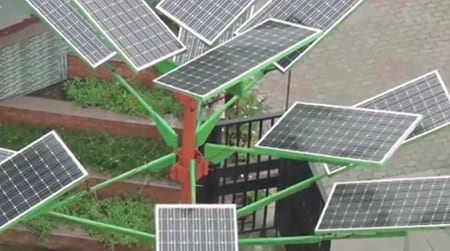 Scientists believe that the new solar tree will be able to generate enough electricity to power five average homes. The solar tree will also be able to generate more energy than conventional solar panels, especially those used within the residential sector. According to the CSIR team, the design of the solar tree allows photovoltaic modules to be placed in such a way where they are more exposed to sunlight. The team suggests this allows the tree to generate 15% more electricity than conventional solar panels.
India is embracing solar energy very aggressively
India hopes to become more reliant on solar energy in the coming years. The government has set an ambitious goal of generating no less than 40% of its electricity from renewable sources by 2030. Because of the ample amount of sunlight the country receives year-round, solar power will be a primary focus for the country. India has already established itself as the fastest growing solar market in the world, even beating out China and the United States in terms of rapid growth.How was this article?
Thanks for the feedback!