Hydrogen news
New research may have found a way to develop better biofuel
Researchers have created a new “nano-reactor” that could catalyze hydrogen production. According to a new study published in the scientific journal, Nature Chemistry, researchers have managed to develop a new biomaterial, by hiding a modified enzyme inside a virus, which is capable of efficiently catalyzing the production of hydrogen. Dubbed the “nano-reactor,” the modified enzyme may result in a biofuel production process that is more efficient and profitable. The modified hydrogen-producing enzyme is 150 times more efficient than an enzyme that has been unaltered. Within the capsid, which i…
Researchers have created a new “nano-reactor” that could catalyze hydrogen production.
According to a new study published in the scientific journal, Nature Chemistry, researchers have managed to develop a new biomaterial, by hiding a modified enzyme inside a virus, which is capable of efficiently catalyzing the production of hydrogen. Dubbed the “nano-reactor,” the modified enzyme may result in a biofuel production process that is more efficient and profitable.The modified hydrogen-producing enzyme is 150 times more efficient than an enzyme that has been unaltered.
Within the capsid, which is the protective protein shell of a virus, the hydrogen-producing enzyme is 150 times more efficient compared to an unaltered enzyme. The researchers initially managed to create the modified enzyme by extracting the genes hyaA and hyaB from Escherichia Coli, which is common bacteria, reported UPI. The two genes are vital to the entire process because they encode key subunits of the hydrogenase enzyme. Inside the capsid, bacteriophage P22 (a bacterial virus) is created.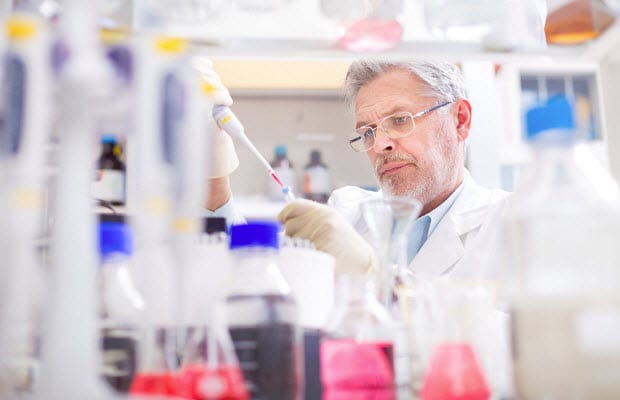 In a press release, researcher and Indiana University chemist, Trevor Douglas, explained that “Essentially, we've taken a virus's ability to self-assemble myriad genetic building blocks and incorporated a very fragile and sensitive enzyme with the remarkable property of taking in protons and spitting out hydrogen gas.” Douglas added that the final result is a “virus-like particle that behaves the same as a highly sophisticated material that catalyses the production of hydrogen.”
The new biomaterial is more environmentally friendly than present biofuel production methods.
The biomaterial is easily formed through fermentation at room temperature. Compared to current production methods used to create biofuel, the new prospective scalable technology is simpler and more eco-friendly. While this isn’t the first time that researchers have attempted to utilize the hydrogenase enzyme to create biofuels, previous attempts to use it have always involved the enzyme’s unaltered form. The trouble with this is that in its unaltered state, the enzyme is overly sensitive to heat and outside chemicals, which makes it unsuitable for large-scale production. However, once inside the virus shell, the enzyme’s resiliency is improved. Douglas said that, previously, no one has ever found a method to generate a sufficient amount of hydrogenase in spite of its amazing potential for biofuel production. However, now the researchers have discovered how to stabilize and create high quantities of the biomaterial, as well as dramatically increase its efficiency.How was this article?
Thanks for the feedback!