Hydrogen News: Kawasaki Launches Construction of 50-Tonne-Per-Day Green Hydrogen Liquefaction Plant
Kawasaki Heavy Industries has started construction on a 50 tonnes per day hydrogen liquefaction plant at Ogishima, part of a NEDO-backed demonstration to advance Japan’s integrated liquefied-hydrogen supply chain.
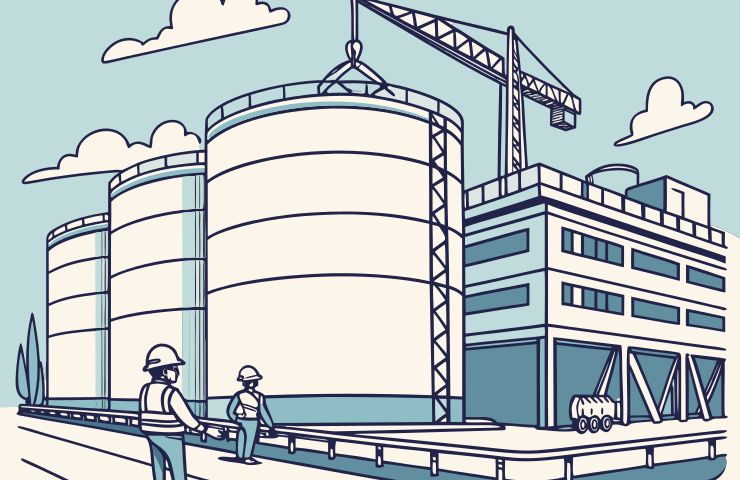
Kawasaki Heavy Industries has begun construction this month on a hydrogen liquefaction plant at Ogishima in Kawasaki City, Kanagawa Prefecture, marking what it describes as Japan’s largest publicly announced liquefaction capacity of 50 tonnes per day, according to Kawasaki Heavy Industries. The project is notable across hydrogen news, green hydrogen news and hydrogen energy news, since a single site integrates hydrogen production, green hydrogen production, hydrogen storage and hydrogen infrastructure into one development. Japan Suiso Energy will operate the facility, with participation from Iwatani Corporation and ENEOS Corporation in the wider demonstration framework.
Right in Step with Japan’s Hydrogen Roadmap
The initiative sits squarely inside national efforts to build a commercial-scale liquefied-hydrogen supply chain, says the New Energy and Industrial Technology Development Organization (NEDO). It is part of the Green Innovation Fund’s Large-scale Hydrogen Supply Chain Establishment programme and the Liquefied Hydrogen Supply Chain Commercialization Demonstration. Those programmes are designed to test technical performance, safety, durability, reliability and economics ahead of international trade.
Aligning with National Goals
The plant will support targets from Japan’s Basic Hydrogen Strategy, revised in 2023, which calls for approximately 3 million tonnes of hydrogen imports per year by 2030, according to Ministry of Economy, Trade and Industry documents. Under the Hydrogen Society Promotion Act, more than 15 trillion yen of public and private investment is expected over 15 years. The NEDO Green Innovation Fund has allocated up to 321.12 billion yen to hydrogen supply-chain projects, aiming for roughly 400 million tonnes of annual CO₂ reduction by 2050 and cost targets near 20 yen per normal cubic metre at arrival.
The Idea is Simple but Powerful
The plant’s core process uses hydrogen liquefaction via a Claude-cycle system, which Kawasaki Heavy Industries says cools gaseous hydrogen to around minus 253 °C, shrinking its volume to about one eight-hundredth. The basic sequence is straightforward in outline: compress the hydrogen, precool it—often using heat exchange with liquid nitrogen—then move it through expansion turbines and valves where part of the gas condenses into liquid. Remaining gas flows back through heat exchangers, recovering cold energy and improving overall efficiency.
Operators must also control the ortho-to-para hydrogen conversion to prevent unwanted heat generation. High-performance insulation and materials are required to resist embrittlement at cryogenic temperatures. Together, this precise, multi-stage sequence forms the technical foundation for scalable hydrogen storage and transport.
Solving Real-World Problems
The Ogishima facility will combine liquefaction with a 50 000 cubic-metre cryogenic storage tank, marine loading and unloading arms, gaseous-hydrogen supply lines and lorry dispatch facilities at the Kawasaki LH2 Terminal, operated by Japan Suiso Energy. Liquid hydrogen arriving by ship—or produced domestically—will feed industrial users such as steelmakers, petrochemical plants and power generators across the Keihin Industrial Complex.
Connection points to pipelines and trucking routes are part of the terminal design. By linking ships, pipelines and road transport, the terminal addresses logistical bottlenecks and aims to stabilise supply for heavy industry and energy delivery, says Japan Suiso Energy.
Balancing Energy Needs and Emissions
Liquefaction is energy-intensive; it typically demands 10–13 kWh per kilogram of hydrogen, according to the US Department of Energy. The demonstration will monitor energy consumption and boil-off rates, and it will track lifecycle emissions by recording the electricity mix and the hydrogen’s origin. Pairing renewable power with optimised cryogenics is intended to lower the carbon footprint and align operations with Japan’s decarbonisation targets.
Data collected during trials will guide efficiency improvements. Those findings are meant to inform cost analysis for future commercial operations and to underpin policy decisions.
Made in Japan, Made for Japan’s Future
Key equipment—from compressors and turbines to heat exchangers and insulated tanks—will be manufactured domestically under Kawasaki Heavy Industries’ coordination. The plan leans on Japan-based R&D and a dense network of engineering suppliers. That local supply chain is expected to reduce costs, speed deployment and create hundreds of skilled jobs in design, fabrication and maintenance.
Tapping into Local Expertise
The project draws on experience developed at Kawasaki waterfront sites, building on the Hy touch Kobe receiving terminal and the SUISO FRONTIER carrier, according to Kawasaki Heavy Industries. Its Ogishima location, on a JFE Steel port platform, benefits from deepwater berths, existing pipelines and nearby industrial demand, which together simplify import and distribution operations.
Kawasaki first sold a 5 tonnes-per-day liquefaction system in Japan in 2020, and this scale-up draws directly on decades of cryogenic and maritime engineering know-how.
Looking Ahead
Construction is scheduled to complete by the end of 2028, with commissioning and planned demonstration operations from 2030, according to Kawasaki Heavy Industries. The trials will yield practical performance data intended to shape future scale-ups, investment plans and regulatory standards, and to influence both domestic and international hydrogen markets.
If the demonstration meets expectations, it could pave the way for additional terminal deployments, strengthen resilient energy import strategies and bolster Japan’s role in clean hydrogen trade.
Through public-private collaboration among technology leaders, government and terminal operators, the initiative highlights how integrated hydrogen infrastructure can bring practical benefits, drive economic growth and advance national climate goals.