HTEC Secures CAD 7.78 Million Fund to Develop Hydrogen Logistics Hub in British Columbia
HTEC secures CAD 7.78 million for the Western Canada Hydrogen Freight Hub, combining a refuelling station with 25 hydrogen fuel-cell trucks in a CAD 100 million project.
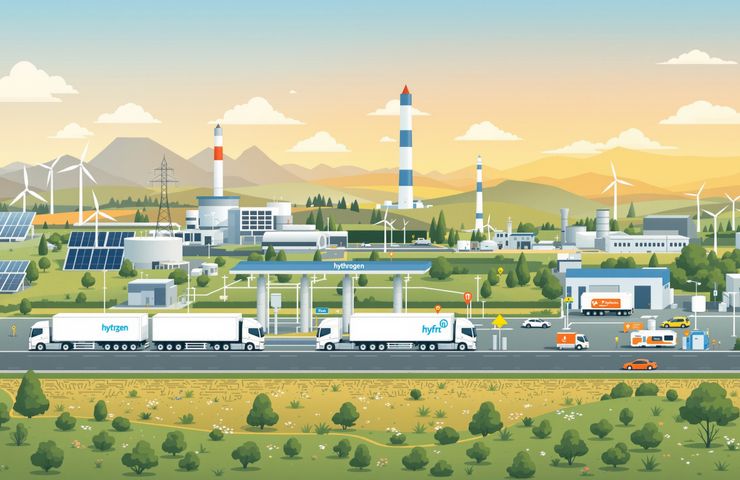
Hydrogen Technology & Energy Corporation (HTEC) has been awarded CAD 7.78 million from the Fuel Innovation Fund to develop the Western Canada Hydrogen Freight Hub. The project will be located in Burnaby, British Columbia, and centers on a high-capacity hydrogen refuelling station that will be paired with 25 Class 8 hydrogen fuel-cell trucks intended for fleet operators throughout southern British Columbia. The award is part of a broader financing package that brings the total project value to an estimated CAD 100 million.
HTEC’s plan targets a persistent obstacle in heavy-duty transport: building both the supply infrastructure and the reliable user base needed to make hydrogen freight services viable. It aims to place refuelling capacity where fleets can access it, and to put fuel-cell trucks into regular operation so the two elements can support one another. In other words, the project seeks to create the practical conditions under which hydrogen freight can move from pilot stages toward routine commercial use.
- The initiative is part of a broader push—not just in hydrogen infrastructure—but towards decarbonizing heavy-duty transport, which is notoriously hard to electrify fully.
- The plan is designed to enable reliable, high-throughput refuelling options for fleet operators, a critical aspect that could encourage more businesses to switch from diesel to clean hydrogen alternatives.
- By pairing a high-capacity refuelling station with the deployment of heavy-duty hydrogen trucks, HTEC aims to create a self-reinforcing cycle of supply and demand.
- Overall, the project reflects British Columbia's commitment to expanding its clean hydrogen economy, building upon policies and pilot programs initiated over recent years.
Understanding Fuel-Cell Technology
Fuel-cell electric trucks convert hydrogen into electricity through an onboard fuel-cell system, producing only water and heat as byproducts instead of harmful tailpipe emissions. That chemical-to-electric conversion happens on the vehicle, which removes the need for large onboard hydrocarbon combustion systems. The result is a drivetrain that can deliver longer ranges and faster refuelling than many battery-only alternatives, attributes often cited as important for Class 8 operations.
For heavy-duty uses where long daily ranges and quick turnaround at depots matter, the fuel-cell approach offers a specific operational profile. Refuelling times mirror the familiar cadence of diesel stops more closely than many battery charging cycles. Less downtime. More predictable scheduling. Those operational characteristics are why the Western Canada Hydrogen Freight Hub pairs a high-capacity station with an initial cohort of heavy-duty trucks.
Investment and Market Positioning
The CAD 7.78 million funding is sourced from compliance contributions within Canada's Clean Fuel Regulations, designed to reduce the carbon intensity of transportation fuels and commercialize low-carbon technologies. This award serves as a critical layer of support for HTEC's project but is supplemented by significant private investments reflecting the total project value of CAD 100 million. In short: public compliance dollars help de-risk the early infrastructure, while private capital fills out the balance required to deliver the hub at scale.
That blended financing model is central to the project’s market positioning. By leveraging regulatory funds alongside private partnerships, HTEC intends to bridge the investment gap that often slows early-stage infrastructure projects. The public contribution reduces upfront risk and demonstrates policy alignment, while private investment signals commercial interest and the expectation of operational demand from fleet operators.
Implications for the Future
While the immediate goal of the Western Canada Hydrogen Freight Hub is to enhance local freight capabilities, its success may resonate further across the hydrogen landscape. A functioning, high-capacity station serving a fleet of Class 8 trucks could provide a template for replication elsewhere. Conversely, operational problems would highlight the areas where policy, technology or commercial arrangements need refinement.
- Hydrogen Pricing: The project’s economic feasibility will largely hinge on the price of hydrogen and operating costs compared to diesel.
- Station Reliability: Consistent performance of refuelling stations will be essential to maintaining fleet operator interest.
- Lifecycle Emissions: Ensuring that the hydrogen supplied is from a low-carbon source will be critical in achieving true sustainability.
These three factors—cost, availability and carbon intensity—will play out in daily operational decisions by fleet managers and in longer-term financial assessments by investors. If hydrogen can be priced competitively, if stations are dependable, and if the fuel is demonstrably low-carbon across its lifecycle, the argument for broader deployment strengthens. If any of those elements falter, adoption could slow despite initial investment.
As environmental targets intensify globally, advancements driven by projects like this one could signal a turning point for hydrogen as a cornerstone of clean transport solutions. The Western Canada Hydrogen Freight Hub is designed to test whether concentrated infrastructure investment, paired with vehicle deployments, can move hydrogen freight from demonstration to routine service.
Moving forward, this initiative not only highlights the potential for clean hydrogen applications but also reflects the socio-economic and regulatory shifts required to push the hydrogen economy into mainstream logistics. Success will depend on coordinated action across regulators, infrastructure providers, fleet operators and capital partners — all working within the constraints and incentives set by policies such as the Clean Fuel Regulations.