Hydrogen Infrastructure: Castilla y León Plans Four Refueling Stations by 2028
H2CYL outlined plans for four hydrogen refueling stations by 2028 across Burgos, Valladolid, Salamanca and León, aiming to integrate green hydrogen production, storage and mobility in Castilla y León.
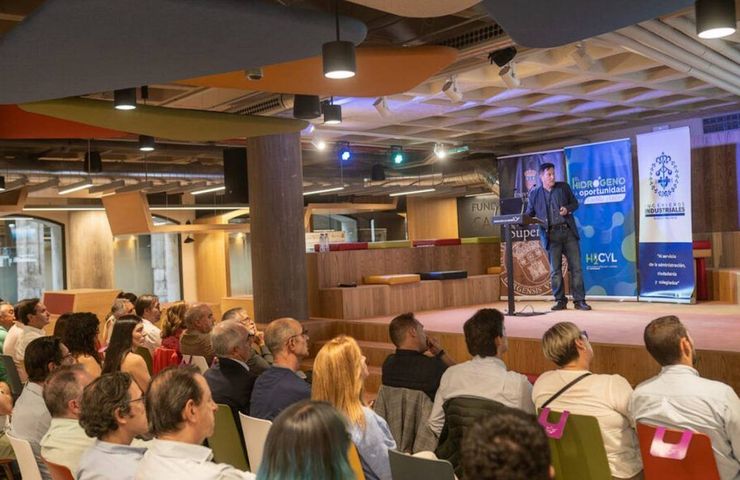
H2CYL, Asociación Castellano y Leonesa del Hidrógeno presented a regional network of hydrogen refueling stations at an event in Burgos this month, saying Castilla y León aims to deploy four stations by 2028 in Burgos, Valladolid, Salamanca and León. The association describes this first phase as a way to link production, storage and transport segments of a green hydrogen value chain across the community.
Context of Castilla y León
Castilla y León covers nine provinces and has a population of about 2.4 million, according to the National Statistics Institute. The region has a long tradition in agriculture, mining, manufacturing and logistics. Major hubs in Valladolid and Burgos sit on transport corridors to Madrid, Bilbao and Galicia. Analysts note abundant renewable potential—solar, wind, hydro and biomass—which could supply renewable electricity to local electrolysers and so power green hydrogen production.
Event and Stakeholders
The network plan was unveiled at an occasion organised by H2CYL in collaboration with the Universidad de Burgos, the Colegio Oficial de Ingenieros Industriales de Burgos y Palencia and the Junta de Castilla y León. At the event, Javier Robador Fustel, manager of H2CYL, detailed how each station—planned for Burgos, Valladolid, Salamanca and León—would serve as a node in the emerging hydrogen infrastructure, supporting mobility, industrial off-takers and grid balancing. The association added that the sites are intended to connect local production with end uses while reinforcing regional energy systems.
H2CYL estimated more than 600 workers are currently engaged in the regional hydrogen sector. That figure is based on the association’s own data and has not been verified by an independent labour statistic.
Regional Strategy and Business Framework
The four-station plan aligns with Spain’s national Hoja de Ruta del Hidrógeno, which targets 100–150 public stations by 2030, according to the 2020 roadmap. At the regional level, the Junta de Castilla y León reports backing over 60 green hydrogen projects with approximately 6.6 billion euros of planned public and private investment and 3,200 jobs, as stated in a government press release. Those figures cover initiatives across production, storage, distribution and consumption, while H2CYL’s proposal focuses specifically on refuelling infrastructure.
A central piece is the so-called Valle del Hidrógeno de Castilla y León around Burgos. Supported by EU funds, the valley emphasises large-scale electrolysis, industrial integration and transport pilots. Other provinces including León, Palencia and Salamanca have electrolysers under review, although none currently match the Burgos valley’s scale.
Green Hydrogen Production and Use
Green hydrogen production via electrolysis splits water into hydrogen and oxygen using renewable electricity. In proton exchange membrane (PEM) electrolysers, water is fed to an anode where it releases protons and electrons. Protons pass through a membrane to the cathode, where they recombine with electrons to form hydrogen gas. The gas is then dried, purified, compressed and stored. In a hydrogen fuel cell, hydrogen reacts with oxygen to generate electricity, emitting only water. Analysts caution that electrolyser manufacture, electricity sourcing and compression energy influence the full life-cycle footprint despite zero emissions at the point of use.
Local Industry Highlights
- GPYO Innova demonstrated an automated coating system for hydrogen pipelines, developed with the Universidad de Burgos and financed by the Instituto para la Competitividad Empresarial de Castilla y León and EU FEDER funds. The solution aims to improve corrosion and wear resistance in high-pressure service.
- H2m Hidrógeno Manufacturado S.L. showcased a prototype electric vehicle with a hydrogen fuel cell range extender. The company indicates the demonstrator can increase range from 75 to 180 km with an added 25 kg of hydrogen, pending further technical validation.
- The Máster en Tecnologías del Hidrógeno at the Universidad de Burgos recognised top final projects, underlining the academic commitment to train specialists in hydrogen production, storage and mobility.
Workforce and Innovation
H2CYL’s estimate of over 600 workers spans roles from R&D to operations. It includes electrolyser design, fuel cell integration, tank fabrication, compression skid assembly, pipeline installation and station maintenance. Local training centres and vocational programmes are adapting curricula to supply technicians, engineers and safety specialists needed by the emerging hydrogen energy news ecosystem. Educational pathways are therefore being aligned with industry demand, the organisers said.
Challenges and Strategic Outlook
Experts at the Burgos gathering flagged a familiar coordination problem. Vehicle uptake depends on network availability, while station viability hinges on robust demand. Key cost drivers include renewable electricity prices, which can vary seasonally, and capital expenses for electrolysers and compressors. In some locations, water sourcing may require advanced treatment, adding complexity to project economics. The International Energy Agency identifies cost, infrastructure build-out and regulatory clarity as persistent barriers to hydrogen scale-up.
Competition from battery-electric vehicles remains strong for light-duty applications because of higher well-to-wheel efficiency and an expanding charging network. For other uses, however, hydrogen has clear attributes. It retains advantages for heavy transport, long-haul routes and high-utilisation fleets that require rapid refuelling.
Financing and Regulatory Path
H2CYL indicates that site assessments, environmental permitting and expressions of interest for operators will launch soon. The Junta de Castilla y León and project stakeholders plan to issue formal calls before year-end to secure PERTE funds for renewable hydrogen, allocations from the EU’s Recovery and Resilience Facility and private‐sector co-investment. Under European clean fuels legislation, public hydrogen refuelling points will be mandated along main transport corridors that intersect the community’s highway network.
Spain’s PERTE for renewable hydrogen and EU recovery grants are cited as potential sources for station capex. Public-private partnerships may involve utilities, logistics firms and hydrogen producers sharing investment and revenue risks, a model intended to accelerate execution if partners are secured.
Conclusion
With a 2028 horizon, the four planned stations represent the first visible nodes of a wider regional hydrogen infrastructure. Progress on permits, financing awards and offtake agreements over the coming year will reveal whether Castilla y León can translate its green hydrogen production ambitions into a functional refuelling network. Should the network materialise, it could anchor production sites, attract vehicle manufacturers and position the community as a testbed for zero-emission heavy transport in Spain.