Hydrogen news
Hydrogen Hubs: A Unique Green Stimulus Strategy
The strategy is meant to accelerate the low-cost clean H2 market while creating jobs. The Biden-Harris administration’s new Bipartisan Infrastructure Law funding of $7 billion for clean hydrogen hubs was recently announced, and while this is exciting news for investors and H2 companies alike, this also offers a substantial amount of promise for stimulating the economy and creating jobs. The US is using H2 as a core component of what can result as a stimulus plan with a green outcome. TRC Solutions Vice President Denise Brinley recently spoke with Hydrogen Fuel News regarding the newly announc…
The strategy is meant to accelerate the low-cost clean H2 market while creating jobs.
The Biden-Harris administration’s new Bipartisan Infrastructure Law funding of $7 billion for clean hydrogen hubs was recently announced, and while this is exciting news for investors and H2 companies alike, this also offers a substantial amount of promise for stimulating the economy and creating jobs.The US is using H2 as a core component of what can result as a stimulus plan with a green outcome.
TRC Solutions Vice President Denise Brinley recently spoke with Hydrogen Fuel News regarding the newly announced funding. She underscored that what makes this funding unique is that it isn’t just about the H2 and clean energy potential. It is also about how the United States are using this decarbonization strategy as a form of economic stimulus and job creation plan that happens to have a green result. “It's about much more than just hydrogen production,” said Brinley. “It's creating regional ecosystem that drive hydrogen from the production all the way through the value chain to off take and layering into that a very strong community-based approach that includes economic and environmental attributes.” Brinley is an expert on the ecosystem development of hydrogen hubs and has worked closely with applicants for this funding. She leads TRC Solutions’ Enabling Climate Technologies and has previously served as the Pennsylvania Office of Energy’s executive director.The time frame for production to begin at the funded hydrogen hubs is likely to be seven to ten years.
The funding is meant to span up to ten years until the hydrogen hubs begin H2 production, explained Brinley. “Because of the regional geographic arrangement of hubs and the fact that the idea behind this funding is to build ecosystems, it's going to take time to get to all of that,” said Brinley. “The first phase really is the planning, the integration of community benefits, and getting the initial project capability underway. Then, I think, as you lean into phases two and three, you're moving towards construction and then the last phase is getting to operation and hydrogen.”
Low-hanging fruit
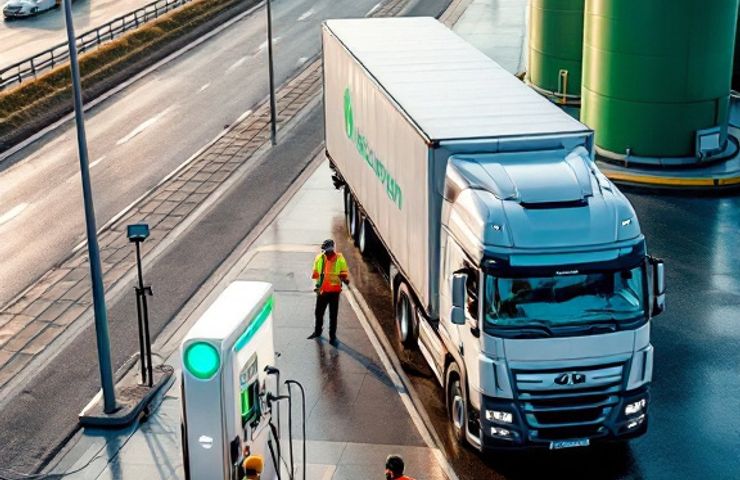
Brinley expects that long-haul shipping will be the first to see action from the hydrogen hubs, followed by ammonia production and heavy industry. “One of the lowest hanging fruits for this market right now is long haul trucking because there is a real identifiable need for better solutions for the long-haul trucking industry,” said Brinley. “And so, fuel cells in trucks should be relatively low hanging fruit in terms of offtake for hydrogen production out of any of these regions. Our transportation network is national. Our corridors for transportation infrastructure will be well suited by regional hydrogen ecosystems that are producing hydrogen that can be applied to hydrogen fuel cells and trucks.” She went on to add that “There's also a burgeoning ammonia market and that is related to sort of an international and domestic market opportunities around ammonia. And then beyond that, it goes to power plants for commercial residential fuels, for industrial applications of hydrogen, steel, cement etcetera. So, I think over time that's the trajectory of hydrogen use that can be applied to any of these hydrogen hubs as they begin.”Unanswered Questions and the Anticipation for More Information
As we navigate through this transformative phase, there are still many unanswered questions that pique our curiosity. How will these programs be implemented effectively? What will be the direct impact on various sectors? How will the balance between economic growth and sustainability be maintained? The answers to these questions, among others, hold the key to understanding the true potential of the Bipartisan Infrastructure Law. As we await more detailed information from the respective programs, the anticipation continues to build. We look forward to gaining a deeper insight into the intricacies of these initiatives and how they plan to shape our future. This unfolding narrative is not just about policy implementation; it's about charting a course towards a more sustainable and economically robust world.How was this article?
Thanks for the feedback!