Hydride-Based Liquids Offer a Game-Changer for Hydrogen Storage
Swiss and Japanese scientists create a room-temperature liquid that stores 6.9% hydrogen by weight—and could disrupt the way we store and transport hydrogen globally.
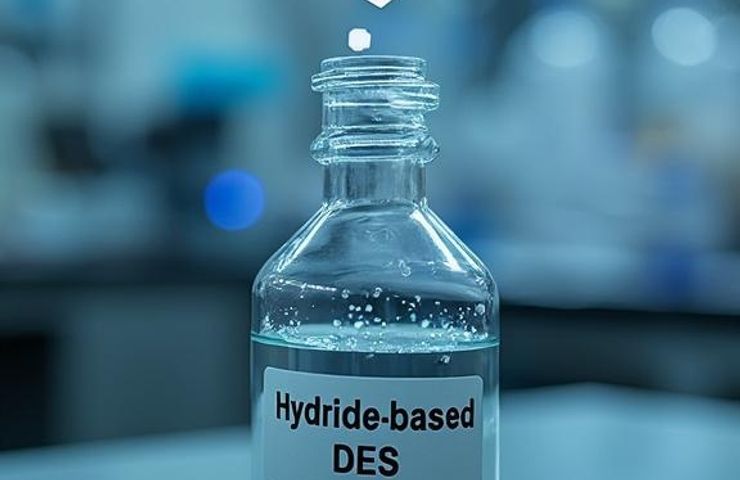
What if the secret to a scalable hydrogen economy wasn’t locked inside high-pressure tanks or deep in cryogenic chambers—but sitting in a simple, clear liquid at room temperature? That’s exactly the kind of potential we’re looking at, thanks to researchers from EPFL in Switzerland and Kyoto University in Japan. They've just introduced the world’s first hydride-based deep eutectic solvent (DES)—a game-changing liquid hydrogen storage solution that could completely change how we transport and use green hydrogen.
The Breakthrough: Liquid Hydrogen, Minus the Headache
Unveiled in July 2025, this new DES is made from just two ingredients—ammonia borane and tetrabutylammonium borohydride, both solid on their own. But when mixed? They form a transparent, hydrogen-rich liquid that stays stable even below freezing. And here’s the kicker—it holds 6.9% hydrogen by weight, topping the U.S. DOE’s 2025 goals for hydrogen carriers.
Why does that matter? Well, today’s hydrogen storage methods often rely on bulky, high-pressure tanks or super-cooled liquids. They’re expensive, complex, and let’s face it—not exactly user-friendly. This DES, on the other hand, is a liquid that’s stable at room temperature. That means simpler logistics, lower costs, and a much safer way to store and ship hydrogen. It could seriously streamline the hydrogen infrastructure we need for a sustainable energy future.
Two Labs, One Big Leap
This breakthrough didn’t fall out of the sky. It’s the result of years of work by two powerhouse research teams. EPFL’s Laboratory of Materials for Renewable Energy, led by Professor Andreas Züttel, has been pushing the envelope on hydrogen storage tech for years. Across the globe, Professor Satoshi Horike and his group at Kyoto University brought in their deep knowledge of energy materials and hybrid systems to make the impossible… well, possible.
The problem they tackled? Hydrides—great at holding hydrogen, but usually stuck in solid form. The researchers figured out how to convert them into a usable, stable liquid, using a concept called deep eutectic solvents (DESs). It’s been around since the early 2000s, but applying it to hydrogen-rich compounds? That’s a whole new ballgame.
The Chemistry Behind the Curtain
So how does it work? The magic happens when you mix these two solid compounds. They engage in strong hydrogen bonding, resulting in a liquid that stays liquid. We’re talking no crystallization—even weeks after storage. To release the hydrogen, just heat it gently to around 60°C. That’s it. No intense energy drain. No toxic byproducts. Plus, the materials can be partially recycled, which keeps costs and waste down. That’s a big win for sustainable energy solutions.
Why This Discovery Matters Now
Fuel cell technology and hydrogen are becoming massive players in the shift toward a zero-emissions future. While producing hydrogen—especially green hydrogen through electrolysis—is picking up pace, how we store and move it has been the sticking point. Until now.
This DES makes hydrogen storage as simple as handling a bottle of solvent. That kind of ease could be a turning point for everything from fuel cell vehicles and industrial heating to backup energy systems in remote areas. By making hydrogen easier to manage, this tech could actually lower the risk across the entire supply chain—and bring hydrogen that much closer to mainstream use.
Rewriting the Rules for Heavy Industry
Imagine a future where you don’t need high-pressure tanks on trucks or cryogenic containers on trains. That’s what this could unlock. Especially in heavy industries—like steelmaking, refineries, or chemical plants—where storing and reconverting hydrogen on-site is a serious challenge, this tech could be the edge they’ve been waiting for.
And for mobile applications where every inch and kilogram counts—like with fuel cell buses or electric delivery fleets—this lightweight liquid form has major appeal. It could push the limits of how and where we use hydrogen on the go.
What’s Next?
This isn’t the final solution to every challenge in green hydrogen, but it’s a major step in the right direction. Thanks to EPFL and Kyoto University, we now have a room-temperature hydrogen carrier that doesn’t just match benchmarks—it clears them. It lives in a form that plugs easily into our existing chemical systems and tackles one of hydrogen’s biggest practical hurdles: safe, simple storage.
As the global energy transition picks up speed, breakthroughs like this don’t just stay in the lab. They have the potential to reshape the real world. There’s still ground to cover—scaling, licensing, and making it commercially viable—but this isn’t a baby step. It’s a leap forward.