Hydrogen news
Three ways green hydrogen projects can improve their chance of securing FID
There are several barriers preventing clean hydrogen projects from securing final investment decision. Even though there are many green hydrogen projects that have been planned, only 4% of green hydrogen projects have reached finial investment decision (FID) as transforming these projects from announcement into FID action is easier said than done. The World Economic Forum has identified three main ways to overcome this challenge. To better understand how the pathway from announcing green hydrogen projects to FID can be accelerated, the World Economic Forum (WEF) launched the Clean Hydrogen Pr…
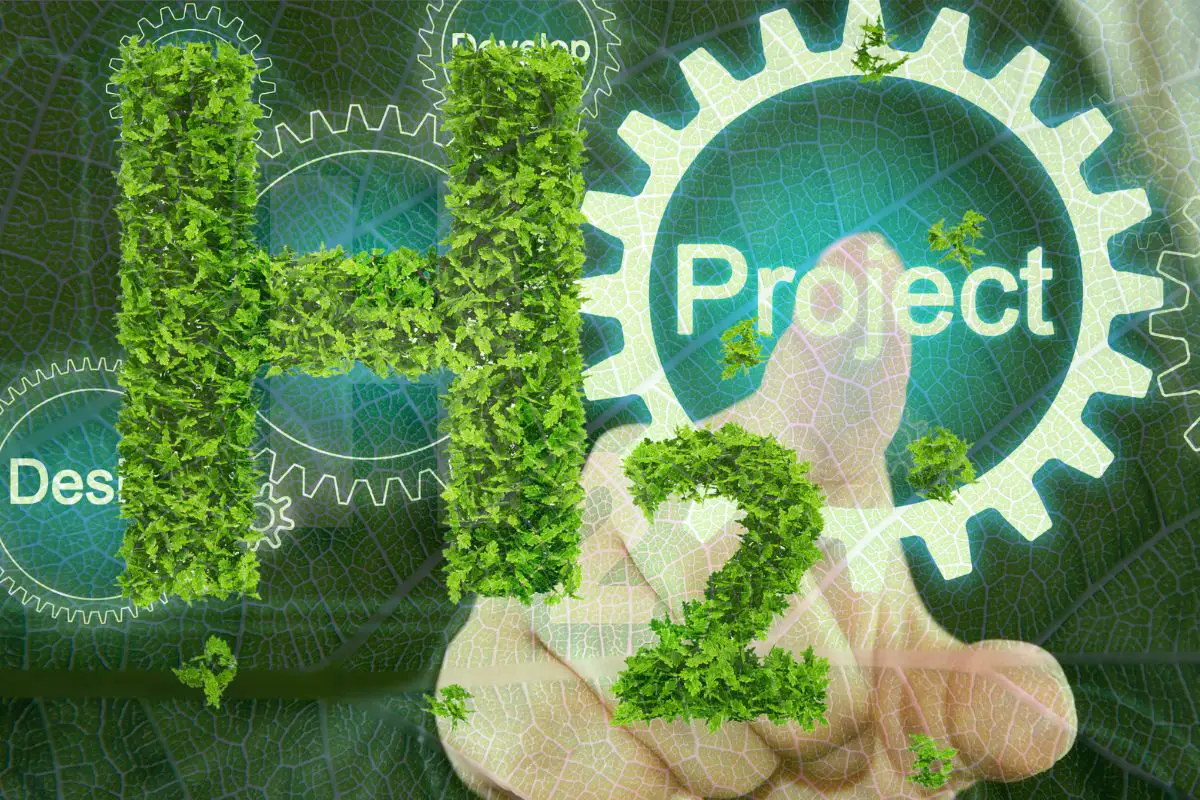
There are several barriers preventing clean hydrogen projects from securing final investment decision.
Even though there are many green hydrogen projects that have been planned, only 4% of green hydrogen projects have reached finial investment decision (FID) as transforming these projects from announcement into FID action is easier said than done.The World Economic Forum has identified three main ways to overcome this challenge.
To better understand how the pathway from announcing green hydrogen projects to FID can be accelerated, the World Economic Forum (WEF) launched the Clean Hydrogen Project Accelerator. The Clean Hydrogen Project Accelerator identifies three primary ways to achieve the expedited process. These include:- Closing the price gap between buyers and sellers
- Dealing with supply-side risk
- Navigating uncertainty in standard and certification
Bridging the green hydrogen projects price gap
Making the switch to green hydrogen is exceptionally expensive for most buyers. The WEF notes that the majority of buyers are constrained by the cost of their existing energy and switching from grey to green H2 could be multiple times more costly. As such, this has created a large gap between the price expectation of green hydrogen buyers and sellers, a gap that continues to prevent many companies from taking the meaningful action that is required to meet net-zero targets. In particular, this is a challenge in sectors with low-profit margins where hydrogen is a vital component, such as fertilizer production.[aweber listid="6179904" formid="497551345" formtype="webform"] Government intervention and subsidies will be key in helping to bridge the price gap between H2 buyers and sellers in the short to medium term. Though not a long-term solution, the WEF believes this will help to make offtake contract negotiation more attractive for both parties. For instance, in Europe, the European Commission’s RePowerEu covers the switching cost to support the adoption of green hydrogen by industry. Whereas in the US, multiple initiatives have rolled out to offer support, including the Department of Energy’s Infrastructure and Jobs Act (an $8 billion program to develop regional green hydrogen hubs), and the government’s Inflation Reduction Act ($270 billion for clean energy tax credits that gives companies using green H2 a $3/kg subsidy advantage over gray H2). https://www.youtube.com/watch?v=emisO2Hg0a8Overcoming significant supply-side risk for green hydrogen projects
There may be more than 45 giga-scale green hydrogen projects proposals announced, but the reality is that production at this scale has yet to be proven. Lack of proof creates notable supply-side risk. Though this will improve in time, the WEF explains in an article that was part of the United Nations Climate Change Conference COP27 that supply-side risk “creates a real risk for early-moving offtakers and is particularly unpalatable for buyers, such as public utility companies, for whom reliability and security of supply is a matter of national interest.” There are two key strategies to overcoming supply-side risk, according to the WEF. One strategy is to create “industrial clusters”. These industrial clusters serve as epicenters for H2 activity. It unites stakeholders across the complete H2 value chain and aligns them around common objectives. As such, cluster members can source hydrogen from many sources and it enables suppliers to benefit from a pool of potential offtakers that are readily available. The second strategy to overcome supply-side risk is “vertical integration”. For this strategy, an increasing number of companies are taking on more than one role across the H2 value chain that are not a traditional core part of their business. This allows the companies several advantages such as acting as their own offtaker, utilizing trusted relationships, and having better control and awareness of the price premium challenge.
Alleviating uncertainty about green hydrogen projects
Another issue that green hydrogen projects face is uncertainty. Lack of confidence and clarity about these projects give investors cold feet. Governments need to provide policy clarity, and there must be market-wide standards, certification frameworks and tradeable guarantees of origin, says the WEF. With policy clarity, standards and certifications in place, investor and market confidence will grow and global trade will begin. In short, the WEF believes that without the security of understanding and comparing the carbon content of H2 products from a lifecyle analysis perspective, many developers hesitate to invest in projects that they are not sure will comply with future regulatory requirements, preventing them from reaching offtake. Though securing offtake contracts will be crucial for progressing green hydrogen projects to financial investment decision, the World Economic Forum says that this is not the only challenge. Green hydrogen supply, demand and infrastructure must be scaled up together, and the underlying supply chain and necessary skills must be developed at the same pace. It will be interesting to see how many more projects achieve FID in the coming year. Throughout 2022, the Hydrogen Fuel News team regularly reported on green H2 projects occurring around the world, and we look forward to reporting on the green hydrogen projects, research, advancements, and technologies that come our way in 2023. Until then, have a safe, green, and happy New Year from the HFN team! HYDROGEN POLL: Cost and infrastructure aside, are you ready to use hydrogen as a source of fuel for home heating?[forminator_poll id="56493"]How was this article?
Thanks for the feedback!