Green Hydrogen Production Goes Inland: H2 Global Energy’s Beni Mellal Ammonia & Tangier H₂O₂
H2 Global Energy is studying two pre-FEED green hydrogen derivative projects in Morocco—a 220–281 kt/y off-grid green ammonia plant in Beni Mellal and a 28 kt/y hydrogen peroxide facility in Tangier—totaling $3.6 billion in estimated CAPEX.
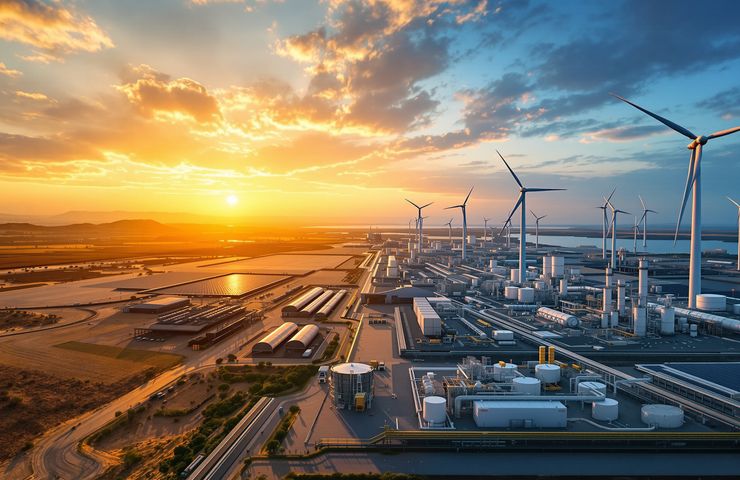
So, you thought green ammonia was all about coastal locations, right? Well, think again! H2 Global Energy, a developer making waves between Switzerland and Dubai, is shaking things up with some exciting projects in the MENA region. They’ve just debuted some preliminary designs for a green ammonia plant in Beni Mellal, aiming to produce between 220 and 281 kilotonnes per year, plus a facility for renewable hydrogen peroxide in Tangier. With an eye-popping estimated capital expenditure of $3.6 billion, these plans challenge the old-school mindset that green hydrogen production has to happen at the coast, opening a new chapter for hydrogen infrastructure in Morocco.
Off-Grid Electrolysis in Beni Mellal
Morocco is already known as a leader in renewable energy, boasting massive solar stations like the Noor complex and vast coastal wind farms. But until now, most major green hydrogen and clean ammonia production projects have been centered around ports for easy export. H2 Global Energy’s proposal for Beni Mellal flips that idea on its head. They’re looking to tap into an inland plateau, blending agricultural plains and the Atlas foothills, with about 1.5 GW of dedicated solar resources and battery energy storage systems to power 1.3 GW of electrolysers.
At this stage, the design capacity ranges from 220 kt/y (according to the UNIDO’s LEAD database) to 281 kt/y based on developer insights. It’s a pretty straightforward process: solar panels and Battery Energy Storage Systems (BESS) deliver electricity to water electrolysers that split H₂O into green hydrogen. This hydrogen then gets fed into a Haber–Bosch synthesis train with nitrogen to create green ammonia, completely bypassing the CO₂ emissions tied to traditional grey production methods. Estimates put the capital expenditure at around $2.5 billion, but that’s more of a ballpark figure than a firm commitment.
Since there won’t be any grid connections, the project leans entirely on its renewable sources, ensuring zero-carbon credentials. However, that comes with its own set of challenges—grid balancing, hydrogen storage, and dispatching all fall on H2 Global’s shoulders. Proper battery sizing is critical to even out solar energy fluctuations and ensure the uptime needed for consistent ammonia production. Then there’s the issue of logistics; typically, bulk ammonia is transported by ship or pipeline, and with Beni Mellal being inland, they’ll have to innovate new transport solutions—think rail spurs, truck fleets, or even scaled ammonia carriers. If they can tackle these obstacles, this model could democratize ammonia production globally, reaching areas that used to be sidelined due to proximity to coastlines.
For Morocco, green ammonia aligns perfectly with its national ambitions. The kingdom’s Green Hydrogen roadmap, along with the fertilizer giant OCP's initiatives to decarbonize through local production, stands to gain significantly. By replacing imported grey ammonia with homegrown green options, they could cut feedstock emissions and offer farmers some protection against wild swings in gas markets. Still, investors will keep a close eye on that capital expenditure, the costs of electrolysers, and how they'll secure water for the process before they leap into this inland venture.
Tangier’s Renewable Hydrogen Peroxide Pivot
While Beni Mellal represents a bold inland strategy, Tangier is carving out its niche by leveraging its coastal advantages. Nestled at the Strait of Gibraltar and already well-connected to Europe via shipping lanes and fiber-optic cables, Tangier is no stranger to industrial activity. Here, H2 Global Energy is planning a 28 kt/y renewable hydrogen peroxide (H₂O₂) facility. This will be powered by about 700 MW of renewable energy, split between wind and solar, with an estimated capital expenditure around $1.1 billion.
The approach for hydrogen peroxide involves using electrolysers to generate green hydrogen, which will then power an anthraquinone-based process. In simpler terms, organic carrier molecules go through cycles of hydrogenation and oxidation to produce H₂O₂ solutions, which are useful in various sectors like pulp and paper, water treatment, and textiles. By presenting a low-carbon choice to regular chemical manufacturers, this facility could attract both local and European customers eager for zero-emission technology credits.
The proximity to port facilities means significantly less hassle in logistics and opens the door for future expansions, like ammonia co-production or hydrogen export pipelines. This flexibility highlights a broader trend in hydrogen production: instead of putting all their eggs in the ammonia basket, developers are looking at specialty chemicals that could offer better margins and cater to local demand. Plus, Tangier’s hydrogen peroxide plant can build on existing infrastructure for industrial gases, making it easier to integrate compared to the off-grid green ammonia setup.
With all this in the pipeline, nailing down the right regulatory and financing frameworks is crucial. Moroccan authorities and potential backers—including local banks and EU-backed PtX funds—need to establish renewable certification systems and incentives for the electrolyser technology. A targeted rollout by the late 2020s sounds promising, but the actual investment decisions will rely on solid offtake agreements and a clear understanding of grid connections and permitting processes. Despite these hurdles, Tangier’s strategic setting and product focus make a strong case for advancing hydrogen project financing in North Africa.
Strategic Moves
When you compare Beni Mellal and Tangier, it becomes clear that H2 Global Energy is playing a smart game with its diversified strategy. Here are a few key moves to highlight:
These projects also reflect changes in the global hydrogen landscape. Investors are becoming more cautious about large ammonia facilities that lack diversified revenue streams. Specialty chemicals like hydrogen peroxide might not move as much volume, but they offer better returns and less complicated logistics. On the other hand, coastal operations have the advantage of maintaining export potential and the ability to produce multiple products.
For Morocco, these efforts align well with national targets. Their Green Hydrogen roadmap aims to scale production for local fertilizer use, explore e-fuels, and potentially set up import agreements with Europe. H2 Global’s initiatives could also attract soft loans or grants, especially from EU-backed PtX programs looking to integrate Africa into carbon-neutral supply chains.
That said, the path from pre-FEED to actual commissioning is loaded with obstacles. Supply chains for electrolysers are tight, battery costs are still high, and upgrades to local grids or transport routes will require significant investment. The key to making it all work will be securing long-term offtake contracts and demonstrating solid financial models. If H2 Global Energy can pull together the necessary capital, tech partnerships, and contracts, Morocco could shift from being a testing ground to a leading player in global hydrogen production.
Maverick Perspective
Let’s be real: these projects are sketches on paper, not concrete plans just yet. That $3.6 billion CAPEX is still waiting on bids for electrolysers, financing deals, and signed contracts. The off-grid approach cuts emissions but introduces a whole new set of operational challenges—one hiccup with the battery and the electrolyser could stop things in their tracks. And while they’re enthusiastic about inland electrolysis, securing water in a semi-arid region could become a game-changer.
Yet sticking to the coast isn’t a foolproof plan either. Moroccan coastal sites are facing stiff competition for grid capacity and port access, and the ammonia market is pretty saturated. Beni Mellal’s inland strategy could pioneer scalable green ammonia production in overlooked areas—if they can crack the logistics and adapt to the higher CAPEX per ton. Tangier’s move towards hydrogen peroxide might be the smarter choice: cater to local needs and sidestep the frantic race for the ammonia market.
Looking Ahead
If H2 Global Energy can get the funding and offtake arrangements in place, we might see a surge of inland and specialty hydrogen projects. Morocco's Green Hydrogen aspirations will be truly tested—not just by ambitious announcements but by securing finance, hitting engineering benchmarks, and launching projects for real. Will Beni Mellal prove that you can set up green hydrogen infrastructure far from the coast? Or will Tangier’s venture into specialty chemicals outshine bulk ammonia strategies? As the landscape of clean energy continues to change, the next steps could redefine how and where we produce these green molecules.