Hydrogen infrastructure: NAT and Hyundai Rotem study hydrogen-powered tram for Egypt’s New Administrative Capital
NAT and Hyundai Rotem have signed a study-stage MoU to explore a 44-unit hydrogen-powered tram on a 28 km route in Egypt’s New Administrative Capital, pending feasibility outcomes.
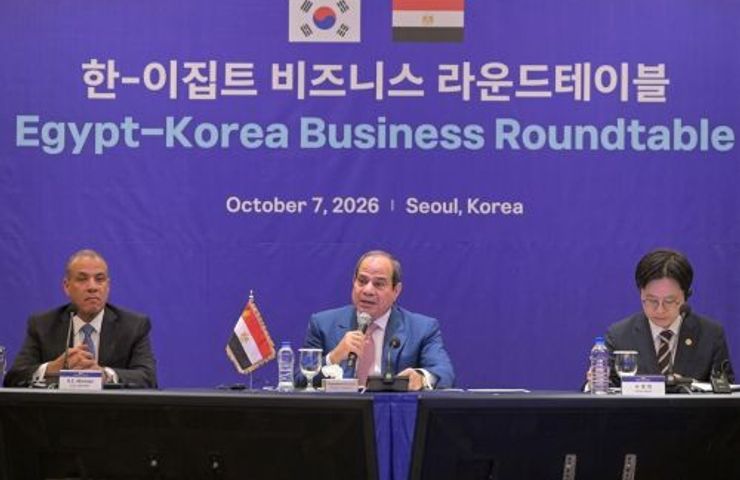
Egypt’s National Authority for Tunnels (NAT) and South Korea’s rolling-stock manufacturer Hyundai Rotem have signed a memorandum of understanding to explore a hydrogen-powered tram system for Egypt’s New Administrative Capital. NAT was established in 1983 under Law No. 113 to plan, study, design and supervise tunnel and metro projects. Its mandate was broadened in 2018 to include all electric-traction rail systems, and in 2020 NAT was reconstituted as a public economic authority, reflecting a larger role in national transport modernization. The agreement, described by South Korea’s Ministry of Trade, Industry and Energy, calls for a preliminary feasibility study of a proposal involving 44 hydrogen-electric tram trainsets operating on an approximately 28-kilometre route. The memorandum of understanding is explicitly framed as a study-stage cooperation framework, not a confirmed procurement contract or an approved construction plan.
Under the terms outlined by the ministry, the two parties will assess economic viability, hydrogen sourcing, safety systems and integration with existing transport projects before any implementation decision. Egyptian transport minister Kamel el-Wazir and President Abdel Fattah el-Sisi took part in the Seoul business roundtable during which the MoU was signed, lending political visibility to the initiative. National Authority for Tunnels sources clarify that details such as final route alignment, depot locations, financing arrangements and a commercial operation date remain under review. No procurement award or construction timetable has been set.
How a hydrogen-electric tram works
The concept under study pairs onboard hydrogen fuel cells with a battery energy-storage system to enable catenary-free operation. Hydrogen would be stored in high-pressure tanks on each tram and fed into a fuel-cell stack where it reacts electrochemically with ambient oxygen to generate electricity. A battery pack supplements peak power during acceleration and captures regenerative-braking energy, improving overall efficiency. The system produces no direct carbon dioxide exhaust at the vehicle, emitting only water and heat during operation. Upstream emissions, however, depend on the hydrogen production pathway, which has not yet been specified in the feasibility framework. Refueling infrastructure, high-pressure storage and safety protocols are also listed as part of the study’s scope.
Strategic fit in a planned city
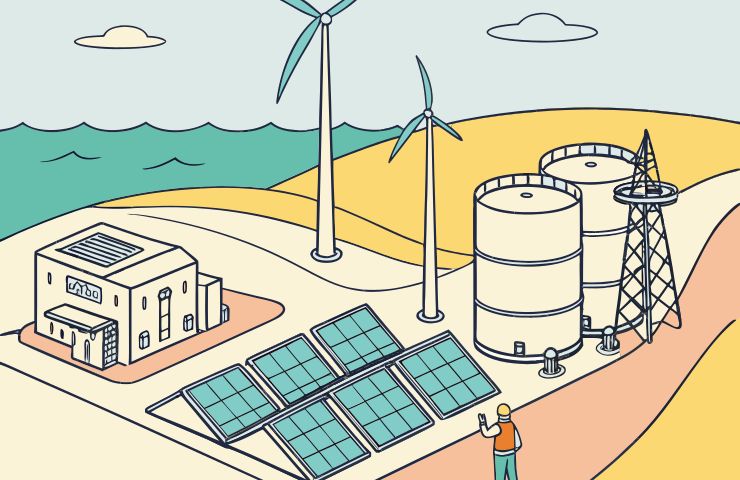
The New Administrative Capital is a 700-square-kilometre development east of Cairo that was announced in 2015 to relocate government functions and create a modern urban hub. Early reports indicate a resident population of around 30,000, with a targeted 250,000 residents within a few years and a long-term capacity exceeding six million. Because much of the territory remains undeveloped, designing transport infrastructure there presents a rare planning opportunity. Authorities can align new corridors and systems without retrofitting legacy networks. The surrounding desert zone has high solar irradiation and wind resources, which could support onsite renewable-power generation and green-hydrogen production if paired with electrolyzers.
The hydrogen tram proposal would join an evolving ecosystem of electric-traction projects. The East Nile Monorail has begun partial commercial service, and the Light Rail Transit system connects the new city with neighbouring areas including Adly Mansour and 10th of Ramadan. A catenary-free tram could reduce visual intrusion compared with overhead wires and offer operational flexibility where overhead electrification is challenging or cost-prohibitive.
Policy and supply-chain considerations
Egypt’s National Low-Carbon Hydrogen Strategy explicitly identifies transport applications, and Law No. 2 of 2024 provides incentives for green-hydrogen production projects. Those measures create a supportive policy backdrop. They do not, however, guarantee that this tram project will qualify for subsidies or mandates. The involvement of South Korea’s Ministry of Trade, Industry and Energy situates the initiative within a broader bilateral cooperation framework covering infrastructure, manufacturing, energy and investment.
A decisive outcome of the feasibility study will be the selection of a hydrogen production pathway. Green hydrogen, produced by electrolysis powered with renewable electricity, would maximize climate benefits. By contrast, fossil-based hydrogen without carbon capture could undermine emissions targets. Establishing a reliable hydrogen infrastructure will mean building electrolyzers or securing supply agreements, installing refueling stations, planning high-pressure storage and implementing stringent safety protocols. Trained personnel will be required to manage operations and emergency procedures. The feasibility analysis must also compare the full lifecycle cost of hydrogen fuel cells with direct electrification, battery-only trams and conventional overhead-energized systems to determine the most economic and sustainable option.
Comparative outlook in hydrogen rail
Internationally, hydrogen rail has emerged as a solution on non-electrified corridors where overhead wires present technical or aesthetic challenges. Alstom’s Coradia iLint, which entered service in Germany in 2018, demonstrated fuel-cell traction for regional rail. Hyundai Rotem has been developing its own hydrogen-tram platform since 2021 and tested prototypes in Ulsan, South Korea. If implemented in Egypt, this project could be the first overseas deployment of Hyundai Rotem’s hydrogen-tram technology and a reference for future zero-emission rollouts. Other urban rail initiatives, such as Alstom’s Innovia monorail in Greater Cairo and tram projects in Saudi Arabia, highlight the range of propulsion options being tested in the region.
Integration challenges and network design
Seamless interchange with the monorail and LRT systems will be crucial to avoid redundant routes and to maximize passenger convenience. Coordinating station designs, fare systems and timetables requires early alignment between public authorities and private partners. The National Authority for Tunnels, with decades of experience in metro and tunnel projects, brings technical expertise and project oversight. Hyundai Rotem can contribute rolling stock, signalling interfaces, maintenance regimes and training programs under an integrated package.
Next steps and decision points
The memorandum stipulates that the parties will complete a detailed feasibility study covering technical design, demand forecasting, lifecycle cost comparison and hydrogen supply logistics. After the study, Egypt’s authorities must award a procurement contract or concession, secure financing, obtain safety certifications and finalize land and depot permits. Only then can construction begin and a commercial operation date be set. Feasibility findings will likely be published publicly, offering insight into hydrogen-tram economics and may influence policy refinements in Egypt’s emerging green-hydrogen sector. Until these steps are complete, the hydrogen tram remains an opportunity under evaluation rather than an approved public-transport investment.
For Hyundai Rotem, the project represents a strategic entry into hydrogen rail markets outside South Korea. For Egypt, it could advance local maintenance capabilities, transfer fuel-cell expertise and align urban transport with national decarbonization ambitions. The success of the study could influence future choices between hydrogen, battery and overhead-electric solutions, not only in the New Administrative Capital but across emerging urban developments in the MENA region and beyond.