Green Hydrogen News: Andalusia Opens Public Consultation on 10 MW Almonte Plant
Andalusia invites public feedback on a proposed 10 MW alkaline electrolysis plant in Almonte, targeting hydrogen-to-gas blending and environmental review.
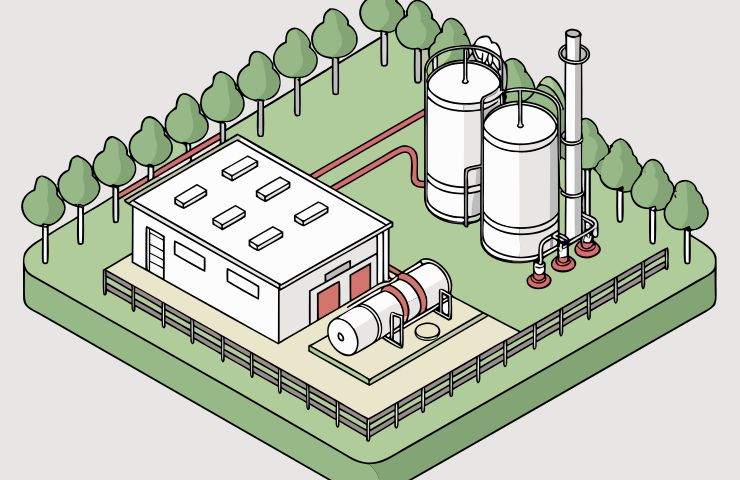
The Delegación Territorial de Sostenibilidad y Medio Ambiente de la Junta de Andalucía en Huelva has opened a thirty-business-day public consultation for the PPH2R 10 MW Almonte project, a proposed green hydrogen production facility in the municipality of Almonte, province of Huelva, Spain, according to official notices and Europa Press reports. The administrative dossier identifies Atlantida Sailh2 Uno, S.L.—an alliance vehicle linked to Atlantica Sustainable Infrastructure and SailH2—as the project promoter. During this public phase, citizens, environmental groups and companies may examine the integrated environmental authorization (AAI), the environmental impact study (EIA) and the health impact assessment before any final permit is granted.
Project Overview
The proposed plant would occupy 5 714 m² of rural land in polígono 29, parcela 41, adjacent to Camino de los Cabezo Gordos. It lies within the municipal term of Almonte, a town of roughly 24 800 residents whose local economy is based on agriculture, livestock and protected marshlands linked to Doñana, according to municipal records. The design calls for a 10 MW alkaline electrolyzer with a nominal hydrogen output of 4 315.2 kg per day and a nominal production flow of 2 000 Nm³ per hour, as cited by pv magazine and Europa Press. Process water would be sourced from the El Tomillar industrial estate, with a maximum daily water demand of 86.4 m³ and an hourly process consumption of 3.6 m³.
Electrolysis Technology and Balance of Plant
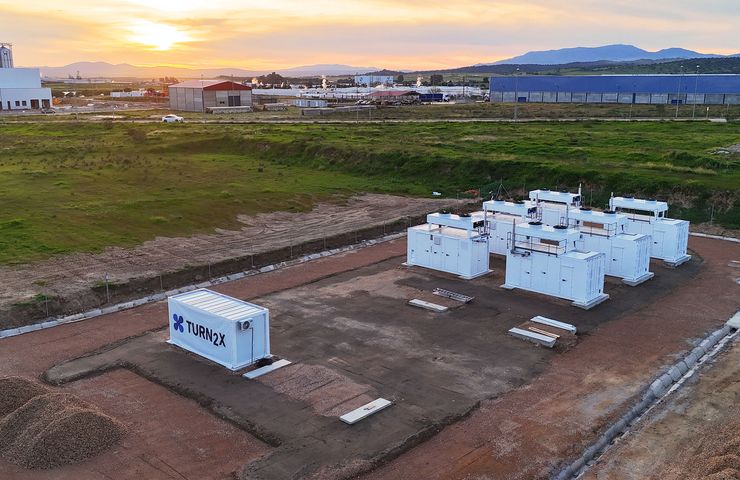
The facility is designed around alkaline electrolysis, in which an alkaline electrolyte circulates between a cathode and an anode separated by a diaphragm. Electrical energy initiates electrochemical reactions: hydrogen evolves at the cathode and oxygen at the anode. According to the project documentation, the hydrogen stream will be purified to 99.999 % purity, dried, compressed and conditioned via skid-mounted equipment—including compressors, gas dryers, safety valves and metering systems—prior to export. The skids are intended to meet pipeline pressure requirements and to include leak detection and safety interlocks in line with industry norms.
Renewable Electricity Supply
The promoter plans to feed the electrolyzer with electricity under a power purchase agreement (PPA) contracted through a commercial supplier, according to the preliminary dossier referenced by pv magazine. The dossier does not disclose the identity of the renewable generation asset. Under European Commission guidelines on renewable fuels of non-biological origin (RFNBO), proof of additionality, and both temporal and geographic correlation between the renewable source and the electrolyzer, will be required alongside guarantees of origin and life-cycle emissions data to certify the hydrogen as renewable.
Blending with Existing Gas Infrastructure
The project’s distribution strategy envisages blending hydrogen into the existing natural gas network. Preliminary schematics indicate a connection to the Enagás Transporte Huelva-Sevilla pipeline at a designated section, according to pv magazine. By mixing hydrogen with gas under controlled ratios—likely below 10–20 % by volume to avoid material compatibility issues—the plant would make use of existing infrastructure to supply industrial and commercial customers without building new hydrogen-specific pipelines. The final blending percentage and technical specifications remain subject to approval by the network operator and to compliance with safety standards for measurement, combustion and end-use appliances.
Environmental and Social Scrutiny
During the consultation, which remains open for thirty business days, stakeholders can submit observations on the integrated environmental authorization, the environmental impact study, and a health impact assessment, according to the Junta de Andalucía’s procedural rules. The documentation classifies the site as rural land, and local sources note that municipal urban compatibility or a building permit has not yet been issued. Key issues the assessment must address include groundwater availability; potential effects on habitats associated with Doñana; soil sealing of approximately 0.57 hectares; noise from compressors; the visual impact of skid modules; treatment of process water; and traffic during construction.
Strategic Context in Andalusia and Spain
The Almonte proposal forms part of Spain’s national green hydrogen roadmap, which originally set a target of 4 GW of electrolyzer capacity by 2030—later updated to 12 GW under the integrated energy and climate plan—according to the Ministry for Ecological Transition. Andalusia has emerged as a candidate region for such projects thanks to high solar potential, existing industrial estates and port facilities. In Huelva province several projects are under evaluation, including a larger 280 MW plant by Hyren that is also under environmental consultation, as reported by local media. Whereas the Hyren scheme targets bulk production for ammonia and synthetic fuels, the Almonte project is framed as a small-scale demonstrator focused on hydrogen-to-gas blending applications.
Economic and Market Factors
The promoter expects the project to generate activity across engineering, procurement, construction and operation phases, although the current dossier does not disclose definitive figures on investment or employment. The modular nature of alkaline electrolyzers may allow competitive procurement of cells, catalysts and balance-of-plant skids from European and local suppliers. Final hydrogen offtake will depend on offtake agreements for renewable hydrogen certificates and on securing buyers at prices that reflect PPA costs, operations & maintenance charges, and certification overhead. Market conditions matter: electricity market volatility and the structure of the PPA will be critical factors in determining levelized hydrogen costs.
Next Steps and Regulatory Uncertainties
When the consultation period ends, the regional authority will review submissions and may require revisions to the impact study or additional mitigation measures. The promoter must then complete water abstraction permits, wastewater discharge authorizations, and a connection agreement with Enagás Transporte. A municipal building license and clearance for rural land use are also pending. Given these outstanding permits and approvals, the project remains at the permitting stage; construction start, commissioning timeline and commercial operation dates are yet to be determined.
In sum, the PPH2R 10 MW Almonte project represents a cautious advance toward integrating green hydrogen into Andalusia’s energy and gas networks by leveraging alkaline electrolysis and existing infrastructure. The public consultation will test the project's technical design, environmental safeguards and community acceptance, and it will shape whether this small-scale demonstration can proceed alongside larger regional ambitions that balance industrial aspirations, agricultural heritage and environmental protection.