Hydrogen news
Green Ammonia and Hydrogen Now Cheaper than Fossil Fuels
Hydrofuel's licensing of Micro Ammonia Production System (MAPS) from Georgia Tech to combine with its Kontak Hydrogen from Ammonia Separation Modules Our mission to provide Green Hydrogen from ammonia to end users with lower costs and life cycle pollution than any other fuel is now within our reach" — Greg Vezina, Hydrofuel Canada Chairman and CEO Hydrofuel Canada Inc. ("Hydrofuel"), a company engaged in delivering Green Ammonia and Hydrogen along the last mile to its customers, has completed an exclusive license agreement with Georgia Institute of Technology ("Georgia Tech") for their paten…
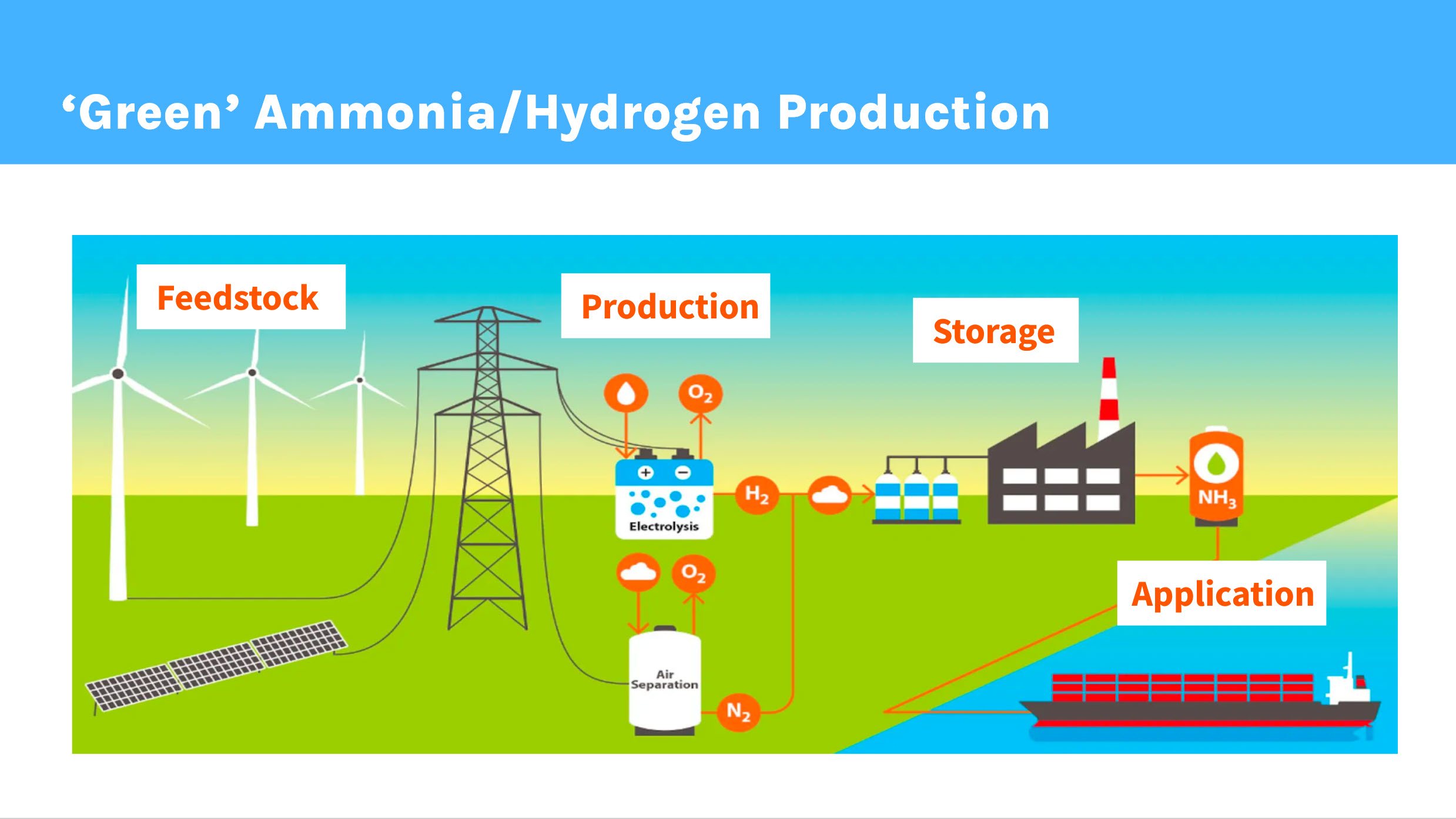
Hydrofuel's licensing of Micro Ammonia Production System (MAPS) from Georgia Tech to combine with its Kontak Hydrogen from Ammonia Separation Modules
Our mission to provide Green Hydrogen from ammonia to end users with lower costs and life cycle pollution than any other fuel is now within our reach"
— Greg Vezina, Hydrofuel Canada Chairman and CEO
Hydrofuel Canada Inc. ("Hydrofuel"), a company engaged in delivering Green Ammonia and Hydrogen along the last mile to its customers, has completed an exclusive license agreement with Georgia Institute of Technology ("Georgia Tech") for their patent pending MAPS system which enables high-yield, sustainable ammonia synthesis from air and water with unprecedented efficiency using a gas-phase electrochemical process.
[caption id="attachment_52760" align="aligncenter" width="875"]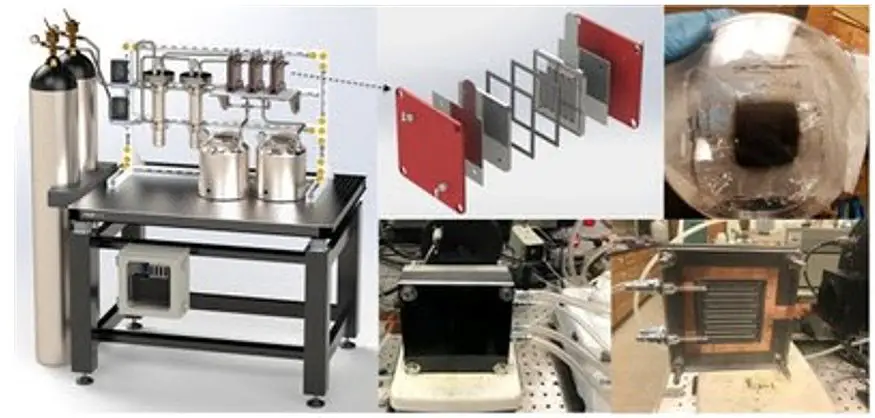 Figures Schematic of the gas-phase (photo) electrochemical cell for nitrogen fixation using hybrid plasmonic nanocages. (center top) In this setup, the catalyst materials are painted on both sides of the membrane surface, as shown in the top right image. (CNW Group/Hydrofuel Canada Inc.)[/caption]
Figures Schematic of the gas-phase (photo) electrochemical cell for nitrogen fixation using hybrid plasmonic nanocages. (center top) In this setup, the catalyst materials are painted on both sides of the membrane surface, as shown in the top right image. (CNW Group/Hydrofuel Canada Inc.)[/caption]
Utilizing MAPS technology with renewable energy to produce cost effective green ammonia is a major development. Using that ammonia with Kontak‘s technology, which Hydrofuel has previously acquired, is a game changer.
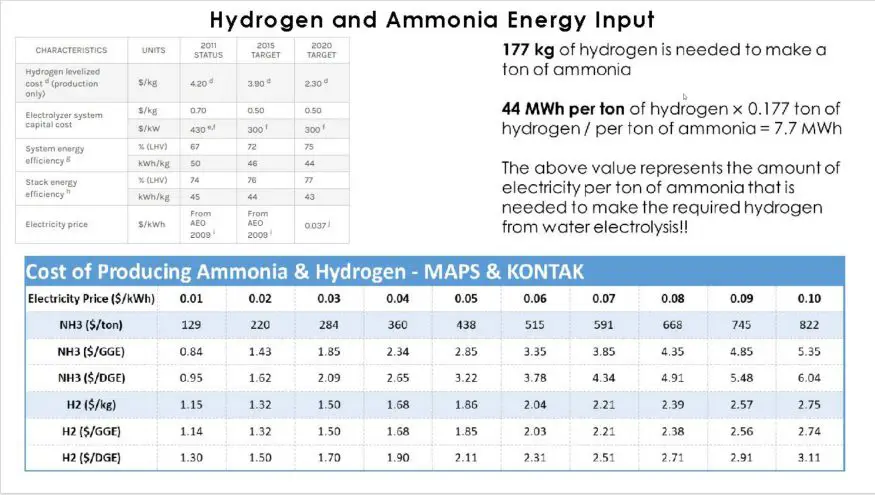
Combined, these technologies allow Hydrofuel to produce Green NH3 using $.02/kWh electricity for as low as $220 a tonne, whereas fossil-fuel derived NH3 is currently selling at $1,500 to $2,000 a tonne.
Green Hydrogen can be separated out from this ammonia to sell at about $1.50 a kg, compared to traditional green H2 which sells for up to $15 a kg. Even at $.08/kWh the production of green Ammonia and releasing Hydrogen from it will be lower cost than any hydrocarbon fuel.
 The MAPS ammonia production technology uses hollow hybrid plasmonic nanocages to create a highly effective electrocatalyst for ammonia synthesis from nitrogen (N2) and electrolyzed water (H2O) under ambient temperatures and pressure in the gas- and liquid-phase system.
Storing hydrogen energy in ammonia is more efficient than pure hydrogen as it doesn’t leak through the walls of containers and pipelines. The atomic the weight of the fuel makes it a perfect carrier of hydrogen for commuter, eVTOL, drone, and regular aircraft travel, as well as for marine, transport truck, agricultural and industrial and power generation uses.
The MAPS technology can decentralize the production of ammonia and hydrogen while it consumes significantly less energy than current methods, permitting local or on-site production with renewable electricity sources and long-term energy storage.
Hydrofuel and MAPs co-inventor Reza Nazemi are negotiating an agreement with Colorado State University to complete a commercial application and demonstration of the MAPS technology, commencing in July of 2022.
The MAPS ammonia production technology uses hollow hybrid plasmonic nanocages to create a highly effective electrocatalyst for ammonia synthesis from nitrogen (N2) and electrolyzed water (H2O) under ambient temperatures and pressure in the gas- and liquid-phase system.
Benefits/Advantages of MAPs Technology
- Simplified process: Enables production of ammonia via gas-phase system with few or no additional steps for separation and purification
- Reduced carbon footprint: Enables decentralized production so that farmers can make their own fertilizer on site, eliminating the need to transport it
- Long-term energy storage: Stored renewable energy in the form of liquid ammonia containing hydrogen that can easily be transported and delivered to end-users for various applications in the energy and transportation industries (e.g., power, combined heating)
How was this article?
Thanks for the feedback!