Coega green ammonia project secures $1 billion Topsoe SOEC package to scale green hydrogen production
Hive Hydrogen South Africa’s Coega Green Ammonia Project has contracted Topsoe to deliver an 850 MW SOEC package and ammonia loop, moving the $5.8 billion facility toward a 2026 FID.

Hive Hydrogen South Africa has teamed up with Topsoe to provide an impressive 850 MW solid oxide electrolyser cell (SOEC) package along with a dynamic Haber–Bosch ammonia synthesis loop for the Coega Green Ammonia Project located in Nelson Mandela Bay’s Coega Special Economic Zone. This contract, which is worth about $1 billion, brings the total investment in the project to $5.8 billion. The aim here is to ramp up the production of around one million tonnes of green ammonia each year, all powered by renewable energy sources. The project has already wrapped up its environmental impact assessment and is now in the front-end engineering design phase, with plans for a final investment decision by 2026 and expected commissioning around 2029.
Site and scale
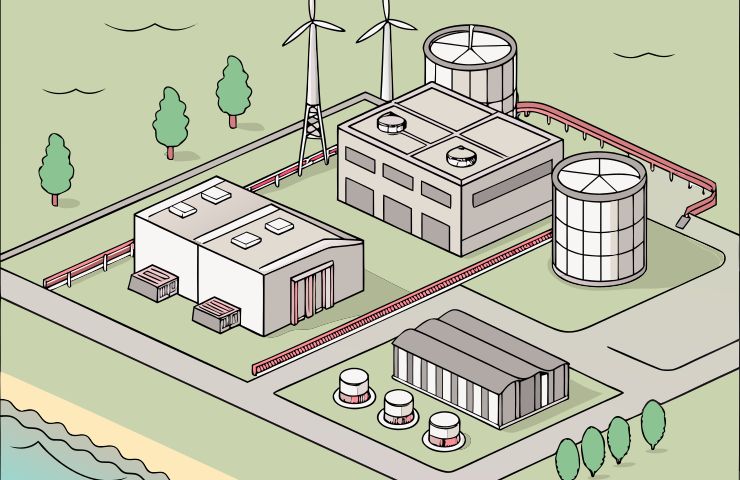
The Coega Green Ammonia Project is strategically placed next to the deep-water Port of Ngqura on South Africa’s southeast coast. This prime location takes advantage of a deep-water export berth and features dedicated on-site storage. The engineering plans include up to four ammonia tanks, each capable of holding 35,000 tonnes, and a 7 km cryogenic pipeline that connects the synthesis plant directly to the port terminal. By combining the electrolyser output with dynamic ammonia synthesis, the facility is designed to adapt to the fluctuating output from its renewable power sources, which total around 3.6 GW to 3.7 GW.
Solid oxide electrolysis technology
The efficiency of this project hinges on Topsoe’s advanced high-temperature SOEC technology. These cells operate at temperatures between 600°C and 850°C, enabling them to split steam into hydrogen and oxygen more efficiently than traditional low-temperature designs. By integrating these units with the heat produced during the ammonia synthesis loop, the plant can recover waste heat, which further reduces the electricity needed for hydrogen production. One of the standout features of these SOEC units is their ability to quickly adjust their output to align with variations in solar and wind energy, potentially slashing grid transmission costs by about 25%.
Ammonia synthesis and storage
Once hydrogen is produced, it’s combined with nitrogen obtained from the atmosphere (using either cryogenic or membrane separation systems) in a dynamic Haber–Bosch loop. This process involves compressing and reacting the gas mix over an iron-based catalyst at high temperature and pressure to create ammonia. The modular setup allows for flexible output adjustments, keeping in sync with the variable supply from the electrolysers. The liquefied ammonia is then stored in large refrigerated tanks before it’s sent through the cryogenic pipeline for bulk export.
Renewable power backbone
At the heart of green hydrogen production is dedicated renewable energy. The project has power purchase agreements in place for approximately 1.5 GW of onshore wind capacity and around 1.4 GW from solar photovoltaic farms. Environmental approvals have already been obtained for the Carissa wind project near Beaufort West, which will supply clean electricity directly to the electrolyser complex. Using a combination of direct grid connections, step-up transformers, and smart control systems ensures balanced production and demand, all without tapping into South Africa’s national grid. This guarantees that the power supplied is low-carbon, qualifying the ammonia produced as "green" under developing certification frameworks.
Water supply
To meet the demands of the SOEC units and associated plant operations, coastal desalination and demineralisation systems will convert seawater into the high-purity water needed. The process involves pre-treatment filtration and chemical dosing to protect the reverse osmosis membranes, followed by rigorous post-treatment through mixed-bed ion exchange or electrodeionisation for optimal conductivity levels. Environmental guidelines meticulously manage the disposal of brine and waste streams, ensuring that it doesn’t compete with the valuable freshwater resources and maintaining a reliable water supply for continuous hydrogen production.
Blended finance and partnerships
Financing a project of this scale requires innovative blended finance approaches. The SA-H2 fund, a combination of public and private capital, has committed development funds in conjunction with the European Commission’s Global Gateway initiative, Invest International, and several South African entities, such as the Public Investment Corporation and the Industrial Development Corporation. This collaborative funding strategy aims to mitigate risks during the early phases of hydrogen infrastructure development, bridging the gap between exploration and actual construction.
Developer profiles and governance
Hive Hydrogen South Africa, founded in 2019 to spearhead the Coega venture, benefits from the extensive experience of its majority shareholder, Hive Energy Ltd. This UK-based renewables developer has a diverse portfolio, including solar, wind, and hydrogen projects. The project is chaired by Thulani Gcabashe, the former CEO of Eskom, who ensures the venture aligns with national energy policy. BuiltAfrica Group also has a significant equity stake and is responsible for local permitting, community engagement, and regulatory compliance in the Coega Special Economic Zone, helping to navigate land allocation and infrastructure coordination through the Coega Development Corporation.
Permitting and infrastructure incentives
The project is reaping the benefits of Special Economic Zone (SEZ) incentives aimed at attracting export-focused investments. These include tax breaks, streamlined customs processes, and dedicated connections to infrastructure. The Coega Development Corporation, the statutory operator for the zone, has managed land leases, environmental approvals, and port agreements, allowing the hydrogen and ammonia production facility to seamlessly integrate with existing utilities and transport corridors. This supportive regulatory environment, along with "lighthouse" designation from national energy authorities, has helped maintain momentum through what developers describe as a challenging feasibility and permitting journey.
Offtake and market positioning
While specific offtake contracts are still under wraps, discussions are ongoing with buyers in Europe and Asia looking to source low-carbon fertilizers and marine fuels. Thanks to cost reductions achieved through the implementation of high-efficiency SOEC electrolysers and significant savings in renewable capital expenditures (over €500 million), the project aims to make unsubsidised green ammonia prices competitive with traditional ammonia derived from fossil fuels. Coega is positioned as part of emerging hydrogen corridors that connect Southern Africa with key import markets, alongside hubs like Prieska and Boegoebaai.
Supply chain and local content
The construction and operation phases will tap into a mix of international engineering, procurement, and construction contractors, while also relying on local suppliers for power handling, piping, tanks, and utilities. The project team emphasizes the importance of transferring technical expertise to South African companies and investing in workforce development, making Coega a catalyst for a burgeoning domestic green hydrogen supply chain. Early engagement with local employers, training institutions, and community stakeholders is essential for developing a steady stream of skilled technicians and engineers.
Environmental risk management
A thorough set of environmental impact assessments has tackled potential risks associated with desalination brine discharge, ammonia storage, handling, and changes in land use for renewable energy sites. Developers are required to continuously monitor marine ecology, emissions, and groundwater supplies while adhering to best practices for brine dispersion, leak detection, and emergency responses. Success hinges on maintaining compliance and being adaptable to ecological sensitivities in the coastal industrial context.
Strategic context
The Coega project aligns seamlessly with South Africa’s national Hydrogen Society Roadmap and Green Hydrogen Commercialization Strategy, which aim for an impressive 500,000 tonnes of annual green hydrogen output and 10 GW of electrolysis capacity by 2030. Although most of this capacity will be centralized in the Northern Cape, Coega highlights the Eastern Cape’s role in a broader hydrogen export strategy. Developing a deep-water export hub in an area already known for automotive manufacturing and bulk shipping taps into established industrial supply chains and maritime routes to both Europe and Asia.
Economic and social impact
Projected to mobilize around $5.8 billion in capital expenditures, the Coega project is set to create thousands of jobs—both directly and indirectly—across construction, operations, technical services, and community development. By exporting ammonia, South Africa can enhance its balance of payments and support national energy transition goals. The Coega plant serves as a model for how high-temperature SOECs and dynamic ammonia loops can produce unsubsidized, competitive green ammonia prices, showcasing influence not only in fertilizer markets but also in emerging maritime fuel corridors.
Policy recognition and future pipeline
Policy makers have recognized Coega as a pivotal project in South Africa’s journey towards a cleaner energy future, prompting national and provincial agencies to investigate similar SEZ-based hydrogen clusters. The insights gained from Coega will help shape regulatory reforms, grid expansion strategies, and blended finance models for future developments, aiming to de-risk projects and attract more foreign investment into green hydrogen export infrastructure.
Looking ahead
If Coega meets its operational goals, it will serve as proof that large-scale green hydrogen and ammonia production can be achieved within a Special Economic Zone. The learnings regarding blended finance, permitting coordination, and technology integration will be invaluable for upcoming projects in South Africa and in other emerging hydrogen markets. As the global appetite for clean ammonia rises in sectors like agriculture and shipping, Coega’s innovative blueprint could help lower costs, speed up decarbonization, and establish South Africa as a strong player in the green hydrogen export arena.