ArcelorMittal Brazil and Utility Global Target Hydrogen Production from Steel Off-Gas
ArcelorMittal Brazil partners with Utility Global and EDP on two hydrogen feasibility projects targeting low-carbon steelmaking using off-gas conversion and electrolysis—pivotal for shaping hydrogen's future in heavy industry.
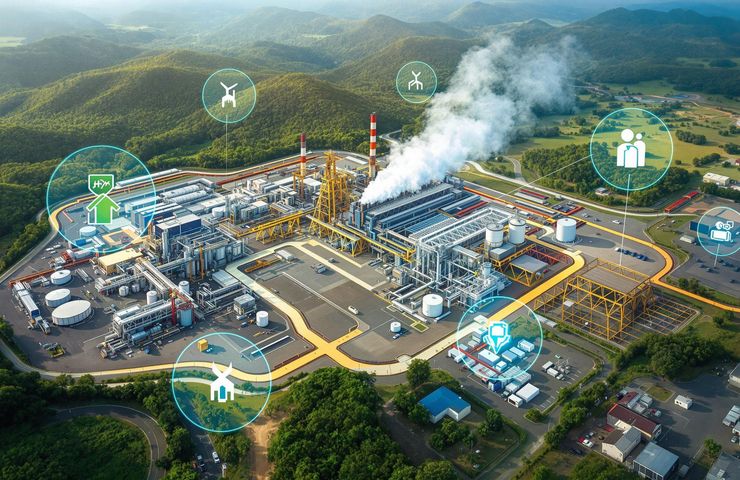
ArcelorMittal Brazil is rolling up its sleeves and diving into industrial decarbonization with not just one, but two bold hydrogen pilot projects—one at Juiz de Fora with Houston-based startup Utility Global, and the other in Tubarão in partnership with energy company EDP. These efforts are a direct response to mounting pressure on heavy industries to cut emissions—and they shine a spotlight on both the ambition and the real-world challenges of bringing hydrogen into steel production.
Making Hydrogen from Off-Gas: A Smarter, Cheaper Play
Set to kick off in July 2025, the Juiz de Fora pilot explores a clever twist on hydrogen production. Instead of relying on external electricity or imported fuels, the project taps into something that’s already on site—off-gases from ArcelorMittal’s own blast furnace operations. The magic comes from Utility Global’s H2Gen system, which uses an electrochemical process to transform a blend of CO, CO₂, H₂, N₂ and steam into clean hydrogen, along with a stream of CO₂ that could be captured down the line.
After racking up more than 3,000 testing hours in North America, H2Gen is showing real promise. For steel producers looking for low-cost solutions that sidestep the hefty demands of traditional methods like water electrolysis or carbon-intensive steam methane reforming (SMR), this route could be a game-changer.
Charting a Green Hydrogen Path at Tubarão
Meanwhile, over in Espírito Santo, ArcelorMittal’s Tubarão facility—one of the major players in Brazil’s flat carbon steel market—has teamed up with EDP to explore another direction: green hydrogen. The idea is to build a small-scale pilot plant that uses renewable electricity to split water molecules, producing hydrogen with zero emissions right from the start.
This venture builds on EDP’s track record from launching Latin America’s first operational green hydrogen facility, and it puts Brazil right in the spotlight as a natural fit for these types of clean energy projects. With ample renewables and growing backing from national policies, the country is shaping up as a leader in next-gen hydrogen infrastructure.
Why It Matters: Strategy Meets Timing
This isn’t just about fancy tech—it’s a testing ground for real business models. The steel industry pumps out about 11% of global CO₂ emissions, and while hydrogen looks like a solid bet on paper, making it work at scale—and at a cost that makes sense—is a major hurdle. That’s what these pilots are aiming to crack.
For ArcelorMittal, Brazil makes sense. With over 15 million tonnes of steel rolling out locally each year and operations in more than 60 countries, the company knows it can’t flip a switch overnight. Full-on green hydrogen or carbon capture, utilization and storage (CCUS) still aren’t economically feasible for now. But testing the waters? That’s a smart bet. And Brazil’s got the goods—think strong manufacturing base, close proximity to raw materials, and one of the most renewable-heavy electricity grids in the world. Add in friendly industrial policies and tax reforms, and the timing couldn’t be better.
A Closer Look at the H2Gen Tech
Unlike many hydrogen systems that require a huge outside power source, the H2Gen system plays it differently. Feed it steam and off-gases already kicking around the steel plant, and it cranks out hydrogen onsite, with far fewer headaches around infrastructure. Since it’s a more compact, plug-and-play setup, it also saves on capital investment compared to traditional electrolyzers. Plus, the CO₂ it releases is already separated—laying groundwork for possible carbon capture integration in the future.
Perhaps just as important, this approach sidesteps one of the biggest sticking points in the hydrogen game: how to store it and move it around. By pulling from production by-products on-site, it reduces reliance on external hydrogen delivery systems and keeps things nimble.
Setting the Stage for Bigger Impact
If all goes according to plan, the ripple effect could be huge—not just for Brazil, but for the broader Latin American industrial landscape. Other steel producers and heavy industries might take notice and follow suit, spotting a way to breathe new life into existing infrastructure by transforming it into hubs for next-gen hydrogen production.
Of course, there's no shortage of roadblocks. These projects are pilots for a reason—tech systems need to be stress-tested, financial models have to hold up, and integrated steel environments are notoriously tough places to roll out something brand new. Still, stepping into this kind of experimentation with a grounded, realistic mindset is critical. No hype—just smart trial and error.
What to Watch Over the Next Two Years
The next 12 to 24 months are going to be make-or-break. If the pilots in Juiz de Fora and Tubarão prove they can hit the right notes—technically and financially—they could help set the tone for hydrogen policy and market investment across the region. These aren’t major rollouts just yet; think of them more as detailed blueprints under heavy review.
And in an industry like steel, where real change doesn’t happen overnight, proof-of-concept projects like these are more than just experiments—they’re part of building the foundation for what zero-emission technology and industrial decarbonization might actually look like by 2030.