Shell and CB&I Demonstrate Commercial-Scale Liquid Hydrogen Storage, Advancing Hydrogen Infrastructure
Shell and CB&I have completed a successful demonstration of a commercial-scale liquid hydrogen storage tank, clearing a critical barrier for hydrogen infrastructure and transport scalability.
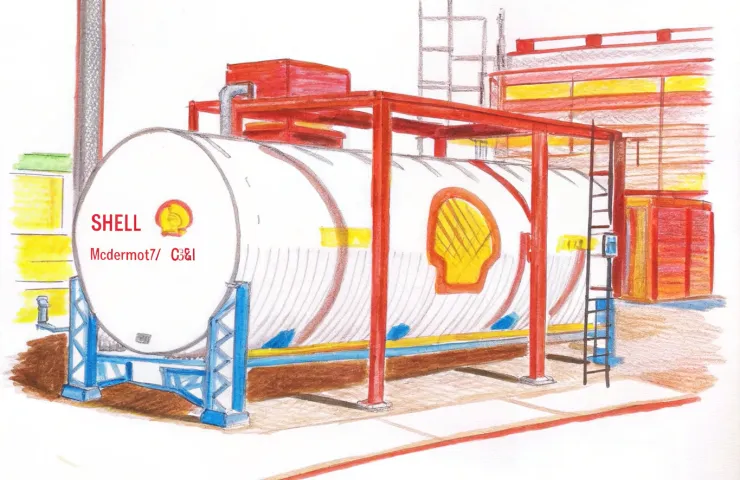
Shell and CB&I just hit a major milestone in the world of hydrogen infrastructure, pulling off a successful demo of a commercial-scale liquid hydrogen storage tank. It’s a big leap forward—one that could dramatically change how we store, move, and use hydrogen in the clean energy mix of the future.
Why Large-Scale Hydrogen Storage Is a Game Changer
Here’s the deal: storing hydrogen isn’t easy—especially when you’re trying to do it at cryogenic temps below -253°C. That’s colder than outer space. This wasn’t some lab experiment. We’re talking real-world, full-scale infrastructure designed to support everything from industrial decarbonization efforts to global hydrogen trade routes. This kind of breakthrough makes hydrogen production and delivery more practical, affordable, and ready for primetime.
If hydrogen is going to seriously compete with traditional fuels, we need a smarter, cheaper way to store and ship it—especially as liquid hydrogen. Why liquid? Because it packs way more energy into a smaller volume than gaseous hydrogen, which makes it ideal for long-haul transport, aerospace, and fueling big ships out at sea.
Years of Collaboration Paying Off
CB&I, a division of McDermott International, brought its decades of cryogenic storage expertise to the table, while Shell continues pushing the envelope on sustainable energy. These two companies go way back—working together across oil, gas, and refining—but this latest project signals something new: a serious pivot into the hydrogen economy.
The exact location of the demo hasn’t been made public, but word is it happened recently at one of Shell’s R&D facilities. The focus was simple: prove the tank works under real operating conditions. That means it had to handle everything—filling, cooling, holding, and warming—while meeting safety and cost targets that actually make sense for global rollout.
The Tech Behind the Tank
Building a massive tank for liquid hydrogen isn’t just a matter of scaling up. You’re dealing with extreme cold, pressure, and some very unpredictable physics. That’s where CB&I’s cryogenic know-how comes in. The tank likely uses high-tech materials—premium stainless steel, multi-layer vacuum insulation, and advanced pressure controls—to keep the hydrogen stable and safe.
“Pulling this off at full scale doesn’t just prove the science—it shows the business case is real,” one industry insider said. “It’s not just about theory anymore. The infrastructure is stepping up in a big way.”
Where This Could Lead
This isn’t just a one-off win. For Shell, it supports their broader push into the green hydrogen value chain—from European production hubs to fueling stations in Asia. For CB&I/McDermott, it could lead to a whole wave of new engineering and construction contracts as countries start building out liquid hydrogen refueling networks, export terminals, and ports.
And this isn’t theoretical, either. With this system now validated, projects in places like Australia, the U.S. Gulf Coast, and the Middle East just got one step closer to real-world shipping of hydrogen.
Connecting the Dots in Hydrogen Infrastructure
Everyone loves to talk about impressive advances in electrolyzers, pipelines, and fuel cells. But let’s be honest—none of that matters without reliable storage. Hydrogen storage is what ties all the pieces together. Without it, we’re not fueling planes, supplying marine bunkers, or building large-scale refueling networks. This demo filled in a key piece of the puzzle—with two major players leading the charge.
So what’s next? Don’t be surprised if we hear announcements about commercial rollouts later this year. Shell is already charging ahead with hydrogen hubs, and thanks to this success, they’ve just added another critical tool to the kit.
In a world moving rapidly toward decarbonization, cryogenic engineering might not make headlines—but behind the scenes, it’s becoming one of the essential tech pillars holding up tomorrow’s zero-carbon supply chains.