Ruthenium Catalyst Breakthrough Could Reshape Hydrogen Production and Ammonia Decomposition
A new ruthenium-based catalyst, created using the solvent dynamics-limiting method, shows major promise for cleaner hydrogen generation and ammonia decomposition—both key to decarbonizing energy systems.
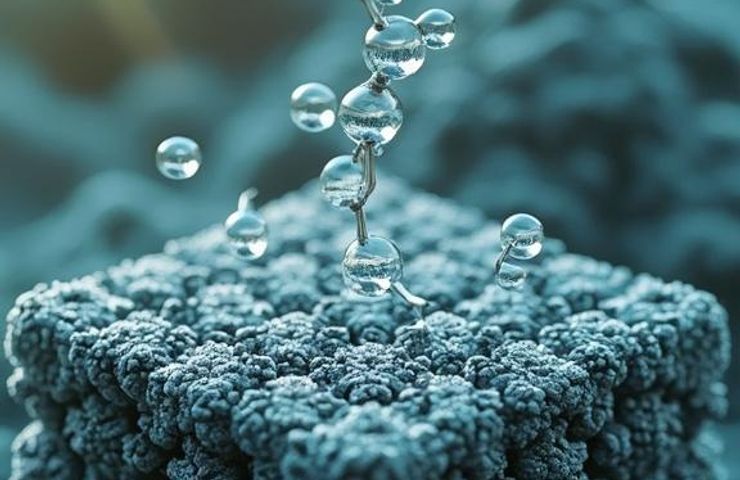
A new chapter in hydrogen production and clean ammonia might be kicking off, all thanks to a breakthrough catalyst that’s pushing ruthenium into exciting new territory. Researchers have uncovered something called the 'solvent dynamics-limiting effect', and with it, they’ve managed to create homoatomic heterophase (fcc/hcp) Ru interface catalysts—a mouthful, sure, but potentially a game-changer when it comes to green hydrogen and sustainable ammonia technology.
Ammonia synthesis—and its reverse, ammonia cracking—have long been staples in industry, but they come at a steep environmental price. The classic Haber–Bosch process eats up a lot of energy and leans heavily on fossil fuels. On the flip side, pulling hydrogen from ammonia sounds great in theory, but the sluggishness of current catalysts has made it tough to scale. That might be about to change, though.
Breaking Ground at the Atomic Level
Here’s where things get really interesting. These new Ru catalysts combine two different crystalline forms—face-centered cubic (fcc) and hexagonal close-packed (hcp)—in a single nanoparticle. Through clever control of solvent dynamics, scientists have managed to lock these two phases together. The result? A highly active atomic interface that lowers the energy needed to get reactions going and boosts how fast electrons move between the structures.
This unique design is a major win for both hydrogen evolution reactions (HER) and ammonia-related chemistry, especially across a wide pH spectrum. In layman’s terms: it’s versatile, powerful, and better suited for real-world conditions. That flexibility makes it a prime candidate for scalable green tech solutions.
Heraeus Precious Metals Steps In
Enter Heraeus Precious Metals, Germany’s powerhouse in catalysis and precious metal processing. Heraeus has been all-in on ruthenium-based catalysts for a while now, and this latest development aligns perfectly with their mission to create sustainable, low-carbon industrial solutions.
Using their edge in metal recycling and custom catalyst work, Heraeus is doing more than making industrial processes more efficient—they’re helping to build a circular economy around precious metals. Greater reusability of ruthenium means less strain on critical natural resources, and that’s huge in a resource-scarce world.
Why It Matters: Hydrogen, Ammonia, and the Road Ahead
So, why should you care? Because hydrogen and ammonia aren’t just futuristic fuels—they’re key energy carriers that hold the potential to clean up sectors like transport, energy storage, and even farming. But unlocking that value hinges on one thing: catalysts that are clean, scalable, and effective.
This is where the new Ru catalyst shines. Not only does it drive reactions at lower temperatures—cutting down the energy needed—but it also opens the door for smart, decentralized systems. Picture solar- or wind-powered micro-reactors that produce clean ammonia as a hydrogen carrier, which can then be cracked on-demand, wherever it’s needed.
And it gets even better when these catalysts are paired with porous carbon materials—especially the nitrogen-doped kind. The combo delivers more stability and better performance, thanks to improved electron transfer. Researchers say the sweet spot is around 2 nm nanoparticles, where the most reactive ruthenium “B5-sites” are exposed and ready to work. This sort of precision means we’re inching closer to turning cutting-edge lab tech into practical, large-scale solutions.
What’s Next? Scaling, Cost, and Real-World Hurdles
Of course, it’s not all smooth sailing. Ruthenium doesn’t come cheap, and while the performance is top-notch, scaling up these intricate catalysts is going to be a tall order. Market swings in metal pricing add another layer of complexity, and building the global manufacturing muscle to support this tech at scale is something we haven’t solved just yet.
Still, the potential upside is hard to ignore. We’re talking about lower energy demands, cleaner processes, better reusability, and support for more resilient, distributed energy systems. The ability to bring down the carbon footprint across industries—from food production and fertilizer to hydrogen infrastructure—is no small prize.
The Takeaway: Catalyst to a Cleaner Future
Even in these early days, this new ruthenium catalyst is a strong signal that we’re headed toward a more flexible, efficient, and sustainable energy future. It’s a great reminder that sometimes the biggest leaps in decarbonization aren’t loud—they’re happening quietly in the lab, at the atomic level.
With players like Heraeus translating science into scalable solutions, the gap between discovery and implementation is shrinking. And as these innovations make their way into industry, they bring us closer to a cleaner planet—one atom at a time.