News
Uruguay’s Ancap Eyes Natural Hydrogen Leap With 2025 Exploration Bid
Uruguay’s Ancap plans to launch Latin America’s first competitive bid for natural hydrogen exploration by 2025, aiming to tap underground reserves and shift global hydrogen production models.
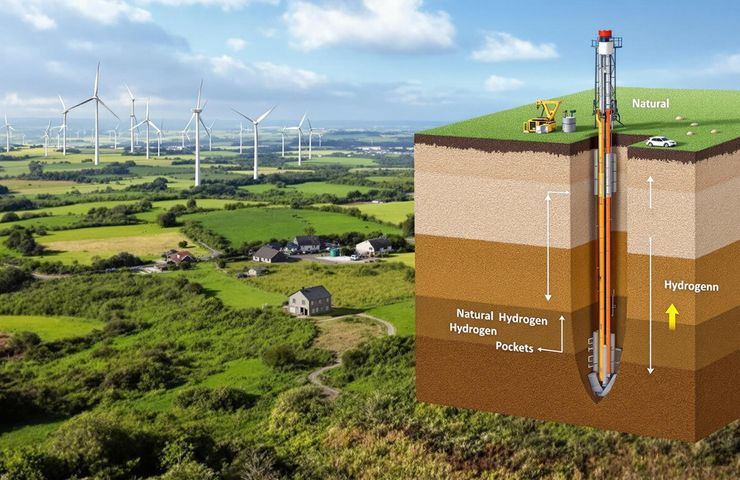
Green Lights, Deep Rocks: Uruguay Bets on Natural Hydrogen
When a country already runs on 98% renewable electricity, what’s next? For Uruguay, the answer may lie deep underground. In a bold twist, Ancap—the country’s state-owned energy company—is turning its attention to a new frontier: natural hydrogen. They’re planning a competitive bidding round by late 2025, with submissions expected the following year. The mission? To tap into naturally occurring hydrogen that’s been forming for millennia beneath the Earth’s surface. And that’s not all—there’s also talk of a carbon capture auction coming up in 2027.The Natural Alternative to Electrolysis
These days, green hydrogen is having its moment in the sun—and for good reason. But making it, through electrolysis, means using loads of renewable electricity to split water molecules. It's clean, yes. But it’s also expensive and energy-hungry. Here’s where “natural” or “white” hydrogen steps in. This stuff is created by geological processes deep below the Earth's surface. No electrolysis required. If you can find it and extract it safely, you’re looking at a potentially cheap, zero-emissions fuel source. By supporting this kind of hydrogen production, Ancap is putting Uruguay on the map as one of the first countries in Latin America to explore this emerging clean energy space in a commercial way.The Science Beneath the Soil
So, what exactly is natural hydrogen? It’s hydrogen gas that seeps from rock formations in the Earth’s crust—a byproduct of ancient geological reactions. Until recently, it flew under the radar or was misidentified entirely. But with today’s advanced subsurface imaging and improved exploration tools, that’s starting to change. Uruguay’s unique geological landscape might just be hiding untapped pockets of this clean energy source. The plan is to open a pre-commercial phase, where interested players can survey the land, run test drills, and gather data. Think of it as a modern-day energy treasure hunt—except the “gold” is invisible and pollution-free.Why Uruguay, Why Now?
Uruguay’s no stranger to sustainability. Thanks to years of smart investments, the country now sources over 98% of its electricity from renewable energy—mainly from wind and hydro. It’s one of Latin America’s top clean energy success stories. But even the greenest energy systems have limitations—namely, energy storage and transportation. That’s where hydrogen steps in. In many ways, it acts like a giant battery, especially useful for industries that are tough to electrify. The government rolled out a green hydrogen roadmap in 2024, focusing on offshore wind for production. Now, with the addition of natural hydrogen, there’s another tool in the toolbox—one that could lower costs and supercharge Uruguay’s path toward full sustainable energy independence.Business Angle: First-Mover Advantage
There’s a strategic business play here too. By stepping into the natural hydrogen game early, Uruguay is setting itself up as a potential leader in a segment that’s barely out of its infancy. Its domestic power needs are already mostly covered. That means Uruguay could eventually export green fuels like hydrogen-derived ammonia to markets hungry for low-carbon solutions. Factor in the possible roll-out of carbon capture tech, and Uruguay starts to look like a go-to hub for industrial decarbonization. “The world is already watching Uruguay’s green hydrogen path,” said one regional energy expert. “If they pull off this natural hydrogen initiative, they’ll raise the bar even higher.”Potential Synergies: Hydrogen + Carbon Capture
Now, about that 2027 carbon capture investment round—some might see it as a curveball, but it actually fits the bigger picture. Often, the same geological setups where you find natural hydrogen can also be used to store carbon dioxide. Co-locating hydrogen production and carbon storage could open the door to hybrid projects that pull hydrogen out while pumping CO₂ back in. It’s like a closed-loop clean energy system—and a very attractive model for global investors.Looking to the Horizon
Of course, there are still plenty of unknowns. Natural hydrogen hasn’t been proven at a full commercial scale yet. Legal frameworks, royalties, and operational rules are still being written. But the momentum is definitely building. France, Australia, and Mali are already exploring it, and now Uruguay’s joining the frontlines. This isn’t just another state-run energy tender. It’s a signal that this underground fuel is starting to make serious waves—and might just be part of the next big shift in sustainable energy. If this gamble pays off, Uruguay won’t just be a renewable energy role model—it could help redefine how the world produces and uses hydrogen. About Ancap Founded back in 1931, Ancap—short for Administración Nacional de Combustibles, Alcohol y Portland—has traditionally been in the hydrocarbons game. But that’s changing. With eyes on green hydrogen and offshore wind, the state-owned giant is leaning hard into the clean energy future.How was this article?
Thanks for the feedback!