Spain’s Largest Green Hydrogen and E-Methanol Project Launches in Puertollano
Spain’s Magnon and Power2X partner up to launch a record-scale green e-methanol plant in Puertollano, combining biogenic CO₂ capture with solar-powered hydrogen production. Backed by EU policy, it aims to decarbonize shipping and aviation by 2030.
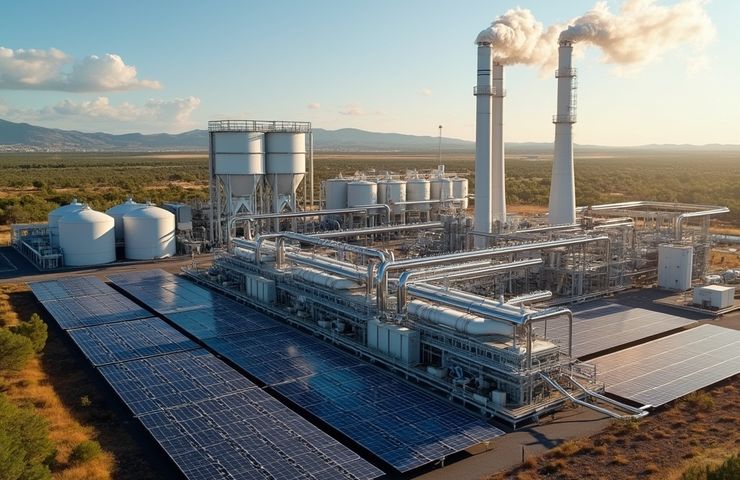
Spain is gearing up to host one of the boldest synthetic fuel projects in Europe, as Magnon teams up with Dutch energy developer Power2X through their joint venture, ErasmoPower2X. The plan? Build a state-of-the-art plant in Puertollano, Ciudad Real that brings together biogenic CO₂ capture and renewable hydrogen production to create green e-methanol at an industrial scale—right when the EU is ramping up pressure to cut emissions.
Europe’s Future Fuel Hub
The project is slated to launch in Q2 2025, with construction kicking off in 2026, and it's set to become Europe’s biggest integrated green methanol facility. It starts by capturing biogenic CO₂ emissions from Magnon’s biomass-powered plants using an advanced amine-based scrubbing system developed for post-combustion capture. On the hydrogen side, a 40MW pressurized alkaline electrolyzer—powered by a tailor-made solar farm—will produce green hydrogen right on site. Then comes the magic: a patented new process using a copper-zinc catalyst in an adiabatic reactor to synthesize e-methanol. It's still hush-hush, but the tech behind it is expected to be a game-changer.
Meeting RED III: Racing the Clock
Why the urgency? The EU’s RED III directive requires that by 2030, at least 5% of transport fuels in aviation and maritime sectors must come from synthetic sources. With green methanol gaining traction in sectors that are notoriously hard to decarbonize—especially shipping—this plant could be Spain's golden ticket to become a major green hydrogen and synthetic fuels export hub in the Mediterranean. If everything goes smoothly, it might even push out up to 800,000 tons of fossil-based methanol imports a year.
Joining Forces for Greener Industry
Formerly known as Ence Energía, Magnon is bringing something big to the table—biogenic CO₂ sourced from its biomass facilities. Shifting into carbon capture isn’t just a technical pivot—it’s a smart move to tap into emissions-trading perks and clean energy incentives. On the other side, Power2X, launched in the Netherlands in 2020, brings deep experience in Power-to-X (PtX) project development. In a 49/51 partnership with Spanish investment group Momentum Invest, they’ve created ErasmoPower2X, the JV charged with keeping the hydrogen and methanol pieces humming in sync at Puertollano.
Policy Backing and Big Bucks
This isn’t just a wild science experiment. Spain’s National Recovery Plan has earmarked €1.5 billion specifically for synthetic fuel innovation. Plus, the country’s Green Hydrogen Roadmap is targeting 4GW of hydrogen electrolysis capacity by 2030. This facility alone will make a serious dent in that goal.
They’re still waiting on final word from the EU's Innovation Fund to help finance this capital-heavy project. If funding goes through, it could unlock a bigger vision: a fully-fledged clean fuels network connecting Puertollano and the Port of Algeciras, paving the way for Europe’s first green transatlantic shipping corridor.
Biomass Concerns Stir Debate
Still, not everyone’s cheering. By using sustainable biomass as a source for CO₂, the project has sparked pushback from Spain’s pellet producers, who worry about future feedstock competition. It’s a familiar story across Europe, where the demand for biomass in both energy and industry may soon outpace what forests can sustainably provide.
Why This Matters
If this project hits its stride, it won’t just be about producing methanol—it’ll be about changing the game. By connecting carbon capture, green hydrogen production, and synthetic fuels all under one roof, the Puertollano complex could become a working blueprint for Europe's future of industrial decarbonization.
“Spain may have played a background role in Europe’s energy story up until now—but this might be the moment it takes the wheel,” said one clean fuels analyst. And honestly, that might just be spot on.
With powerful policy support, the right partners, and tech that actually connects the dots, Spain’s push for green hydrogen and synthetic fuels is starting to look more like a movement—and less like a moonshot.