
Johnson Matthey Expands Hydrogen ICE Testing in Gothenburg to Drive Sustainable Transport Adoption
Johnson Matthey opens a hydrogen ICE test facility in Gothenburg to accelerate clean heavy-duty transport solutions and support Europe's decarbonization goals.
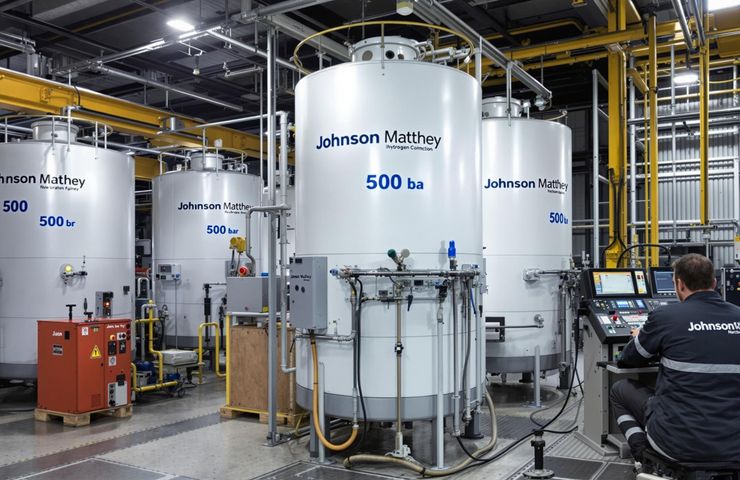
Johnson Matthey has just cut the ribbon on its very first hydrogen internal combustion engine (H2ICE) testing facility in Gothenburg, Sweden—a big move that shows it’s betting on a broader mix of zero-emission solutions, not just the battery-electric norm.
Pushing Forward on Clean Heavy-Duty Transport
Unveiled on July 24, 2025, this brand-new facility supercharges Johnson Matthey’s R&D game in the hydrogen mobility space. It’s all about testing catalyst systems that go into hydrogen internal combustion engines, which play a crucial role in cutting down nitrogen oxides (NOx) as emissions rules get stricter, especially in the heavy-duty transport sector. Real-world data from this site will be a huge help for engine makers and government regulators trying to stay ahead in the race to zero-emissions compliance.
With roots going back to 1817 and deep expertise in catalyst technologies, Johnson Matthey has been leaning hard into the hydrogen economy in recent years. This latest move highlights its strong focus on cleaner options for heavy transport—spaces where battery-electric tech doesn’t always fit the bill.
What’s Under the Hood: High-Tech Hydrogen Testing
The Gothenburg site isn’t just some lab with science fair experiments. We’re talking full-scale engine test cells that can handle hydrogen combustion at pressures up to 500 bar. Built-in safety features like gas sensors, fire protection systems, and advanced hydrogen control tech make this a secure and state-of-the-art setup. The name of the game here? Making sure catalyst and aftertreatment systems can cut emissions without sacrificing reliability or performance.
According to Tauseef Salma, Chief Technology Officer of Johnson Matthey’s Clean Air division, this site is a big step forward: “This is about getting hydrogen mobility ready for prime time and helping heavy transport meet net-zero emissions goals.”
So, Why Hydrogen ICE, and Why Now?
Sure, hydrogen fuel cells usually hog the spotlight when folks talk about zero-emission transport. But hydrogen internal combustion engines bring their own advantages, especially for big trucks and commercial fleets. For starters, they can be dropped into existing engine platforms, which means less downtime and lower upfront costs. There’s also less need for new fueling infrastructure, and they bring decades of proven engine performance to the table.
Take Project Brunel, for example—a recent venture between Johnson Matthey and Cummins that wrapped in March 2025. The project showed that hydrogen ICE tech holds up well in terms of both durability and cost-effective emissions control.
That’s turning heads across the industry. More and more, both regulators and fleet operators are seeing hydrogen ICE as a legit pathway toward industrial decarbonization, especially as zero-emission targets for vehicles loom closer in Europe and beyond.
Why Gothenburg Was a Smart Pick
Johnson Matthey didn’t choose Gothenburg on a whim. The site already had diesel engine testing in place, and the city itself is buzzing with clean-tech activity. It’s home to one of Scandinavia’s biggest ports, several hydrogen refueling pilot programs, and a tight-knit innovation community focused on green energy.
By building on what’s already there, JM sidesteps unnecessary costs while tapping into a region that’s serious about green hydrogen and sustainable logistics. The move aligns well with Sweden’s climate goals and fits right into the EU’s vision for a hydrogen-powered future.
Key Takeaways
- Accelerating to market: The Gothenburg facility helps speed up development timelines for hydrogen ICEs, giving manufacturers a shorter path to commercialization.
- Leveraging partnerships: Builds on JM’s legacy in catalyst systems and major collaborations like Project Brunel and the Global Hydrogen Mobility Alliance.
- Scaling safely: Loaded with top-tier safety and testing systems, the facility sets a new standard for hydrogen engine testing.
- Practical transition: Hydrogen ICE tech offers a cost-effective, low-disruption option for fleets not quite ready to go all-in on electric yet.
- Boosts local economy: Supports clean-tech jobs and hydrogen skill-building in Sweden and across wider European markets.
This Isn’t Just R&D—It’s a Real Shift
As governments crack down harder on transport emissions, especially from goods movement and logistics, companies like Johnson Matthey are laying the foundation for what’s next. This H2ICE launch isn’t just about research—it’s a signal that hydrogen internal combustion engines are moving from theory into action.
For everyone in the hydrogen sector—investors, regulators, fleet operators—this expansion offers real-world proof that the future of zero-emission technology doesn’t hinge on one solution. Hydrogen isn’t just chasing battery-electric; it’s laying down its own path, and fast.
A Final Thought
No one’s saying hydrogen ICEs are the be-all and end-all. But in terms of practical, scalable, and lower-hassle alternatives for today’s heavy-transport challenges? They’ve got real potential. And with companies like Johnson Matthey backing them, we’re likely to see that potential turn into progress—sooner than you might think.