News
India and Germany Unveil $1.3B Green Hydrogen Export Hub in Andhra Pradesh
Juno Joule and Select Energy team up to deliver India’s first EU-compliant green hydrogen export hub in Andhra Pradesh, targeting 180 KTPA production by 2029.
A Strategic Leap Toward Global Hydrogen Trade
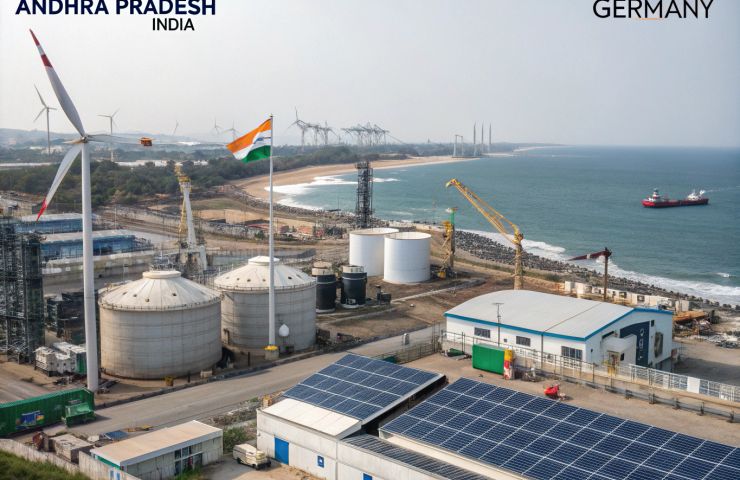
India is making a serious move to become a major player in the global clean fuels market. In a major partnership, Juno Joule Green Energy has teamed up with Germany’s Select Energy GmbH on a $1.3 billion venture to build a green hydrogen and clean ammonia export hub along India’s southeastern coastline. The deal was signed on May 21, 2025, during the World Hydrogen Summit in Rotterdam—and it highlights just how strong the Indo-German energy collaboration is becoming. Backed by India’s Ministry of New and Renewable Energy (MNRE) under the National Green Hydrogen Mission, the project plans to harness large-scale electrolysis powered entirely by renewables. The goal? To produce 180 kilotons per year of green hydrogen. That renewable hydrogen will then be turned into clean ammonia, with an ambitious target of hitting one million tons annually by 2029—most of it headed to Europe and other international markets.The Technical Backbone: Renewable Hydrogen Meets Export Ambition
So what’s powering all of this? Picture a network of advanced MW-scale alkaline and PEM electrolysis units running on a hybrid mix of solar, wind, and potentially even hydropower. To make it all sustainable, especially in a region where freshwater isn't exactly abundant, the project’ll use desalinated seawater—processed at a specialized plant that can handle about 50,000 cubic meters per day. This green hydrogen will then fuel a next-gen ammonia synthesis plant. It's built around an upgraded version of the traditional Haber-Bosch process—tweaked to deal with renewables' ups and downs. Nitrogen for the reaction gets pulled from the air through separation units, and once the ammonia is ready, it's liquefied, cooled, and piped over to a future-ready export terminal at Mulapeta Port.RFNBO-Compliant and Built for the EU Market
One of the big differentiators here is that the entire operation’s designed to be fully RFNBO-compliant. That means the ammonia is made using Renewable Fuels of Non-Biological Origin, in line with strict EU standards. A blockchain-based tracking system will follow everything—from renewable electricity input to ammonia-loaded shipment—making transparency and traceability a top priority. This setup aligns perfectly with Germany’s H2Global mechanism, which offers long-term pricing certainty for hydrogen buyers through contracts. Europe’s in serious need of clean hydrogen imports, and thanks to India’s ultra low-cost renewables and tech-savvy workforce, it could have a competitive edge over regions like Africa or the Middle East.India’s Renewable Powerhouse: Why Andhra Pradesh?
Andhra Pradesh is stepping into the spotlight. With over 1,600 km of coastline and wind energy potential that tops 44 GW, the state is fast becoming a clean energy epicenter. It was designated a renewable manufacturing zone back in 2023 under India’s Green Hydrogen Policy—which set the stage for projects like this one. The first phase of construction kicks off in 2026 and will zero in on supplying around 60 KTPA of green hydrogen to India’s domestic fertilizer industry. That creates a handy use-case close to home—building demand while prepping for future exports.Strategic Stakes: Jobs, Emissions, and South-South Cooperation
Once the whole thing ramps up, the project could prevent up to 5 million tons of CO₂ emissions a year—mostly from the shipping sector, where clean ammonia promises to be a game changer. There’s buzz about 5,000 to 6,000 potential jobs—though those numbers aren’t official yet. But the bigger picture here is broader. This isn’t just about one massive plant; it's a prototype for how the Global South can lead in industrial decarbonization. Think of it as a blueprint that can be replicated in other regions rich in renewables but in need of industrial growth.Risks and Challenges: Competition & Certification
Of course, it’s not all smooth sailing. The plan leans heavily on EU certification frameworks, which can shift, tighten, or just get more expensive over time. If RFNBO rules change midstream, that could shake up the project economics. And the space is getting crowded—fast. Countries in Africa and the Middle East are throwing serious money behind their hydrogen exports, often with robust government backing and the advantage of being closer to Europe logistically. Bottom line? The clean hydrogen race is as much about geopolitics as it is about green tech.Closing Insights
This isn’t just India dabbling in green hydrogen. It's a strategic pivot toward a future where clean fuels like green hydrogen and ammonia play major roles as export commodities. With electrolysis costs falling and international demand growing, the next few years could shape whether projects like this set the trend or fizzle out. Right now, all eyes are on Andhra Pradesh. If things go as planned, this coastal state could end up being to hydrogen production what Qatar has become for LNG.How was this article?
Thanks for the feedback!