Hydrogen Production at a Crossroads as Europe’s Green Steel Transition Slows
Europe’s hydrogen-powered steel plans hit delays as firms grapple with weak policy signals and market demand. Sweden remains in the spotlight, but real progress now hinges on bold EU action in 2025.
Europe’s big dream of zero-emission steel—fueled by green hydrogen and clean electricity—is beginning to feel the strain. While early strides from names like SSAB, ArcelorMittal, and thyssenkrupp seemed to set the pace, the push for hydrogen-based Direct Reduced Iron (H2-DRI) is now struggling to keep its footing. Economic uncertainty, fuzzy policy direction, and lukewarm demand for clean steel are all slowing things down.
Sweden’s Head Start Hits Speed Bumps
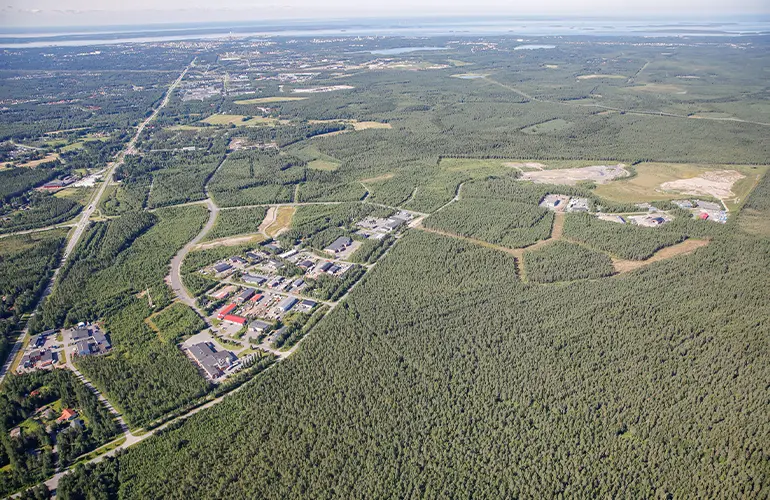
Take Sweden’s Norrbotten region, for example—things looked promising at the start. The Hybrit project, a team effort by SSAB, LKAB, and Vattenfall, was built on a simple but powerful concept: replace coal with hydrogen produced through electrolysis, all powered by renewables. It wasn’t just vision—new players like Stegra jumped in too, with ambitious plans to churn out five million tonnes of ultra-low-emission steel annually by 2030.
Fast forward, and that momentum’s slowing. Even seasoned giants like Tata Steel, Nippon Steel, and Posco, who’ve been exploring hydrogen production for industrial decarbonization, are hitting pause and pushing their timelines into the 2030s. Why? Because right now, it just doesn’t add up financially. The incentives aren’t strong enough to justify the huge upfront investment.
Policy Confusion, Market Hesitation
One of the biggest roadblocks? Unclear policy. Everyone’s waiting on the upcoming European Commission’s Steel and Metals Action Plan, set for 2025, which could set the tone for future support. But the early chatter isn’t all positive—critics are worried it’s light on public involvement and heavy on industry lobbying [4].
Then there’s the missing piece: the Green Premium. Right now, few companies are willing to pay extra for low-carbon steel. That leaves early movers with high costs and not nearly enough demand to balance them out. As one observer put it, “Without commercial buyers or clear policy support, the early adopters are running on fumes.”
The Case for Hydrogen Isn’t Dead
But hold on—this isn’t the end of the road for green hydrogen in steelmaking. The tech still works. When hydrogen is used to reduce iron ore, all it releases is water vapor—not carbon-heavy emissions. Pair that with Electric Arc Furnaces (EAF) running on renewables, and you’re looking at nearly zero-emission steel—potentially a game changer in the long run.
That’s why projects like Hybrit are still sticking with it. And innovations like H2STEEL—backed by the EU and using bio-coal derived from biowaste—offer fresh ways to decarbonize. These are more than just proof-of-concept labs; they’re stepping stones toward a future of greener industry.
Jobs, Industry Strength, and Global Competition
And it’s about more than just emissions. This shift touches on jobs, Europe's manufacturing advantage, and even wider hydrogen infrastructure development. If Europe doesn’t seize this opportunity, it risks losing its industrial clout altogether. Cheaper, dirtier steel from places like China, the Middle East, or North Africa could swoop in if the EU stalls.
Sweden especially has a lot to lose—and gain. With abundant renewable power and access to raw materials, places like Norrbotten are perfectly set up to lead. But whether projects like Stegra succeed will depend largely on smart policy: streamlined permitting, targeted funding, and above all, practical support for things like hydrogen storage and distribution.
Looking Toward 2045: Delayed, but Still Possible
So, what’s the bottom line? While there’s most certainly a slowdown, there’s also reason for hope. SSAB is still on track to unveil fully fossil-free steel by 2026. ArcelorMittal, thyssenkrupp, and others haven’t walked away—they’re just adjusting their timelines. But unless the EU steps up with strong policies, realistic pricing signals, and financing support, the risk grows that companies will look elsewhere—or simply slow down long enough to lose momentum.
Hydrogen steel has huge upside—for the climate, for industry, and for workers. But ambitious goals need more than good intentions. The technology’s ready. The ideas are bold. It’s the support structure that has to catch up. And the clock isn’t slowing down.