News
Hydrogen Fuel Cell Trucks Hit the Road in UK's First Major Trial
John G Russell kicks off the UK's first hydrogen fuel cell truck trial, testing viability in real freight operations through 2031.
Scotland’s Hydrogen Truck Trial Signals a Crucial Moment for Heavy Freight
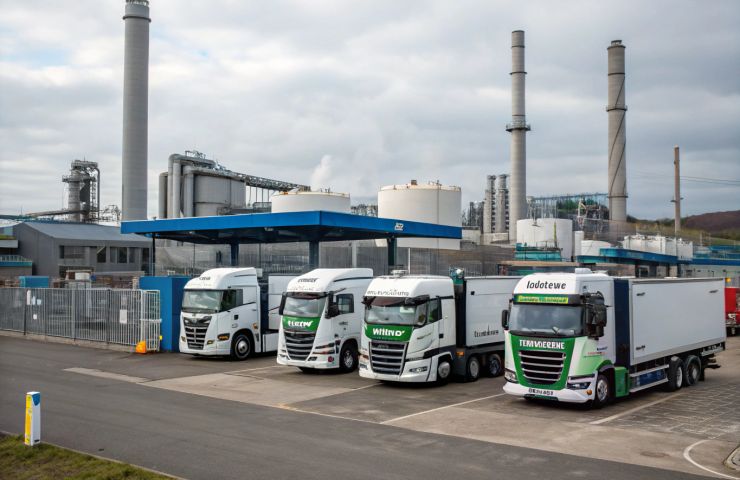
What if we could haul tons of goods across the country without burning a single drop of diesel? Sounds like a far-off dream, right? Not anymore. A major trial taking place in Coatbridge, Scotland, is setting out to prove that hydrogen-powered freight trucks are ready to take the wheel—and maybe even lead the pack. Kicking off in Q2 2025, John G Russell (Transport) Ltd is front and center in what’s shaping up to be the UK’s boldest real-world test of hydrogen fuel cell trucks in long-haul operations. This isn’t a science fair project—it’s a boots-on-the-ground trial in one of trucking's toughest segments.Zero-Emission Haulage Hits the Road
Thanks to backing from the UK government’s £200 million Zero Emission HGV and Infrastructure Demonstrator (ZEHID) program, a six-year test is gearing up to pit hydrogen fuel cell electric vehicles (HFCEVs) and battery-electric trucks against their diesel counterparts. The aim? Find out how these zero-emission technologies stack up when it comes to real-world performance—rain, shine, and those brutally cold Scottish winters. This isn’t just a flash-in-the-pan pilot. We’re talking full-scale commercial operations rolling out in March 2026, running through to 2031. Real deliveries, real miles, real data.Why Hydrogen, and Why Now?
Battery-electric trucks are great in cities, no doubt. But when you’re looking at big rigs hauling for hundreds of kilometers with heavy loads, hydrogen starts to shine. This trial is laser-focused on answering some lingering questions: 1. How do fuel cells hold up to the daily grind? 2. Can they handle extreme cold? (Spoiler: testing down to -40°C!) 3. How do hydrogen refueling logistics compare to good ol’ diesel? In short, this is hydrogen’s big moment to prove it belongs in the future of freight.The Technology Under the Hood
The fleet will be led by Scania’s next-gen HFCEVs, packing a 120kW hydrogen fuel cell system, a 90kWh buffer battery, and boasting a range of around 450km. The trucks store hydrogen in 70MPa tanks and use PEM fuel cells—technology you’ll also find in hydrogen-powered passenger cars from brands like Toyota and Honda. To support this switch, Russell’s Coatbridge depot is getting a serious makeover. That includes a £2.8 million investment in on-site hydrogen storage and Scotland’s very first commercial hydrogen refueling station, which opened its doors in 2024. On the battery-electric side, MAN Truck & Bus is rolling out 400kW electric rigs, alongside 1.2MW megawatt chargers built with Siemens. These can juice up a truck for 200km of range in just 45 minutes—plenty to stay on schedule without your drivers pulling an all-nighter.Coatbridge: From Iron Works to Hydrogen Hub
So why set up shop in Coatbridge? Simple—it’s perfectly positioned. Just outside of Glasgow, it’s already a key freight route and close to some of Scotland’s emerging hydrogen production facilities. Plus, it’s got serious industrial roots. Back in the day, this town churned out iron like there was no tomorrow. Now, it's aiming to be at the heart of industrial decarbonization. Call it a comeback story—where coal once reigned, zero-emission technology is taking charge.Partnerships Powering the Shift
This transformation isn’t happening solo. John G Russell is teaming up with a mighty coalition of industry and government heavyweights: - DfT is bringing policy and serious investment. - Scania and MAN, the tech giants, are providing the high-performance trucks. - Logistics leaders like DFDS, Maritime Transport, and Gregory Distribution are bringing the practical know-how and scale to make this viable. They're covering all the angles—from driver training and safety (thanks to the new BS EN 17339:2024 hydrogen storage standards), to grid upgrades that include future-proofing with 400kV National Grid enhancements. This isn’t just a vehicle swap—it’s a full-on infrastructure reinvention.A Business and Carbon Case
Yes, reducing emissions is a big win. If the project hits its mark, it could cut out up to 15,000 tonnes of CO₂ each year. But let’s talk business: Fleet operators care just as much about reliability and running costs. So this trial is also about crunching the numbers—showing that hydrogen fuel cells can stand alongside diesel when it comes to uptime, refueling speed, and logistical simplicity. And more importantly, showing they can do it consistently.Lessons from the Past, Eyes on the Future
If this all sounds vaguely familiar, there’s a reason. Back in 2010, the UK launched a so-called "Hydrogen Highway” that basically stalled out—too few vehicles, too little refueling infrastructure. But times have changed. The tech’s better, the pressures to decarbonize are stronger, and the hydrogen infrastructure is finally catching up. This isn’t about hype or hoping for the best. It’s about hard data. This trial will test fuel cell trucks where it really counts—on the open road, under live conditions, with zero room for fluff.A Turning Point for Heavy Transport
Here’s the bottom line. By 2035, the UK says new trucks over 26 tons need to be zero-emission. That’s not a target—it’s a mandate. This trial? It might just be the proof point the industry’s been waiting for. If hydrogen hits the mark—on cost, cold-weather performance, and depot readiness—it could help shift the gears on an entire sector. And if it all plays out as planned, remember where it happened first. Not in a lab. Not at a trade show. But in a gritty Scottish town, where fuel cell technology got its first real crack at changing the game.How was this article?
Thanks for the feedback!