News
Hydrogen Fuel Cell Breakthrough: UCLA Catalyst Hits 200,000-Hour Durability
UCLA smashes durability records with a graphene-protected hydrogen catalyst boasting a 200,000-hour lifespan—years ahead of federal targets and a shot in the arm for the hydrogen trucking future.
Fuel Cells Just Got a Serious Upgrade
Think hydrogen fuel cell technology is crawling along? Think again. UCLA researchers just raised the bar in a big way with a next-gen platinum catalyst shielded in graphene that doesn’t just last—it goes the distance. Try wrapping your head around this: a projected lifespan of 200,000 hours. That’s almost seven times what the U.S. Department of Energy (DOE) is even hoping to achieve by 2050. This isn’t just academic hype—it’s a direct challenge to truck makers and infrastructure players still on the fence about hydrogen’s long-term potential.The Core News: Numbers That Matter
So what’s the deal? A team led by Professor Yu Huang at UCLA created a graphene-encapsulated platinum catalyst that’s redefining what durability looks like in hydrogen fuel cells. Stress tests showed a drop in performance of just 1.1% after 90,000 aggressive cycles. The upshot? These fuel cells could theoretically run for over 20 years nonstop. And when you’re talking about heavy-duty zero-emission transportation, that kind of lifespan is a game-changer.What It Means: Durability Unlocks Everything
Here’s the bottom line—without serious durability, fuel cells don’t stand a chance. They have to survive the real world: heat, load swings, punishment. Batteries in heavy-duty trucks are already tipping the scales—sometimes adding eight times the weight—which eats into cargo capacity. Hydrogen fuel cells, on the other hand, offer a lighter, faster refueling alternative. And now? They’ve got the longevity to match. This breakthrough drops the total cost of ownership right where it hurts competitors.How It Works – But Fast
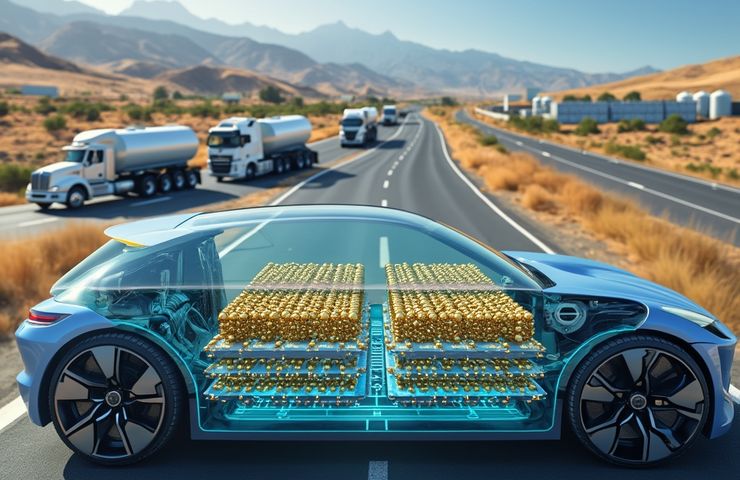
Here’s the high-level version: UCLA’s team used super tiny platinum particles, tucked inside graphene “pockets” and built into a porous carbon structure. That structure absorbs voltage shockwaves and shields the platinum from the usual wear-and-tear. No alloy leaching, no exotic materials. Just clever design that keeps the whole system humming.Strategic Implications: Trucks, OEMs and $7 Billion
Major OEMs like Daimler Truck and Volvo are already eyeing hydrogen truck launches around 2027. This catalyst could be the tech that helps them not just launch—but dominate. On top of that, its staying power could cut platinum usage by up to 40%, helping reduce dependency on this pricey material. Stack it all together, and we could be looking at up to $7 billion in hydrogen infrastructure savings—especially when paired with cheap green hydrogen production. And let’s not kid ourselves—electric vehicle charging infrastructure won’t always be the cheaper, faster, or cleaner option for heavy-duty hauls. Hydrogen is leveling up.California Connection
This isn’t a solution waiting for regulation to catch up—California is already in go-mode. The state’s mandating that 40% of new heavy-duty trucks be zero-emission by 2035. It's also home to half the entire U.S. hydrogen vehicle fleet and has 65 active hydrogen refueling stations. So yeah, this new catalyst could slide right into California’s big hydrogen bet.Context Worth Knowing
For a bit of perspective: the DOE’s 2050 goal for heavy-duty hydrogen systems is 30,000 hours. UCLA just casually crushed that—coming in at nearly 7x the goal. And these aren’t new players, either. The same team already developed a 15,000-hour catalyst last year for light-duty vehicles, doubling federal targets at the time. This work is part of a longer-term effort—public funding, lab smarts, and industry overlap. It’s not a lucky lab fluke. It’s the future, carefully built one material breakthrough at a time.Final Take: Is This the “Forever Catalyst”?
Nothing lasts forever. But 200,000 hours of performance? That’s the kind of durability that turns heads across the entire zero-emission tech space. Picture it: hauling up to 100,000 pounds of freight with no tailpipe emissions… no charging anxiety… and now, no tech weak link. Hydrogen’s biggest drawback was always lifespan. With this UCLA catalyst? That excuse just died.Sharp Questions Going Forward
- How quickly will OEMs swing their platforms toward this tech? - Who’s going to snatch up the licensing rights first? - Can cutting platinum really make supply chains more stable long-term? This isn’t just something you file away in a glossy journal. It's headed straight for real roads, real trucks, and real change in hydrogen infrastructure and industrial decarbonization.How was this article?
Thanks for the feedback!