News
HyCARB Secures €45.7M to Boost Green Hydrogen Innovation in Dutch Chemical Industry
The HyCARB consortium secures €45.7M to lead green hydrogen innovation for decarbonizing the Dutch chemical industry by 2029—uniting 47 partners across academia, business, and government.
Breaking New Ground in Industrial Decarbonization
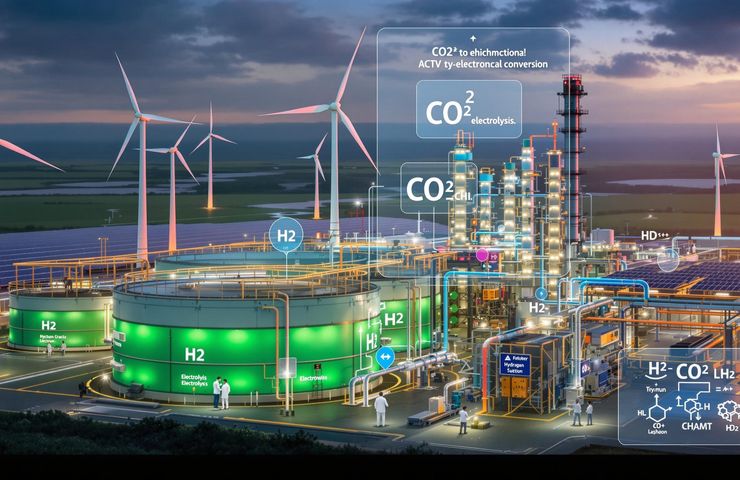
Every now and then, it feels like we’re inching toward a cleaner future—slowly but surely. But then, a moment of real momentum comes along. One of those moments? The launch of HyCARB, a Dutch R&D powerhouse that just locked in a hefty €45.7 million in funding to fast-track green hydrogen solutions for sustainable chemical production. This isn’t just a nice-to-have for the Netherlands. With its strong industrial base and firm climate goals, it’s a smart, strategic move. Leading the charge is TNO (Netherlands Organisation for Applied Scientific Research), backed by GroenvermogenNL and the Dutch Research Council (NWO). Together, they’ve pulled together an impressive crew of 47 partners: from top universities and applied science institutions to major research hubs and more than 30 businesses—all united around one big goal: turn captured CO2, green hydrogen, and clean electricity into the fuels and products of tomorrow, while slashing emissions from one of the biggest climate culprits: the chemical industry.At the Core of HyCARB: Urgency Meets Innovation
HyCARB isn’t business-as-usual research—it’s a plan to transform how we think about industrial decarbonization. The project is organized around four key technologies that work hand in hand:- Green Hydrogen Production: Using clean electricity from solar and wind to split water into hydrogen—an eco-friendly substitute for fossil-fed chemical processes.
- CO2 Conversion: Turning captured carbon into usable fuels and materials through smart, cutting-edge catalysis. Waste becomes value, and emissions shrink.
- Electrified Process Heating: Swapping out fossil-based heat with electrical alternatives—a major opportunity for bumping up efficiency and reducing the carbon footprint of heavy industry.
- Techno-Economic and Life Cycle Analysis: Real-time data and deep analysis to make sure the business case is as solid as the climate logic.
Why the Netherlands is the Perfect Testbed
It’s not just coincidence that HyCARB is happening in the Netherlands. From the industrial ports of Rotterdam to the hydrogen valleys coming to life in the north, this country already has the bones—and the brains—for a hydrogen-powered future. With the chemical sector still a major source of national CO2 emissions, the push here is as urgent as it is ambitious. HyCARB fits like a glove within big policy drivers, from the EU Green Deal to the Dutch National Hydrogen Strategy. It also builds on years of forward-thinking investment across wind, solar, and biomass—setting the stage for hydrogen and carbon transformation to take the lead.Collaboration That Goes Beyond the Lab
What really sets HyCARB apart is how deeply collaborative it is. On the academic side, universities like Utrecht University—working on next-gen catalysts—and TU Eindhoven—focused on process innovation—are bringing scientific firepower. But this isn’t just a research bubble. Over 30 companies are onboard, making sure the solutions don’t gather dust after the experiments end. Real-world testing facilities, expert analysis teams, and built-in plans for scaling are all part of the package. Everything’s geared toward shaking up the status quo and making sure the transition from lab to factory floor is seamless.The Ripple Effect: Big Wins Beyond Emissions
If HyCARB hits its goals, the potential upside is huge:- Massive emissions cuts that move the needle on both EU and Dutch climate targets.
- Commercial-ready and cost-effective tech that could help bring green hydrogen to the mainstream in legacy industries.
- Skilled jobs and new talent pipelines feeding into the green economy.
- Blueprints and regulatory reference points for the next wave of hydrogen projects.
- Global know-how exports, cementing Dutch leadership in climate-friendly chemistry.
A Smart Play for a Tough Sector
Let’s be honest—decarbonizing the chemical sector is no walk in the park. But HyCARB is playing it smart. Instead of chasing moonshots, it’s focused on the stuff that can deliver deep carbon cuts in just a few years—if the tech and the business models line up. With researchers, engineers, analysts, and industrial teams pulling in the same direction, the odds of making it work skyrocket. This isn’t just some science fair project—it’s a mission to rewrite the future of industry.What Comes Next: Scaling the Vision
Looking ahead to 2029, the real test will be scaling. If HyCARB can show the world how to take clean innovations from idea to implementation, the Netherlands will be more than just a player in sustainable energy—it’ll be leading the way. And for industries around the globe wondering how their future might look without fossil fuels, HyCARB could offer the roadmap: forged in steel and powered by clean molecules. Sources: - FuelCellsWorks: HyCARB Secures €45M - GroenvermogenNL AnnouncementHow was this article?
Thanks for the feedback!