Hydrogen Production
Green Hydrogen: NEOM’s 80% Complete Plant Poised to Transform Hydrogen Production
NEOM’s Oxagon green hydrogen plant is 80% built, integrates 4 GW of renewables for 600 t/day H₂ & 1.2 M t/yr NH₃, starts exports in 2027.
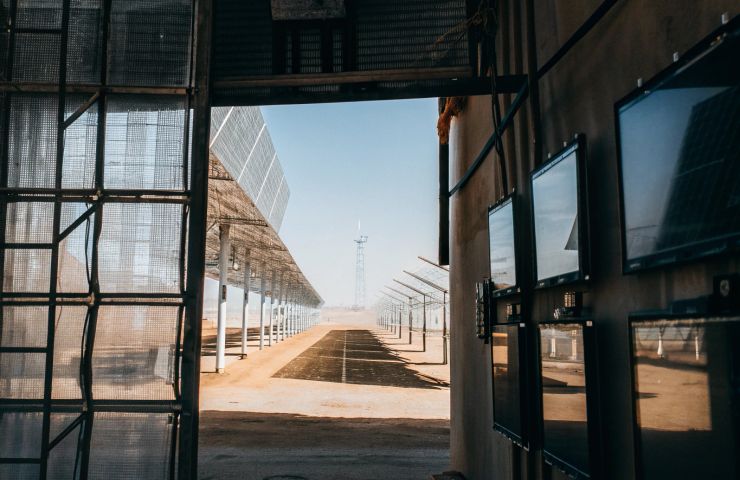
You don’t see mega-fabs like this every day. In the windswept desert north of the Red Sea, NEOM’s Oxagon hub is buzzing with activity as it races toward a landmark accomplishment: the world’s largest green hydrogen and clean ammonia production facility, now about 80% built as of Q1 2025. When it fires up in 2027, it’s set to churn out 600 tonnes of carbon-free hydrogen daily and 1.2 million tonnes of clean ammonia each year—enough to meet industrial demand on multiple continents.
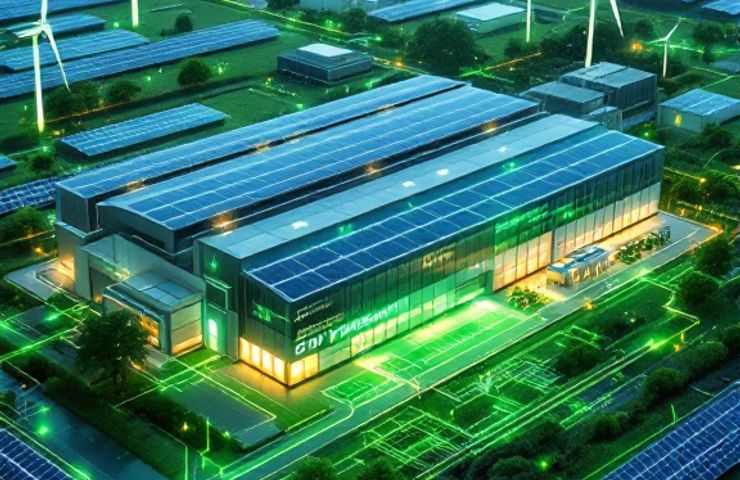
This $8.4 billion plant is a three-way partnership: NEOM brings the visionary urban framework, Pennsylvania-based Air Products is the EPC contractor, system integrator, and exclusive offtaker for 30 years, and Saudi renewables titan ACWA Power contributes its renewable-energy and desalination expertise. Day-to-day construction and eventual operations fall to NGHC (the NEOM Green Hydrogen Company), which is weaving together 4 GW of solar arrays and wind farms, advanced thyssenkrupp electrolysis units, an AI-driven Energy Management System, and Air Products’ air-separation tech to split water, capture nitrogen, and synthesize ammonia—all powered by sun and breeze.
This $8.4 billion plant is a three-way partnership: NEOM brings the visionary urban framework, Pennsylvania-based Air Products is the EPC contractor, system integrator, and exclusive offtaker for 30 years, and Saudi renewables titan ACWA Power contributes its renewable-energy and desalination expertise. Day-to-day construction and eventual operations fall to NGHC (the NEOM Green Hydrogen Company), which is weaving together 4 GW of solar arrays and wind farms, advanced thyssenkrupp electrolysis units, an AI-driven Energy Management System, and Air Products’ air-separation tech to split water, capture nitrogen, and synthesize ammonia—all powered by sun and breeze.
NEOM Vision 2030 and Oxagon Context
Since its 2017 launch as a $500+ billion blueprint for net-zero urban zones, NEOM has been all about pushing boundaries. Oxagon—part floating metropolis, part industrial port—sits on the Red Sea coast for a reason: steady offshore winds, buckets of sunshine, and direct shipping lanes to Europe and Asia. Under Vision 2030’s diversification drive, Oxagon aims to leapfrog old-school petro hubs and turn Saudi Arabia into a green hydrogen export powerhouse. Financial close came in May 2023, locking in commitments from NEOM, Air Products, and ACWA Power to build and run the project.Historical Context
For years, green hydrogen and clean ammonia have been hailed as the holy grail for decarbonizing heavy industry, shipping, and long-haul transport. Early pilots rarely cracked 100 MW of electrolyser capacity and often ran into budget blowouts. That’s why the NEOM Green Hydrogen Project—with its massive 4 GW renewable input and integrated ammonia synthesis—is such a game-changer. If it pulls off what it’s promising, we might finally see green hydrogen production move from lab slides to real-world fuel.Project Milestones and Scale
- 80% complete as of January 2025: solar farms, wind-turbine foundations, and electrolyser steelwork are well underway.
- 4 GW renewables slated to feed the electrolyser halls and storage by mid-2026.
- 600 t/day hydrogen and 1.2 M t/year ammonia output targets.
- Deep-water port with jetties and storage tanks ready for direct loading onto ammonia carriers.
Cutting-Edge Technologies
At its heart, the plant uses thyssenkrupp PEM electrolysers to split H₂O into hydrogen and oxygen with renewable juice. An AI-powered Energy Management System forecasts solar and wind output, optimizes battery and hydrogen storage, and schedules maintenance—aiming for over 95% uptime. Air Products’ cryogenic air-separation units deliver ultra-pure nitrogen straight to Haber-Bosch reactors for ammonia synthesis. Hundreds of IoT sensors stream data to a digital twin, letting engineers tweak operations in real time.Strategic Partnerships and Business Model
Air Products wears several hats: EPC contractor, systems integrator, and exclusive ammonia purchaser for the next 30 years. Under its offtake deal, TotalEnergies will snap up 70,000 tonnes annually from 2030 to 2045, locking in predictable revenue. ACWA Power brings its renewables and desalination know-how; NEOM handles urban infrastructure and regulatory frameworks; and NGHC keeps the gears turning day-to-day.Environmental and Economic Impact
- 5 million t CO₂ avoided/year—that’s like taking over a million cars off the road.
- 10,000 direct and indirect jobs in construction, operations, IT, and logistics.
- Technology transfer in large-scale electrolysis, AI-driven controls, and ammonia logistics.
- Regional ecosystem growth through spin-off manufacturing and services around Oxagon.
Risks and Market Outlook
Of course, nothing’s risk-free. Demand hinges on shipping-fuel regs, decarbonization incentives, and competition from other mega-projects in Australia and Europe. Cost inflation, supply-chain hiccups, and unproven gigawatt-scale electrolyser uptime are wildcards. Policy changes—think subsidies, carbon pricing, or trade barriers—could all tip the scales.Broader Implications for the Global Hydrogen Economy
If Oxagon delivers on its promises, it could spark a wave of green-hydrogen hubs from Australia’s Pilbara coast to Europe’s North Sea. Investors have been waiting for a commercial-scale success story to de-risk their bets. Shipping lines might fast-track ammonia-bunkering conversions, and regulators could speed up hydrogen corridors. NEOM’s blueprint might become the playbook—if it can be replicated at scale.What’s Next?
All eyes are on 2027, when the first green ammonia shipments roll out of Oxagon. If it works, it’ll prove giga-scale sustainable energy hubs can be built and run economically, kicking off a new era of zero-emission fuels. For anyone tracking fuel cell technology, hydrogen production, or clean ammonia logistics, this is the project to watch—because NEOM might just redraw the global energy map.How was this article?
Thanks for the feedback!