News
Germany Begins First Hydrogen Salt Cavern Storage Project to Unlock Scalable Green Hydrogen
Germany’s H2CAST project, backed by Storag Etzel, Gasunie and Plug Power, marks a major leap into hydrogen storage with salt caverns in Lower Saxony now operational.
The quiet underground revolution: Germany’s big hydrogen moment
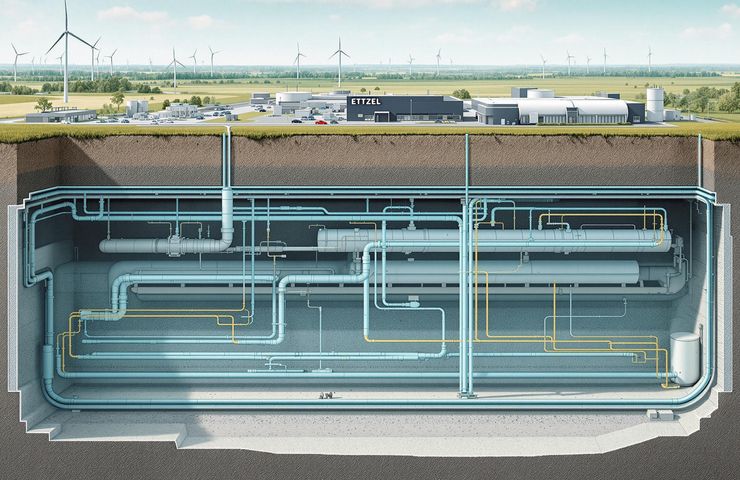
What do you get when you mix 90 tonnes of hydrogen, a pair of giant salt caverns, and an old Cold War oil site? Welcome to Germany’s biggest underground hydrogen storage project—now officially up and running. Nestled below the clay-rich fields of Lower Saxony, in the industrial town of Etzel, the H2CAST project has just begun pumping green hydrogen into two enormous salt caverns, each capable of holding 300,000m³. Sure, 90 tonnes might not sound like much now, but it’s a bold start—a meaningful first step toward the dream of a 24/7 hydrogen-powered economy.Why salt caverns, and why now?
Let’s be honest: figuring out how to store hydrogen has always been tricky. It's great that we can make green hydrogen from solar and wind through electrolysis, but until now, safe, scalable, and affordable storage has been the missing piece. That’s where salt caverns come into play. These underground formations—dug out through solution mining—are basically nature’s airtight strongboxes. They’re stable, non-porous, and perfect for containing gases like hydrogen. Located 200 to 1,500 meters underground, the Etzel salt dome is no rookie either. Since the 1960s, it's been storing natural gas and oil and now holds around 20% of Germany's strategic oil reserves. What's changing is the mission. That same old infrastructure is getting a shiny new purpose: powering the country's push for industrial decarbonization.The team behind the scenes
Leading the effort is Storag Etzel, a German firm with deep experience in storing hydrocarbons. But they’re not flying solo. 🛠️ Enter Gasunie, a Dutch gas transmission heavyweight backing the hydrogen shift since 2022. They're helping retrofit aging gas networks into tomorrow’s hydrogen infrastructure. ⚡ Then there’s Plug Power, an American player bringing its green hydrogen chops to the table. Its massive PEM electrolyzer in Kölleda, along with the nearby Werlte facility, is poised to crank out the hydrogen that’ll eventually fill those Etzel caverns. Together, these three bring the perfect trifecta: underground space, tech know-how, and clean hydrogen production.So, what’s the game plan?
We're in the early chapters of this story. The first hydrogen injection took place in Q2 2025, with the second cavern scheduled to start up in Q3 2025. For now, Storag Etzel is testing a 2% hydrogen blend in existing pipelines—upgrades are coming to handle pure hydrogen by around 2026. And get this: the hydrogen loss rate is just 0.01% per month. That’s next to nothing. Here’s where it gets exciting: success here could unlock much bigger caverns in the future. Picture this—over 5,000 tonnes of hydrogen in storage. That’s enough to power 500 hydrogen fuel cell trucks a day or cut emissions in heavy hitters like the steel and chemical industries. As one exec close to the project puts it: “Think of this like the battery in your phone. Except it’s underground—and it keeps whole cities running through winter.”Hydrogen storage: the unsung hero of clean energy
Everyone talks about production—boosting electrolysis capacity, installing renewables, building power-to-gas plants. But hydrogen storage? That’s the quiet workhorse holding it all together. Without large-scale, seasonal storage, you’re stuck with overproduction headaches or power shortages that hit industries hard. Germany’s goal of putting up 10GW of electrolyzers by 2030 will only work if we’ve got solid storage systems—like Etzel—ready to back it up.Looking abroad: Germany steps into big league territory
Etzel isn’t the only one chasing this dream, but it’s definitely ahead of the curve. Similar pilots are happening in Utah (ACES Delta) and Cheshire, UK. Still, thanks to Europe’s tight regulations and Germany’s drive to decarbonize fast, Etzel could outpace its overseas rivals. Fun fact: the Etzel salt dome owes its legacy to NATO. It was built to hold crude oil during the Cold War. Now, it’s being reimagined to store green hydrogen. That kind of resourceful reuse is exactly what the energy transition needs more of.What’s next?
If this pilot proves successful—and all signs look good—it’ll set a benchmark for future EU Hydrogen Storage Directives. Expect big-name industrial players like Salzgitter and BASF to start lining up for access. Meanwhile, Berlin and Brussels are keen to push for energy independence without leaning on fossil fuel imports. And who knows? If all goes well, salt caverns could become the new gold mines of Europe’s clean energy era. In a world chasing low-carbon solutions, deep underground salt caverns like Etzel might just be the unsung MVPs of the entire green hydrogen revolution.How was this article?
Thanks for the feedback!