Automated KPFM Empowers Photoelectrode R&D with Millisecond Charge Mapping for Solar Fuels
Researchers in Germany and the U.S. unveiled an automated, high-speed KPFM method that offers real-time charge mapping in photoelectrodes. It aims to boost green hydrogen tech by improving solar fuel efficiency.
Cutting-edge fuel cell technology and breakthroughs in solar fuel production may be on the brink of a major leap forward, all thanks to a powerful new imaging technique developed by an international team of researchers. This collaboration—led by the Lawrence Berkeley National Laboratory in the U.S. and several German institutions including Helmholtz-Zentrum Hereon—has resulted in a fully automated, lightning-fast voltage mapping system that could change the game for how we design and refine materials for hydrogen production.
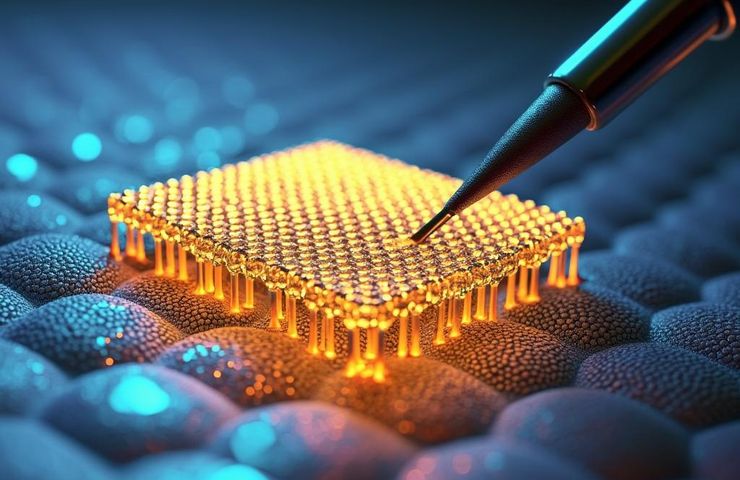
At the heart of the innovation is a turbocharged version of Kelvin Probe Force Microscopy (KPFM). What’s new? It can now track rapid voltage shifts on the surface of photoelectrodes with millisecond precision and zoomed-in, sub-micron detail. That means researchers get a real-time, pixel-by-pixel look at how electric charges move and behave inside devices—live and up close.
Why This Tech Is a Big Deal for Solar Fuels and Hydrogen
For years, photoelectrochemical (PEC) cells—often made with semiconductors like titanium dioxide—have promised to split water using sunlight, producing clean hydrogen or other solar fuels with zero emissions. The promise is huge, but progress has been slow. Short lifespans, poor efficiency, and lack of insight into what's truly happening at the microscopic level have held things back.
This new approach to KPFM completely changes the equation:
- Millisecond-level voltage fluctuations can now be monitored and analyzed.
- Charge flow dynamics across the device surface can be visualized in real-time.
- Real-world material stability during operation is now trackable—while the device is running.
Professor Francesca M. Toma, leading the project from Berkeley Lab’s Institute for Functional Materials for Sustainability, explained that this creates a feedback loop scientists have long dreamed of. Now, they can connect what’s happening at the nanoscale directly to the performance of the full device. It’s the kind of deep insight that allows for truly optimized zero-emission technology.
Germany and the U.S.: Teaming Up for Innovation
This wasn't a solo effort. Research and development were carefully divided across a network of powerhouse labs. Experts at Helmholtz-Zentrum Berlin and Helmholtz-Zentrum Hereon conducted experiments and helped shape the underlying algorithms. Over in the U.S., scientists at Berkeley Lab worked with collaborators from Helmut Schmidt University to fine-tune the data analytics and make sense of how voltage relates to material reactivity.
Mauricio Schieda and Maryam Pourmahdavi, two key researchers on the project, demonstrated the tool using titanium dioxide—a rock-solid standard for PEC systems. Their tests proved the method can capture highly dynamic voltage behavior across complex surfaces, all without disturbing the device itself.
Turning a Classic Tool into a Real-Time Powerhouse
KPFM has been around for a while—since the late 20th century. Until now, though, it’s been a bit like using a still camera to catch lightning. This new upgrade flips the script with smart automation, next-gen signal correction, and adaptive imaging speeds. Suddenly, what used to be a lab-only diagnostic tool is looking like a potential secret weapon for engineers designing the next generation of clean energy technologies.
Think of it this way: instead of guessing how a material’s behaving from snapshots, we’re now watching a live video feed of its electrical heartbeat. That’s a huge deal.
Not Just for Solar—Fuel Cells, Batteries, and Beyond
What’s really exciting? Even though the first trials focused on TiO₂ in photoelectrochemical cells, the imaging method is flexible—it doesn’t care what material you throw at it. It’s ready to be used across fuel cell technology, battery research, and even in studying coatings that fight off corrosion. That opens the door to fast-track development of better catalysts and more durable coatings for green hydrogen production.
In short, speeding up discovery and validation means companies working on sustainable energy systems can move faster from lab to market.
From Lab Bench to the Real World
This isn't just a tool for scientists looking for curiosity data—it’s the kind of platform that allows for large-scale materials screening, failure tracking, and real-time optimization of how energy devices work in the real world. The implications are huge, especially as both Europe and the United States push forward with their zero-emission technology and climate goals.
Researchers say this is no one-and-done achievement. The infrastructure is already in place—labs in California and Germany are equipped and ready. Collaborations are running on cloud-based data platforms, so discoveries can be shared and scaled faster than ever before.
As Pourmahdavi pointed out, one of the most practical parts of this new method is how easily it can slot into modern lab setups. It has auto-correction tools built in and can process a wide range of samples quickly—shaving testing timelines from months to weeks.
Where Do We Go from Here?
Looking ahead, this tech could be integrated into rapid PEC testing platforms, or paired with AI to predict material breakdowns before they ever happen. That’s more than just cool tech—it could unlock radically better, cheaper, and longer-lasting systems for hydrogen production and other energy storage solutions.
For now, researchers are calling this a real inflection point: the moment when sub-millisecond voltage readings became accessible, not just for lab research, but for practical, scalable applications in fuel cells, solar fuels, and beyond.