New Catalyst Innovation Enables Green Hydrogen from Tap Water Using PEM Electrolyzers
Tianjin University researchers modified PEM electrolyzers to produce green hydrogen from tap water using molybdenum oxide catalysts—eliminating the need for ultrapure water and cutting system complexity.
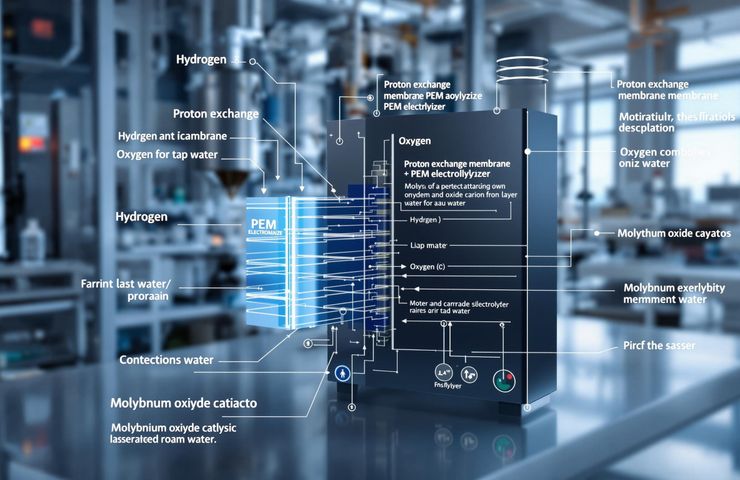
Hydrogen production just hit a major milestone, and it’s all thanks to a team of researchers in China who cracked one of the trickiest challenges in green hydrogen systems: water purity. A breakthrough out of Tianjin University now lets PEM electrolyzers run efficiently on regular ol' tap water. That means no more pricey purification systems, making green hydrogen cleaner, cheaper, and way more scalable than ever before.
Big Win: Making PEM Electrolyzers Work with Tap Water
A research group led by Wang, Yang, and Guo at Tianjin University has developed a clever method to tweak the catalyst layer in PEM electrolyzers. By integrating molybdenum oxide (MoO₃₋ₓ)—a type of Brønsted acid oxide—they created a naturally acidic zone right at the cathode. What’s the big deal? That local acidity lets the system deliver hydrogen even when using water straight from the tap, all without sacrificing performance or durability.
Their setup ran like a champ at 1.0 A/cm² for more than 3,000 hours, holding strong to the standards needed for industrial use. Until now, systems had to rely on ultra-pure water to achieve that kind of efficiency and lifetime.
How It's Done: An Acidic Shield That Makes It Work
The magic happens at the cathode, where the MoO₃₋ₓ keeps things nice and acidic right where they need to be. That acidity does two things: it blocks gunk like calcium and magnesium from clogging up the system, and it helps the reaction move faster and stay stable. That means fewer breakdowns and more reliable hydrogen generation—even with water that hasn’t been meticulously filtered.
To see and understand what was happening during all this, the team used tools like pH ultramicroelectrodes and scanning electrochemical microscopy. These let them actually watch how the environment changed on a microscopic level in real-time, right inside the functional electrolyzer.
What This Means for the Real World
This isn’t just some lab experiment—it’s a game-changer for how we scale green hydrogen. In places where clean water is expensive or hard to come by, like remote outposts, deserts, or small regional hubs, this breakthrough removes a huge barrier. Gone are the days of needing costly reverse osmosis systems or bulky water filters to keep things running. That means lower startup costs and faster rollout for hydrogen-based systems.
Whether it's off-grid renewables, local hydrogen fueling stations, or industrial sites trying to cut emissions, being able to run PEM electrolysis on ordinary water opens up big possibilities.
Why Tianjin? Because It’s Built for This
This research came out of Tianjin, a bustling city in northern China known for its cutting-edge tech and industrial infrastructure. With over 13 million residents and a rich ecosystem of engineers and scientists, it’s the perfect setting for world-class innovation in sustainable energy. This breakthrough isn't just science for science’s sake—it's rooted in a place that’s serious about energy transition leadership.
PEM vs Alkaline: Closing the Gap
For years, alkaline electrolyzers had the edge when it came to water tolerance, but they struggled with hydrogen purity and high performance. With this breakthrough, PEM systems are leveling the playing field. Now they can safely use impure water and still pump out high-purity hydrogen with superior current density. It’s the best of both worlds—the efficiency of PEM with the accessibility of alkaline systems.
That’s huge for industries that demand clean hydrogen, like fuel cell production, chemical synthesis, and even certain types of transport.
What’s Next: Questions and Challenges
Still, it’s early days. While this tech handled tap water well, questions remain: How will it hold up against nastier stuff like chlorides, sulfates, or biological contaminants? Could this trickle into other areas, like hydrogen fuel cells or even ammonia synthesis? There's still testing to be done, but the signs are promising.
What’s clear is how much ground is being gained through advanced measurement techniques and collaboration across materials, engineering, and electrochemistry. We’re seeing lab know-how finally catch up to real-world needs.
Zooming Out: What It Means for Hydrogen Infrastructure
As industries and governments race to hit decarbonization targets, hydrogen is emerging as a universal fuel—adaptable, clean, and ready to integrate into everything from power grids to heavy transport. But up until now, the need for pure water was a stumbling block.
This research flips the script. Deploying PEM electrolyzers anywhere with basic water access now becomes realistic—at mines, ports, solar plants, you name it. The simpler the infrastructure, the faster the return on investment—and the faster we transition to a sustainable energy future.
Bottom line: Thanks to Tianjin’s team, we’ve now got PEM electrolyzers that aren’t so picky about their water. And that shift—from “only the best water” to “whatever’s on tap”—could make the difference between niche adoption and mainstream impact in the global move toward green hydrogen.