Natural Hydrogen Production Attracts Over $1 Billion in Global Investment, Energizing Saskatchewan Exploration
Global investment in natural hydrogen exploration has exceeded USD 1 billion, driving junior explorers like Makenita Resources to expand their Saskatchewan acreage near MAX Power’s Lawson discovery and attracting major investors to this emerging low-carbon feedstock.
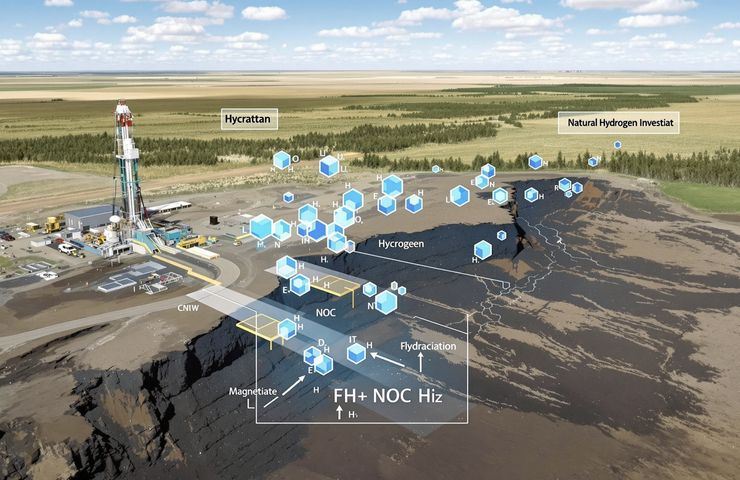
It's pretty exciting to see that global investments in natural hydrogen exploration have shot up past USD 1 billion recently. This shift shows that people are moving beyond just curiosity and really diving into serious investments for producing hydrogen from underground sources. A lot of this money is finding its way into North America, with almost half earmarked for projects in the U.S. Canada’s Saskatchewan is quickly becoming a hotspot too, with junior explorers jumping in to claim land near some pretty impressive discoveries.
At a big hydrogen conference in Paris, an advisory firm called NaturalHy revealed some cool market data. They reported that global investments in geological hydrogen exploration have hit the USD 1 billion mark. Around 50% of that cash is coming from U.S. explorers, with Europe and Canada splitting the rest. One standout funding round was when the U.S.-based Koloma raised about USD 400 million, thanks to support from heavy hitters like Breakthrough Energy Ventures, Khosla Ventures, Amazon, and Mitsubishi Heavy Industries. In Canada, all eyes are on projects close to MAX Power Mining Corp.’s recent Lawson discovery, as well as land expansions by Makenita Resources Inc..
NaturalHy’s Investment Insights
NaturalHy has really carved out a niche for itself as a go-to source for insights on geologic hydrogen markets. Their “NaturalHy Invest” platform aims to open up exploration investments to more people, starting with contributions as low as €10,000. At the Paris event, they pointed out that nearly half of the billion dollars is going into U.S. ventures, highlighting North America's leading role. While France's Lorraine basin is grabbing attention from EU institutional investors, NaturalHy's data shows there's a growing global interest in hydrogen exploration beyond just one region.
Makenita’s Saskatchewan Expansion
Makenita Resources Inc. is making things happen by expanding its Serpentinization Iron-Magnetite Project in Saskatchewan from about 51,300 acres to an impressive 116,149 acres, right next to MAX Power’s Lawson area. While they’re primarily focusing on iron and magnetite, they’re also noting the “additional upside potential” for natural hydrogen that comes from serpentinization in iron-rich rocks. Makenita is clear that, as of now, no hydrogen discovery has been officially reported on their land yet, making it a bit of a gamble, but they've secured a position close to any regional hydrogen action.
Serpentinization as a Hydrogen Source
So, what is serpentinization? It’s a neat process where water interacts with ultra-mafic or iron-rich rocks, especially those that have magnetite, resulting in the production of molecular hydrogen. In Saskatchewan, these iron-magnetite units are nestled in crystalline basement rocks, which are topped with sedimentary structures that can trap hydrogen. Explorers are using various methods—like geophysical surveys, mapping structures, and taking geochemical samples—to pinpoint potential hydrogen reservoirs. But drilling can pose some technical challenges, like mitigating hydrogen embrittlement in steel casings and dealing with microbial corrosion, along with separating hydrogen from other gases like nitrogen or methane.
Lawson Discovery Enters Validation Phase
MAX Power Mining Corp. has announced some promising news, confirming continuous elevated hydrogen readings from about 830 to 860 meters in their Lawson 2-24 well, along with notable gas shows in the basement rocks. These findings are crucial for their ongoing commercial validation drilling, which aims to figure out flow rates, reservoir pressure, and overall deliverability. If they hit the jackpot, this could kick off Canada’s first successful subsurface hydrogen system and spark a regional land rush!
Backing this exciting venture, investor Eric Sprott put CAD 25 million into a public placement and another CAD 10 million through private subscriptions, locking in nearly 19.5% of MAX Power’s equity. His involvement is being seen as a strong endorsement of the potential for geologic hydrogen as a new source of energy.
Strategic Stakes for Junior Explorers
This new district in Saskatchewan bears a striking resemblance to those early days of shale gas and lithium booms: a high-profile find sends neighboring juniors scrambling to grab land in the hopes of hitting it big. With just over 35 million shares floating around, Makenita has a tight share structure that could amplify any gains if they catch a break with nearby hydrogen flows. Investors are essentially betting on the potential of the area's geology rather than existing proven resources.
Regulatory and Environmental Considerations
Fortunately, Saskatchewan already has a regulatory framework for oil, gas, and minerals, which helps lay the groundwork for hydrogen licensing and environmental oversight. But with geologic hydrogen, there are some unique challenges: ensuring well integrity to avoid hydrogen leaks, managing the co-production of methane so that it doesn’t negate carbon benefits, and debating on methods for stimulating production while being cautious about groundwater and seismic effects. It’s going to be crucial for policymakers and communities to demand thorough impact assessments and ongoing monitoring.
Environmental experts are also warning that unchecked hydrogen or methane venting could mess with our climate by extending methane's lifespan in the atmosphere and affecting stratospheric chemistry. The best practices are expected to come from lessons learned in the oil and gas and geothermal industries, focusing on leak detection and responsible reporting.
Comparative Frontiers in Natural Hydrogen
Outside of Saskatchewan, we’ve got interesting parallels at places like Mali’s Bourakébougou field, which has been producing a first-rate hydrogen reservoir since 2012 with estimated wellhead costs around USD 0.5/kg. In Europe, France’s Lorraine basin is generating buzz among investors with projections of millions of tonnes of subsurface hydrogen. There are also early indicators of potential plays in Kansas, Nebraska, Albania, and Australia, contributing to a global outlook for natural hydrogen exploration.
That said, outside of Mali, we still haven’t seen a large-scale commercial deposit get fully fleshed out yet. Most projects are still in the exploratory phase, which means that hitting the USD 1 billion investment milestone is more about taking early-stage risks rather than having a proven supply ready to go.
Financial and Infrastructure Evolution
The natural hydrogen sector is quickly shaping up its own financial landscape. NaturalHy's investment platforms, combined with new European Hydrogen Bank initiatives aimed at incentivizing electrolytic hydrogen, hint at diverging capital flows between geologic hydrogen and green hydrogen. Meanwhile, pipeline operators and storage developers are looking at how to blend subsurface H₂ with electrolytic hydrogen to better balance supply with demand, especially in light of industrial clusters and the production of clean ammonia.
Analysts believe that if early production wells can maintain flow rates that keep costs below USD 1/kg, natural hydrogen could go head-to-head with blue hydrogen—currently ranging from USD 1–2/kg—and might even round out renewable-based approaches. However, meeting those cost targets will hinge on having the right geology in place, along with efficient systems for production, separation, and transport.
Looking Ahead
As we move forward, it’ll be essential to keep an eye on several key milestones: the commercial deliverability results from MAX Power’s validation drilling, any signs of hydrogen on Makenita’s newly expanded land, and what goes down in France’s Lorraine basin. On the regulatory front, decisions from Saskatchewan’s regulators will set benchmarks for hydrogen well approvals and environmental safeguards. The intersection of solid technical proof, keen investor interest, and clear regulations will determine if geologic hydrogen can transition from speculative dreams to a staple in our clean energy future.