Chubut’s 2035 Roadmap Eyes 13,000 MW Wind and 632,000 Tonne Production
Chubut’s provincial government has unveiled a strategic roadmap targeting 13,000 MW of wind generation linked to 632,000 tonnes of green hydrogen production by 2035, emphasizing a planning scenario rather than committed projects.
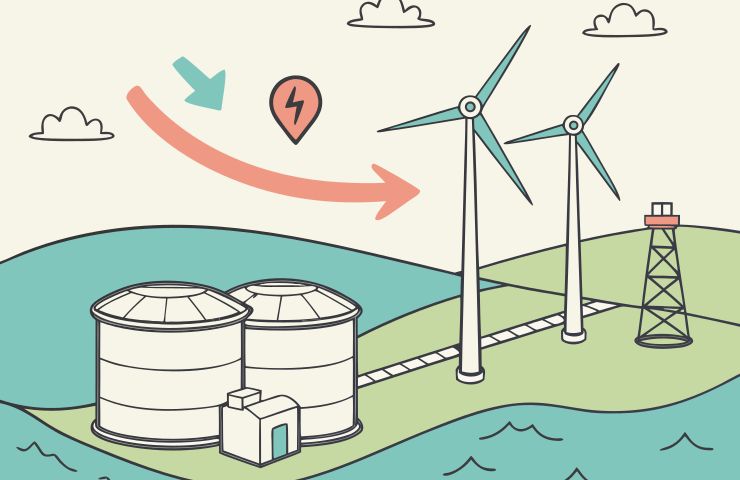
The Government of the Province of Chubut this month unveiled a provincial roadmap designed to leverage Patagonia’s abundant wind resources for large-scale green hydrogen production. According to provincial authorities, the document sets a planning objective of linking approximately 13,000 MW of wind generation to the production of around 632,000 tonnes of green hydrogen per year by 2035, with green ammonia and e-fuels identified as possible downstream derivatives.
Strategic Planning, Not a Construction Announcement
The roadmap was prepared by the nonprofit advisory group Transición Energética Sostenible in collaboration with consultancy CALDEN and with technical support from Germany’s GIZ, according to the announcement and provincial Decree 1052/2025. It is presented as a strategic industrial-development framework rather than a list of projects ready to be built. Sources emphasize that no financing commitments, permits or construction start dates have been confirmed. The targets are therefore conditional. They depend on enabling conditions such as grid expansion, water supply and offtake agreements.
Building on a Local Precedent
The document draws on local technical experience in Chubut, notably the Hychico green-hydrogen pilot near Comodoro Rivadavia. That facility uses wind-powered electrolysis to produce high-purity hydrogen, transports it via a short dedicated pipeline and is testing geological storage, according to Hychico’s own materials. Hychico operates at pilot scale. It is mentioned as technical background rather than being cited as a direct participant in the province’s 2035 targets.
How Wind-to-Hydrogen Integration Works
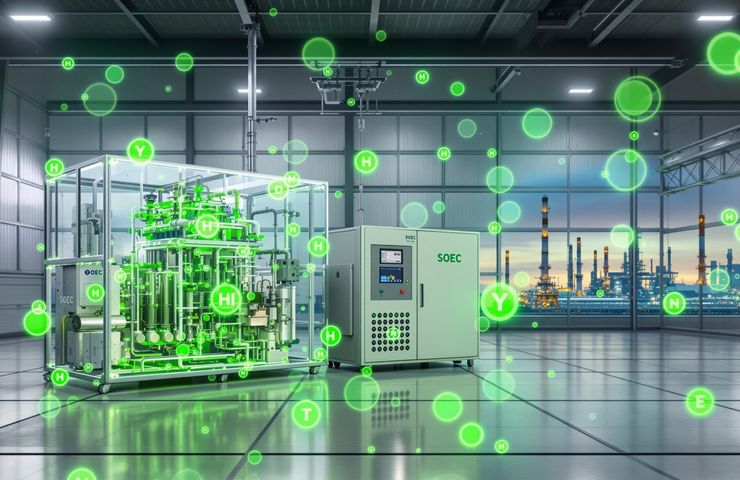
Under the proposed scenario, large wind farms would supply renewable electricity to electrolyzers that split water into hydrogen and oxygen. Electrolyzer technology options include alkaline systems—valued for maturity and cost—and proton exchange membrane (PEM) units, prized for rapid response to fluctuating wind output. The hydrogen would then be compressed or conditioned for storage in high-pressure tanks, geological formations or chemical carriers like ammonia. Managing intermittency may require oversizing capacity, on-site buffering or hybrid grid integration. In short: electricity from wind becomes a feedstock, and system design must reconcile variable supply with the needs of synthesis and storage.
Potential Derivative Products
The roadmap identifies green ammonia—produced by combining renewable hydrogen with nitrogen in a Haber-Bosch loop—and e-fuels such as synthetic methane or methanol, made by blending hydrogen with carbon sources. Both pathways demand stable synthesis conditions. As the plan notes, project design must integrate hydrogen buffering, additional renewable generation or flexible operation to align with variable wind output. These derivative products are presented as options for local industry and for potential export via port facilities that the province would need to develop.
Economic and Policy Implications
By framing wind power as an industrial feedstock rather than solely an electricity source, Chubut aims to diversify beyond petroleum and to foster local manufacturing and services. The roadmap also envisages development of port and transmission infrastructure to support an export-oriented hydrogen economy. Local authorities note that success hinges on national certification schemes, offtake contracts underpinned by creditworthy buyers, robust environmental assessments and meaningful community consultation over land, water and biodiversity impacts. Those elements are presented as prerequisites for moving from planning to implementation.
Challenges on the Path to 2035
Electrolysis remains capital-intensive, and large-scale hydrogen projects face several practical risks. Variable renewable supply and water sourcing are two of the headline issues. The roadmap points out that electrolysis requires roughly ten litres per kilogram of hydrogen for feedstock. Land-use conflicts and ecosystem impacts will need to be addressed during environmental review. Meanwhile, developers must secure transmission upgrades, port terminals for potential export and financing structures to de-risk early-stage infrastructure. In other words, the technical ambitions are substantial but they sit alongside a complex web of permitting, resource management and commercial hurdles.
Looking Ahead
Chubut’s roadmap sends a clear policy signal that the province is laying the groundwork for a low-emissions hydrogen industry. Whether the 13,000 MW and 632,000 tonne targets materialize depends on aligning technical design, regulatory frameworks, market demand and financing over the next decade. Observers will watch for the full roadmap publication to assess methodology, capacity‐factor assumptions and investment estimates. For now, the strategic plan marks a significant step in converting Patagonia’s wind potential into a hydrogen economy—but it is a first step, not a construction timetable.