Linde's 24 MW Green Hydrogen Production at Leuna Faces Multi-Year Delay
Linde’s planned 24 MW electrolyzer at Leuna Chemical Complex is now four years behind schedule after supply-chain and safety setbacks, with a new commercial target in Q3 2026.
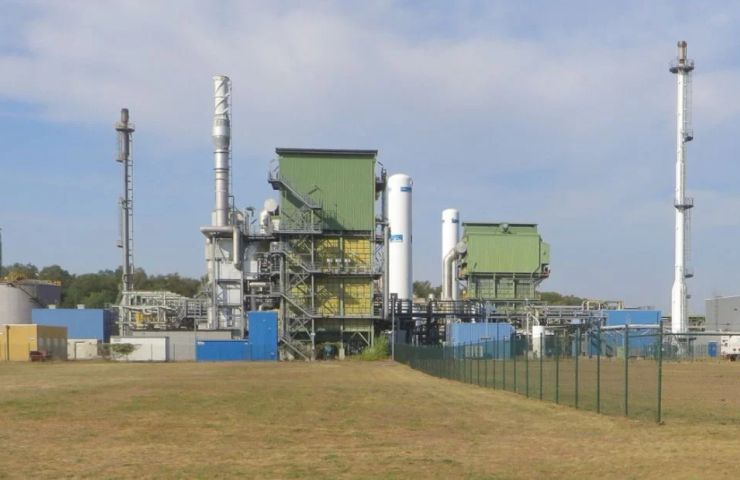
Linde has pushed back the commercial start of its planned 24 MW PEM electrolyzer at the Leuna Chemical Complex, shifting the timeline roughly four years behind the original schedule. According to Linde’s announcement in early 2021, the facility was intended as a large-scale demonstration of green hydrogen production but has encountered delays that now target a start-up in the third quarter of 2026. No source confirms that the plant has begun regular operation as of mid-October 2026. The delay has tightened scrutiny on technical, safety and scheduling assumptions that guided the early planning phases.
Project Origins and Ambitions
When announced in 2021, Linde plc described the Leuna electrolyzer as the world’s largest PEM electrolyzer at the time, with a design capacity to produce up to 3,200 tonnes of hydrogen per year. The project was intended to run on renewable electricity and to tie into Linde’s existing hydrogen infrastructure, supplying customers through a pipeline network and via liquefied hydrogen deliveries to hydrogen refueling stations. Linde operates in more than 80 countries, offering hydrogen production, liquefaction, storage and distribution, and this project was intended to complement those global capabilities by adding significant domestic renewable-hydrogen capacity. In scope and ambition it was presented as a test of how industrial-scale electrolysis can be applied inside an operating chemical complex.
The engineering and module delivery was led by ITM Power plc via the ITM Linde Electrolysis joint venture. Public authorities in Saxony-Anhalt and Berlin reportedly provided around €15 million in grant support, reflecting Germany’s National Hydrogen Strategy target of at least 10 GW electrolyzer capacity by 2030 and the EU’s push for renewable fuels of non-biological origin under REPowerEU. The Leuna project aimed to demonstrate how electrolysis can underpin industrial decarbonization in chemicals, refining and transport. Stakeholder expectations were high; the plant was meant to show how renewables-based hydrogen could be produced, stored and delivered at industrial scale.
Execution Challenges
Before hydrogen production could even start, the project faced multiple execution hurdles. In its 2022 financial results, ITM Power cited supply-chain constraints for critical electrolyzer components, changes to Leuna’s site requirements that required repositioning of modules and manufacturing or testing delays. These factors pushed the original mid-2022 commissioning target out by many months. ITM’s report underscores a common lesson: scaling megawatt-scale electrolysis involves complex logistics and tight coordination across suppliers, constructors and site operators. That coordination proved harder in practice than anticipated.
To address these issues, Linde and ITM Linde Electrolysis worked on improved logistical planning, revised module interfaces and detailed site-integration assessments with InfraLeuna’s utilities platform. By late 2022, the partners were ready for initial hot commissioning, only to encounter a more critical safety barrier. The combination of late design changes and the need to align multiple contractors lengthened lead times and increased the number of required checks before the plant could be declared ready for operation.
Safety-Driven Suspension and Redesign
Independent reporting, based on a response from the state ministry, indicates that an attempted start-up in late 2022 was suspended after identifying a potential delay in the facility’s automatic shutdown logic under certain leak conditions. Hydrogen’s wide flammability range and rapid diffusion require leak detection and emergency valves to respond within milliseconds, and the plant’s original safety controls may not have met that threshold. Regulators and operators both viewed this as a non-negotiable issue given the risks associated with high-flow hydrogen systems operating inside an industrial site.
From October 2022, extensive engineering improvements were designed—including a redesign of shutdown sequences, the addition of redundant leak sensors, and upgrades to control-room interfaces and staff emergency training—and were implemented from April 2024. The ministry estimated that this work represented about 25% of the plant’s original investment. Safety authorities also conducted additional reviews before approving the modified system for a follow-up start-up. Those reviews added time, but they were required to satisfy both operational safety standards and public accountability for a project receiving public grant support.
Restart Attempt and Further Incident
When operations resumed in December 2025, the Saxony-Anhalt ministry reports that a separate hydrogen leak and localized fire occurred, requiring further technical measures such as tightened seal integrity testing and enhanced fire-monitoring systems. Linde has not disclosed detailed root-cause findings, but the incident illustrates that commissioning a first-of-its-kind 24 MW electrolyzer entails rigorous safety validation protocols under diverse conditions. The restart and subsequent incident prompted additional verification steps and a more conservative approach to operational ramp-up.
With that episode addressed, the ministry now projects a commercial start in the third quarter of 2026. Public sources do not confirm that the plant has reached regular operation as of mid-October 2026. Operators and customers remain cautious, and planned handover milestones have been moved to allow for further testing and third-party certification where required.
Economic and Market Ripple Effects
Delays at Leuna carry broad implications. Independent outlets report around €15 million of public funding was earmarked for the electrolyzer, so accountability and transparent progress reporting are under scrutiny. Downstream users—including the TotalEnergies refinery at Leuna—have had to seek alternative supplies. That refinery has separate agreements: a 30 MW electrolyzer at Bad Lauchstädt with VNG and Uniper, and a planned 300 MW plant in Lingen under RWE to deliver 30,000 tonnes annually from 2030. Customers tied to commercial fuel contracts have therefore reallocated offtake or sourced hydrogen from alternate projects while Leuna completes validation.
The Leuna story highlights the intertwined nature of project timelines, customer contracts and regional hydrogen infrastructure. Mobility operators awaiting fuel cells for transit refueling stations have also been on standby, underlining how supply delays can defer wider hydrogen fuel cell deployment in transport. In short: a single megawatt-scale project can influence supply chains, refueling availability and local decarbonization schedules.
Lessons for Clean Hydrogen Deployment
The Leuna delay offers a cautionary tale for developers of large-scale green hydrogen production. From supply chains and site integration to safety systems and regulatory approvals, megawatt-class electrolysis requires end-to-end coordination and time-intensive verification phases. However, these steps do not reflect a technical failure of PEM technology; rather, they highlight the due diligence needed when integrating new systems into existing industrial complexes. The experience at Leuna points to predictable friction points that other projects can address earlier in their timelines.
For Linde, the electrolyzer remains strategically vital. Once operational, it will link into Linde’s pipelines to serve chemical and refining customers, while its liquefaction unit can support hydrogen storage and distribution to refueling networks. Linde indicates that large-scale electrolysis could lower unit costs of renewable hydrogen over time, strengthening the business case for industrial decarbonization and zero-emission technology. The plant’s role within Linde’s broader hydrogen portfolio is unchanged, even if the path to commercial service has lengthened.
At the European level, lessons from Leuna are feeding into project-development frameworks and financing models. As Germany pursues its 10 GW electrolyzer target and the EU tightens renewable hydrogen mandates, future projects may integrate more modular construction, enhanced supply-chain resilience and early-stage safety verification to meet both policy ambitions and customer timelines. If Linde can navigate the remaining technical hurdles and deliver certified low-carbon hydrogen at scale, the Leuna plant may yet validate the vision of integrated hydrogen infrastructure and accelerate the energy transition across heavy industry and mobility. Industry observers will watch whether Linde and ITM Linde Electrolysis can translate these initial setbacks into a fully certified, reliable hydrogen supply service.