Launch of Hyd’Occ: A Step Forward for Green Hydrogen Production in France
Qair and AREC Occitanie have inaugurated Hyd’Occ, the largest renewable hydrogen production facility in France located at Port-la-Nouvelle, featuring a 20 MW alkaline electrolyser designed to produce 2,700 tonnes of green hydrogen per year.
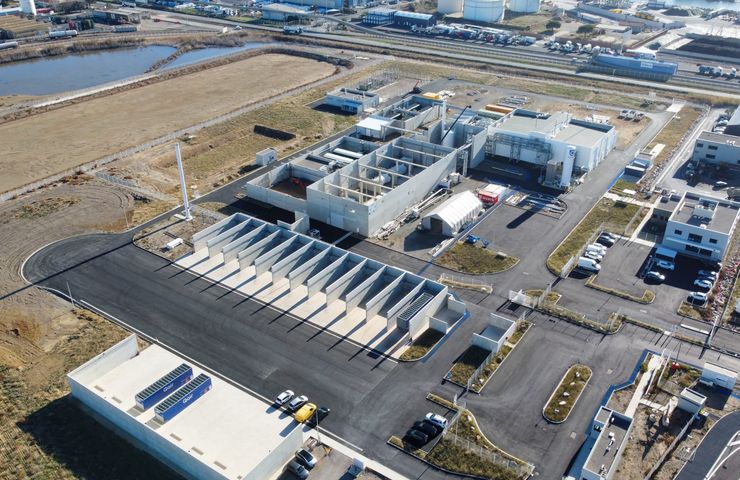
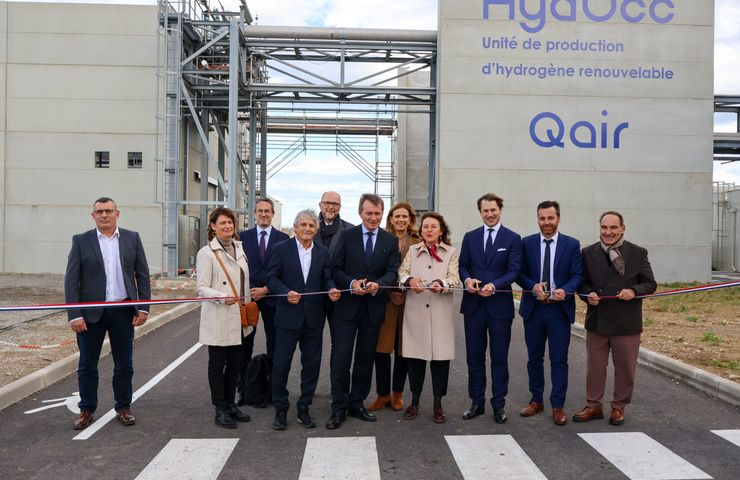
Qair and AREC Occitanie have inaugurated Hyd’Occ, marking the establishment of France's largest renewable hydrogen production facility located at Port-la-Nouvelle. The plant is intended to use renewable energy to produce green hydrogen. It is being presented as a significant addition to France's industrial decarbonization and sustainable energy efforts. The announcement places Hyd’Occ at the centre of a regional push to develop hydrogen as a practical fuel for industry, heavy transport and maritime applications.
The Hyd’Occ facility features a 20 MW alkaline electrolyser, which is expected to yield up to 2,700 tonnes of renewable hydrogen annually. That capacity is the basis for the project’s initial market-facing activities. This first phase of the project is strategically integrated with hydrogen refuelling infrastructure in nearby Béziers and Narbonne, positioning the plant as a node within a developing local hydrogen ecosystem aimed at serving heavy mobility and maritime sectors. The connection to regional refuelling points is intended to link production with demand for trucks, buses and vessels that can run on hydrogen.
Core Facility Specifications
The facility is set up to operate on power from renewable sources, reportedly connected to three floating offshore wind turbines, although the exact arrangements and outputs are still pending independent verification. Those details — how the turbines will be tied into the electrolyser, and the precise volume of renewable electricity available on demand — have yet to be publicly validated. The project description highlights the renewable pairing, but it stops short of verified operational data.
At its technical heart, Hyd’Occ uses alkaline water electrolysis to make hydrogen. In simple terms, that process utilises electricity to split water into hydrogen and oxygen. Electrolysis is a well-established method for producing hydrogen without direct carbon emissions when the input electricity is renewable. The electrolyser at Hyd’Occ is described as alkaline, a common electrochemical technology that has been deployed in industrial settings; the plant’s designers have selected it for this initial commercial phase.
Business and Strategic Significance
Hyd’Occ represents more than just a technical achievement; it is being framed as a pivotal moment in the market adoption of renewable hydrogen. Qair has lined up several strategic partnerships as part of the commercial plan. Contracts with Plug Power and the HydrOMer vessel, which plans to operate on hydrogen produced at the site, are cited as early anchors of demand. Those relationships are intended to create real-world pathways for the hydrogen produced at Port-la-Nouvelle to reach end users.
Yet the project’s longer-term success remains conditional. The plant’s operators and observers note that planned customer agreements must be translated into verified contracts and actual offtake to sustain steady operations. Interest from public and private transport stakeholders is growing, but converting that interest into binding commitments will be necessary to underpin the plant’s economics at high utilisation. In short: the technology is in place, the partners are named, but predictable revenue depends on the legal and commercial follow-through.
Operational planning will need to reconcile production profiles with end-user demand. Hydrogen producers typically aim to match electrolyser output with confirmed offtakes or storage options to avoid underuse. The Hyd’Occ team will therefore have to manage both production scheduling and commercial contracting carefully, aligning supply windows with the refuelling network in Béziers and Narbonne as well as with maritime customer needs.
Market Context and Future Prospects
The launch of Hyd’Occ aligns with France's national hydrogen strategy, which currently emphasizes achieving 4.5 GW of electrolyser capacity by 2030. That national target is referenced as part of a broader, cautiously paced policy framework that reflects lessons learned from earlier market setbacks, including financing obstacles and policy uncertainties. Hyd’Occ’s initial 20 MW thus sits against a stated national ambition that is orders of magnitude larger, but also shaped by a more pragmatic timeline.
Hyd’Occ's inaugural capacity represents a significant portion of the country’s current 70 MW electrolyser output. This contrast underscores how early-stage the commercial electrolyser market remains in France today. Project proponents have flagged plans for future expansions, including a proposed 40 MW phase that would bring total capacity to 60 MW and produce 5,400 tonnes annually. Those envisaged steps, however, are conditional on securing a dependable customer base and the commercial terms needed to justify scaled deployment.
For the facility to support hydrogen logistics and regional mobility applications at scale, production alone will not suffice. Robust distribution frameworks must be developed in parallel, encompassing storage and transportation methodologies suited to the volumes and densities of demand in the region. The Hyd’Occ project brief highlights the need for these complementary systems — fuel delivery, intermediate storage and refuelling station operations — to be put in place if the local hydrogen supply chain is to function reliably.
The plant’s economic model will also need to address the realities of long-term offtake agreements. Securing binding contracts that match supply volumes and durations to capital repayment schedules and operating costs is a familiar challenge in energy infrastructure. Hyd’Occ’s developers acknowledge this constraint implicitly by linking future phases to the establishment of a dependable customer base; without offtake certainty, larger electrolysers can remain idle or underutilised, weakening project economics.
Conclusion
Hyd’Occ serves as a barometer for the evolving landscape of hydrogen infrastructure in France and beyond. It tests how production capacity, renewable power supply and nascent refuelling networks can be woven together at a regional scale. Technological progress and potential cost reductions are part of the longer-term story, but near-term assessments will hinge on measurable outcomes: actual utilisation rates, contract fulfilments and the integration of the plant’s output into transport and maritime supply chains.
In that sense, Hyd’Occ is both a demonstration project and a commercial trial. It will be watched for how effectively planned agreements turn into verified sales, and for whether the anticipated linkages to local refuelling stations and maritime customers materialise. The project offers a learning opportunity: an early indicator of whether France’s hydrogen ambitions can be translated into operating facilities that consistently feed demand across heavy mobility and maritime sectors.