INPEX Launches Ammonia Production at Kashiwazaki Hydrogen Park
INPEX Corporation has initiated ammonia production at the Kashiwazaki Hydrogen Park, a key step in Japan's hydrogen and ammonia supply ecosystem.
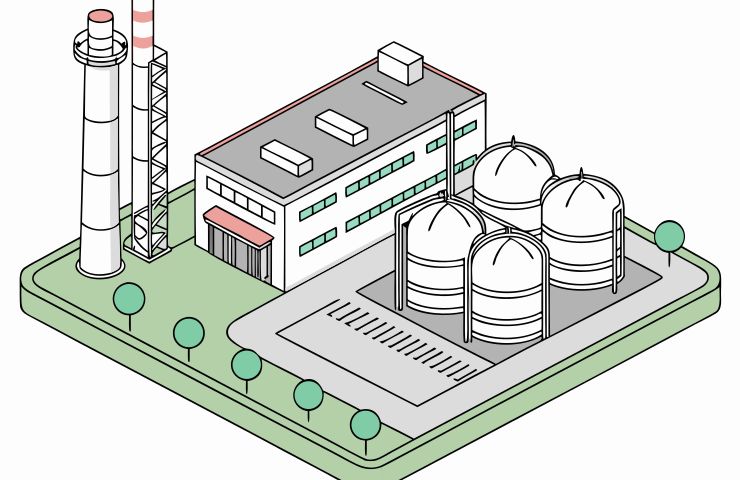
INPEX Corporation has initiated ammonia production and supply at the Kashiwazaki Hydrogen Park in Kashiwazaki City, Niigata Prefecture, Japan. This launch is part of an integrated demonstration project focusing on blue-hydrogen and blue-ammonia production. The launch signifies a crucial step towards building a domestic hydrogen and ammonia supply chain in Japan.
Ammonia production commenced with the collaboration of major entities in the hydrogen sector. On 23 October 2026, INPEX announced that it had initiated ammonia production at the park, just a day after Mitsubishi Gas Chemical began accepting this product for its manufacturing operations and distribution to local clients.
Project Overview and Operations
The production process at the Kashiwazaki Hydrogen Park utilizes natural gas sourced from INPEX’s Minami-Nagaoka Gas Field, which will support hydrogen production. The gas undergoes conversion into syngas, from which hydrogen is extracted, utilizing Air Liquide Engineering & Construction's autothermal reforming (ATR) technology.
Following hydrogen production, a portion of this gas is transformed into ammonia through the unique synthesis technology provided by Tsubame BHB Co., Ltd.. Tsubame BHB’s process enables ammonia formation under lower temperatures and pressures compared to the traditional Haber-Bosch method, positioning it as a breakthrough in ammonia synthesis technology.
The project aims to produce approximately 700 tonnes of hydrogen annually. However, the ammonia plant's capacity is noted as around 500 tonnes per year. Furthermore, CO2 generated during this entire process is captured and injected into a depleted gas reservoir located in the Higashi-Kashiwazaki Gas Field.
Significance of the Project
The achievement of producing ammonia at this scale marks Japan’s transition from planning and pilot projects to actual demonstration of technology integration. Japan's approach to hydrogen and ammonia is underpinned by its national policies initiated with the 2017 Basic Hydrogen Strategy, which was later refined in 2023 and followed by the Hydrogen Society Promotion Act.
The New Energy and Industrial Technology Development Organization (NEDO) backs the demonstration of hydrogen and ammonia production along with CO2 capture. Meanwhile, the Japan Organization for Metals and Energy Security (JOGMEC) collaborates with INPEX on CO2 storage, focusing on utilizing depleted oil and gas fields.
Challenges and Future Prospects
While this integrated demonstration holds promise, it does not comprehend all debates surrounding blue hydrogen's environmental impacts. Since the process relies on natural gas, there are concerns regarding methane leakage, the energy intensity of CO2 capture, and the lifecycle emissions associated with ammonium production and use.
Moving forward, the operation will provide operational data essential for evaluating the technical, economic, and environmental viability of hydrogen and ammonia as integral components of Japan’s energy policy. As the country endeavors to meet its industrial decarbonization and energy security goals, successful operation of this project could lay the groundwork for expanding localized hydrogen and ammonia operations nationally.
Conclusion
As INPEX and its partners transition this demonstration project to operational scale, it will serve as a crucial reference for future endeavors in hydrogen production and utilization within Japan’s advancing hydrogen economy.