Hydrogen Storage News: Guardiane-Q Fortifies Underground Green Hydrogen Security in Spain
Spain’s new Guardiane-Q project designs and validates an advanced security system for underground green hydrogen storage, leveraging five technology lines from geomechanical risk analysis to quantum-safe cryptography. Coordinated by Trinity Energy Storage and financed by CDTI, it aims to de-risk Spain’s Aljarafe hydrogen storage facility and support EU clean energy infrastructure.
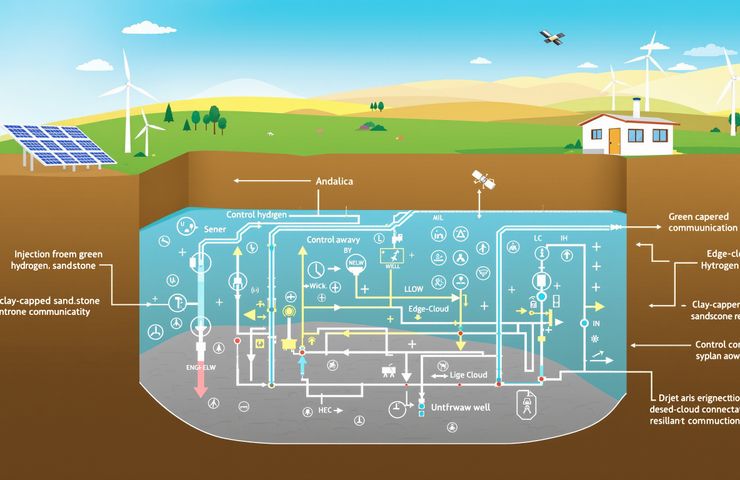
Guardiane-Q, an exciting industrial research project aimed at transforming underground hydrogen storage. This initiative is all about supporting Trinity Energy Storage’s Aljarafe Project and is stepping up to tackle the tricky safety and security challenges that come with repurposing depleted natural gas reservoirs into green hydrogen caverns. It’s not just any hydrogen news—this could set a new standard for hydrogen infrastructure globally.
Background: Underground Storage and the Aljarafe Opportunity
So, what’s the deal with underground hydrogen storage? It’s one of the few methods that can handle those seasonal ups and downs we see with renewable energy generation. The Aljarafe area, just a hop away from Seville, has a natural edge with three depleted natural gas fields capped off by thick layers of clay that seal everything in. In 2022, Trinity Energy Storage snagged hydrocarbon concessions in this prime location and is already running a subsurface gas storage plant in nearby Huelva. They’ve got plans to inject hydrogen—produced by slicing water molecules apart through electrolysis—into these reservoirs, where they estimate they can store around 14,000 tonnes of green hydrogen, which is about 550 GWh! Plus, they’ll be utilizing existing pipelines and compression systems to make it all happen.
Spain’s Andalusia region is already buzzing with renewable energy generation, boasting plenty of solar and wind farms pumping power into the grid. But here’s the catch: all that renewable electricity needs a way to be stored for when demand spikes, and that’s where our underground hydrogen storage comes into play. By using the existing gas infrastructure near Seville, developers can sidestep new land use issues while making the most of their mature pipelines and compression stations. It’s a win-win for the environment and helps ramp up flexibility.
The Guardiane-Q Mission: Securing the Future of Stored Hydrogen
Guardiane-Q isn’t just your run-of-the-mill project. It’s designed to create and validate a smart, multi-layered security framework for underground hydrogen storage. With a hefty funding package of 7.04 million euros—in which 5.47 million comes from the Spanish Centre for Technological Development and Innovation (CDTI)—this isn’t just theoretical chatter. They’re rolling up their sleeves to tackle all kinds of risks, from physical to cyber. And get this: it’s not about deploying a solution just yet; it’s all about doing the groundwork to make sure the clean hydrogen infrastructure is rock-solid before it gets rolled out commercially.
Secret Sauce: Five Tech Pillars Covering All Angles
Now, let’s talk about Guardiane-Q’s secret sauce: five interconnected tech pillars that aim to cover all the bases—from geology to those tricky quantum-era cyber threats. By testing these components in controlled environments, the project intends to develop blueprints that can be used not only for hydrogen storage but also for other critical energy assets.
Rock-Solid Risk Analysis
First on the list is comprehensive scenario analysis. Teams from the Universidad Politécnica de Madrid and the Rock Mechanics Lab at the Universidade da Coruña are diving deep into how pressure cycles, rock stress, and seismic activity might behave when hydrogen swaps out natural gas underground. This geomechanical assessment is vital for ensuring that the reservoir stays safe and identifies the limits for safe operations.
Multisensor Monitoring: Early-Warning Guardians
Next up, we have a distributed monitoring system that’s all about combining pressure, temperature, chemical purity, and microseismic sensors to work in unison. These sensors are there to catch any anomalies—like sudden pressure changes or impurities—before they become real problems. This isn’t just a step up from the usual gas storage monitoring; it’s a significant leap forward for hydrogen storage methods.
Edge-Cloud Intelligence: Smarter, Faster Decisions
Then there’s Plexus Tech’s cutting-edge edge-cloud platform, which processes data right at the wellheads and sends it to cloud dashboards. This blend of local and cloud computing allows for quick alerts and deep analytical insights—from machine learning diagnostics to scenario simulations. Operators can get actionable info in real time, keeping everything running smoothly even if there’s a hiccup in the networks. It’s all about reliability for critical hydrogen infrastructure.
Satellite Communications: Connectivity That Won’t Quit
When terrestrial networks falter, we still need that data to flow. That’s where Hydra Space’s satellite communications come into play. They’re integrating small-satellite links into control networks, which means Guardiane-Q can keep telemetry, control commands, and cybersecurity logs going strong—no matter what disruptions hit, whether they’re natural or man-made.
Quantum-Safe Cybersecurity
The fifth and final pillar takes aim at tomorrow’s cyber threats with post-quantum cryptography and quantum random number generation. Quside, based in Barcelona, provides the hardware and algorithms necessary to shield control systems from today’s cyber attacks and from future quantum computing capabilities. It’s not every day you see such forward-thinking security applied to hydrogen projects, but with Guardiane-Q, they’re serious about leading the energy transition.
Consortium Stars: A Collaborative Powerhouse
This project is the brainchild of a powerful consortium that brings together both industrial innovators and research leaders. Trinity Energy Storage coordinates the Guardiane-Q consortium, while partners like H2B2 Electrolysis Technologies, Hydra Space, Plexus Tech, and Quside are on hand to tackle everything from production alignment to communications and cryptography. And let’s not forget H2B2, which provides the electrolysis systems pumping green hydrogen straight into the storage infrastructure. Scientific heavyweights like Ciemat, Centro Nacional del Hidrógeno (CNH2), INTA, Eurecat, and Ikerlan, along with UPM and UDC labs, are also on board. This collaborative approach blends hydrogen production expertise with cybersecurity, marking a major milestone in the realm of green hydrogen production and storage innovation.
Built for the Energy Transition
As we’ve seen, Andalusia experiences its peak renewable power output in the spring and autumn, making seasonal storage absolutely essential. Underground hydrogen storage is primed to soak up all that excess wind and solar energy and then release it when demand surges. This practical solution not only smooths out price fluctuations but also diminishes reliance on fossil fuel backups. Plus, by using depleted reservoirs, the land impact is kept to a minimum compared to traditional aboveground tanks, amplifying the sustainability of our hydrogen infrastructure.
Synergy with European Initiatives
What’s more, Guardiane-Q works hand-in-hand with other European projects like H2SALT and PureH2, which are exploring salt-cavern storage and hydrogen purification. The inclusion of Aljarafe in ENTSO-G’s provisional planning smells like a potential Project of Common Interest, aligning local ambitions with EU funding and regulations for clean hydrogen news.
Beyond Hydrogen: Transferable Security Solutions
While Guardiane-Q is tailor-made for underground hydrogen storage, the technologies it’s developing could have broader applications. The multisensor monitoring, edge-cloud intelligence, satellite fallback, and quantum-safe cybersecurity can be adapted to areas such as CO2 sequestration, large battery parks, LNG terminals, and even green data centers. This spread of cross-sector potential broadens the impact, establishing Guardiane-Q as a cornerstone for resilient, secure critical infrastructure on a global scale.
Why It Matters: Real-World Impact and EU Ambitions
Ultimately, Guardiane-Q is more than just a research project; it’s an essential step toward making underground hydrogen storage bankable and acceptable to regulators. With the Aljarafe Project already listed on ENTSO-G’s provisional European hydrogen network, it’s positioned as a potential Project of Common Interest. That recognition could unlock funding and ease the permitting process across borders, bolstering Spain’s significance in the hydrogen economy.
Bottom line: Guardiane-Q is a strategic initiative aimed at securing vital energy assets, reinforcing national technological independence, and fast-tracking the development of safe underground hydrogen storage. As Europe races toward net zero, this integrated security framework could serve as the blueprint for ensuring clean hydrogen reaches where it’s needed most.