AKROS Energy’s Salt-Based Pilot Advances Green Hydrogen Logistics
AKROS Energy’s containerized pilot near Rostock-Laage demonstrates reversible salt-based hydrogen storage, converting potassium bicarbonate to formate for safe, pressure-free transport.
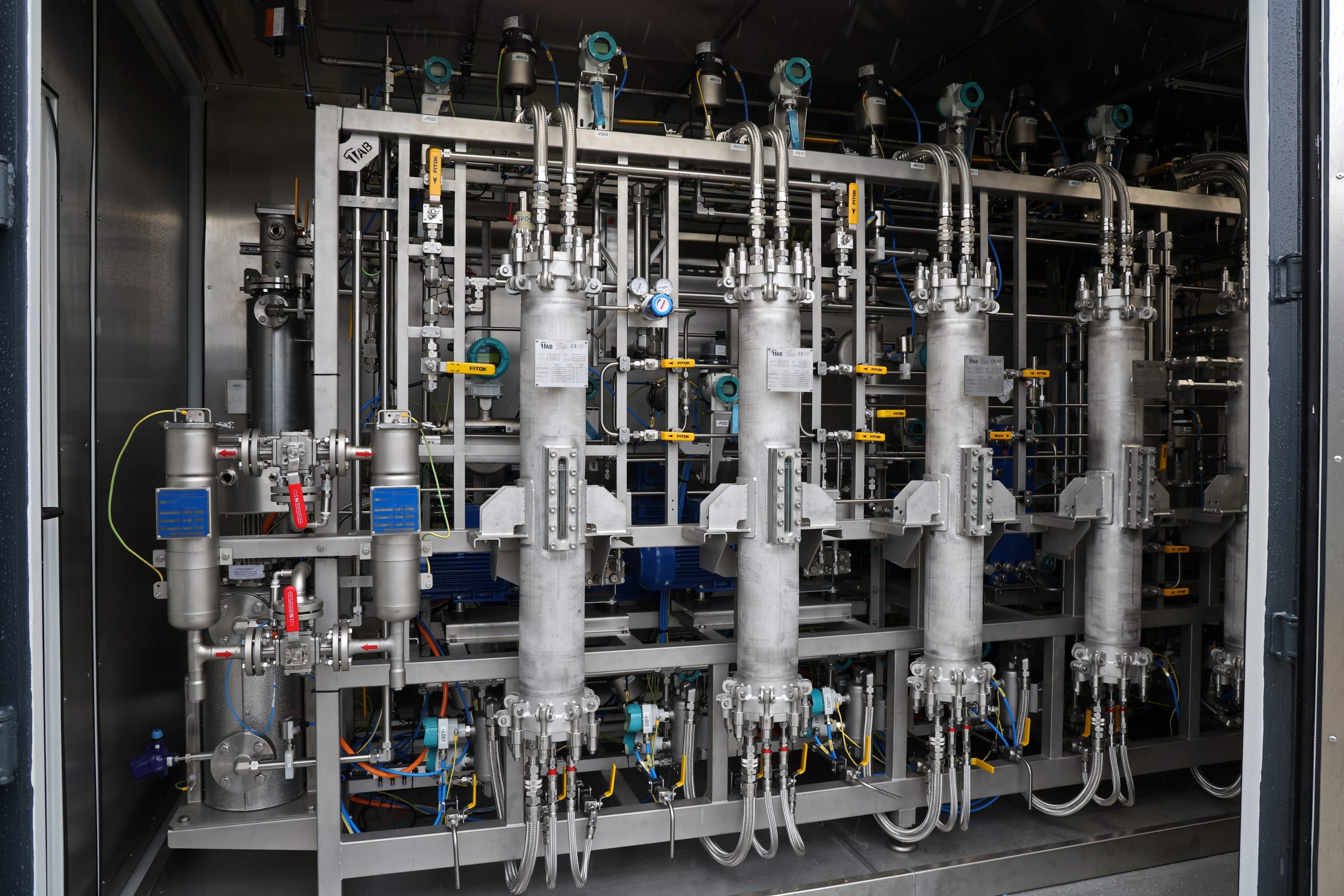
In the quiet corners of northeastern Germany, just outside of Rostock-Laage, something pretty exciting is happening inside a 40-foot container. AKROS Energy is shaking things up when it comes to hydrogen storage. Within this unassuming steel box, they’ve set up a pilot plant that’s taking green hydrogen—yes, that renewable kind—and packing it safely into a common industrial salt. By transforming potassium bicarbonate into potassium formate and back again, this innovative system means we can transport hydrogen safely without the whole pressure headache. It’s a big deal that could really change up the economics and safety game in the global hydrogen value chain.
From Lab Concept to Industrial Demonstration
AKROS Energy started its journey as a spin-off from H2APEX’s research team in 2024, building on years of collaboration with the Leibniz Institute for Catalysis (LIKAT) in Rostock. They’ve got six patents under their belt for this salt-based hydrogen storage method, two of which they co-own with LIKAT itself. Basically, they’re diving into manufacturing and distributing process equipment for hydrogen and energy storage. The pilot plant, which has received a nice boost from state and EU funding through the “Formaport” initiative, marks the first time this chemical process has been run continuously at such a large scale—pretty impressive!
Pilot Plant Mechanics
So how does it actually work? To charge up with hydrogen, they use an aqueous solution of potassium bicarbonate (yeah, the same stuff you find in baking powder) that flows into one of four reactors inside the container. Operating at a cozy 60 °C and below 30 bar, this solution encounters a special ruthenium-based catalyst that kicks off the hydrogenation reaction. Essentially, bicarbonate gets transformed into potassium formate, which stores hydrogen in a safe, chemical form. This loaded formate can either crystallize or stay in liquid form, making it ready for shipping. Right now, they’re turning out about 3 kg of hydrogen every hour, with plans to ramp up to about 100 kg/h—which is comparable to a mid-sized electrolyzer. That’s some serious potential!
Reversible Bicarbonate–Formate Cycle
What really makes the AKROS process tick is this clever reversible cycle: KHCO₃ + H₂ → KCOOH + H₂O. In a reverse reactor—also hanging out in that container—the whole reaction flips over. By lowering the hydrogen pressure and adjusting the temperature just right, they can break the formate back down into bicarbonate, releasing hydrogen gas that can be used for fuel cells or various industrial applications. The leftover bicarbonate goes right back to the loading reactor, closing that loop neatly. Thanks to some top-notch homogenous catalysis work perfected over at LIKAT, this shows that lab-scale chemistry can really scale up to work in real-world situations.
Bulk Logistics, Low Risk
Now, here’s where it gets really appealing. Unlike the high-pressure storage that can go up to 700 bar, or cryogenic tanks that are cooled to -253 °C, AKROS’s salt carrier can roll around in standard tank containers, bulk silos, or even rail wagons without needing any fancy insulation or pressure relief systems. And it’s non-toxic and non-flammable, which definitely helps clear some regulatory hurdles. By separating hydrogen from its gas form, they've sidestepped issues like boil-off losses and hydrogen embrittlement. For logistics companies, this means minimal retraining is needed since they’re already used to handling chemical salts.
Policy and Market Drivers
Looking at the bigger picture, Germany’s national hydrogen strategy anticipates a staggering demand for over 100 TWh of hydrogen annually by 2030. Much of this will need to be stored or transported from renewable hubs. Northern Germany, with its abundant offshore wind power, existing gas networks, and those handy salt caverns, is set to be a key player in this market. However, to balance out the fluctuating energy production, they’ll need systems that support long-duration storage and flexible carriers. This salt-based system could seamlessly integrate with port facilities in Rostock and other terminals, offering a modular solution alongside existing geological storage options. It’s a win-win for both domestic usage and exports.
Competitive Landscape
Of course, there are alternatives out there. Material-based hydrogen carriers like ammonia and liquid organic hydrogen carriers (LOHCs) offer different solutions to the usual compression and liquefaction methods. Ammonia has an established shipping sector, but it comes with its own set of challenges, like toxicity and cracking risks. On the other hand, LOHCs have high energy costs tied to their conversion processes. And while metal hydrides might offer high density, they also come with their own baggage in terms of weight and heat management. AKROS’s salt solution stands out for its safety and simplicity, choosing to sacrifice a bit of gravimetric density for more affordable capital and operational costs. If their storage solution proves economically viable—and external studies are currently in the works—they might just outpace these established carriers in terms of costs.
Technical and Scale-Up Challenges
Now, it’s not all smooth sailing. Transitioning from lab-scale catalysis to a sturdy plant has its own challenges. They need to keep a close eye on catalyst lifespan, ensure selectivity stays on track, and manage heat during various reaction steps. Handling solids, making sure everything mixes well, and preventing blockages during crystallization are all engineering puzzles that need solving. AKROS has set up its pilot project with easily removable reactor modules and online monitoring to tackle these issues, but gathering long-term data is key as they gear up for full commercial plants. Plus, securing a stable supply of high-purity potassium salts and the critical ruthenium catalyst is crucial, especially with the growing demand for these specialized chemicals and rare metals globally.
Environmental and Regulatory Outlook
An interesting upside? The carrier salts they’re using are already approved for things like airport de-icing and food-grade processes, which means the environmental risks are way lower compared to ammonia or certain specialized LOHCs. Because bicarbonate and formate are so benign, there’s not much liability involved if there’s a spill or leak. And without any high-pressure gas requirements, explosion risks are significantly reduced. Still, it’s important for regulators to adapt hazard classifications for a chemical carrier that can release pure hydrogen on demand. Pilot projects like this one are vital for shaping safety guidelines and training for operators and emergency responders.
Partnerships and Next Steps
Looking ahead, AKROS Energy and H2APEX are reaching out to industrial partners in sectors like steel and refining to land offtake agreements for their load-and-release services. They’re also chatting with off-grid and remote customers who are keen on distributed storage solutions. Plus, with EU funding programs supporting hydrogen corridor development, they might secure financing for multi-container setups near ports or pipeline junctions. If they nail it at the pilot stage, it could lead to collaborations, licensing deals, and tailored project deliveries for other companies wanting to integrate salt-based storage into their hydrogen projects.
Looking to the Horizon
The rise of a scalable salt-based carrier is a solid sign that hydrogen is moving beyond just a fuel cell buzzword to become a mainstream energy option. With renewables on the rise and industries going green, flexible storage that utilizes existing logistics could really ramp up demand. AKROS’s pilot is stepping up as a testing ground: if they can prove reliable economics, durable catalysts, and easy integration, salt-based hydrogen storage might just secure a vital role in making a low-carbon future a reality while extending the reach of green hydrogen far beyond just coastal terminals and main hubs.